What Cannot Be Transferred
In the social contract that establishes civil government, individuals transfer the right of natural force to the sovereign — the right to judge disputes, to punish transgressions, and to defend the community. But Spinoza argues that this transfer has a strict limit: it cannot include the right to think. The reason is not merely moral but logical: thought cannot be surrendered. No external force can compel genuine belief; the sovereign can compel the expression of certain opinions but cannot compel that these opinions be actually held. Any attempt to govern thought merely produces hypocrisy — citizens who say what the sovereign requires while thinking what reason and experience lead them to think.
The Self-Defeating Nature of Censorship
The attempt to suppress free expression is, Spinoza argues, not merely unjust but counterproductive. Suppression does not eliminate heterodox opinion; it drives it underground, generates martyrs, and lends dangerous ideas the glamour of the forbidden. Moreover, the state that depends on intellectual conformity makes itself intellectually fragile: it loses access to the honest advice and critical analysis that are the preconditions of good governance. The republic that encourages free expression profits from the diversity of perspectives and the critical examination of its own laws and policies.
The Boundary of Legitimate Constraint
Spinoza is not an unlimited libertarian about expression: he accepts that the sovereign can legitimately constrain seditious speech — expression that directly threatens the overthrow of the government or incites concrete violence. The boundary is between the internal forum of thought and conscience, which is immune to legitimate sovereign authority, and the external forum of action, which is subject to it. One may think anything; one may express one's thoughts provided the expression does not constitute a direct incitement to illegal action. This is the foundation of modern liberal free speech doctrine, formulated two centuries before Mill's On Liberty.
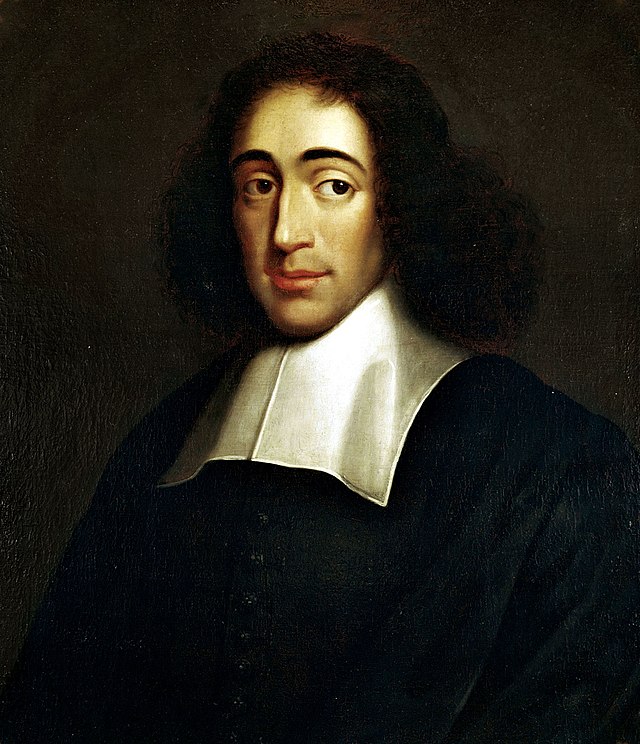
Spinoza's argument for freedom of thought in the final chapters of the Theological-Political Treatise draws on his metaphysical analysis of the social contract and was directed at the theological censorship exercised in the Dutch Republic. The book itself was immediately banned; it circulated widely in clandestine editions throughout seventeenth- and eighteenth-century Europe. Its influence on Locke's Letter Concerning Toleration (1689) and on the French and American Enlightenments was formative.
Related Concepts