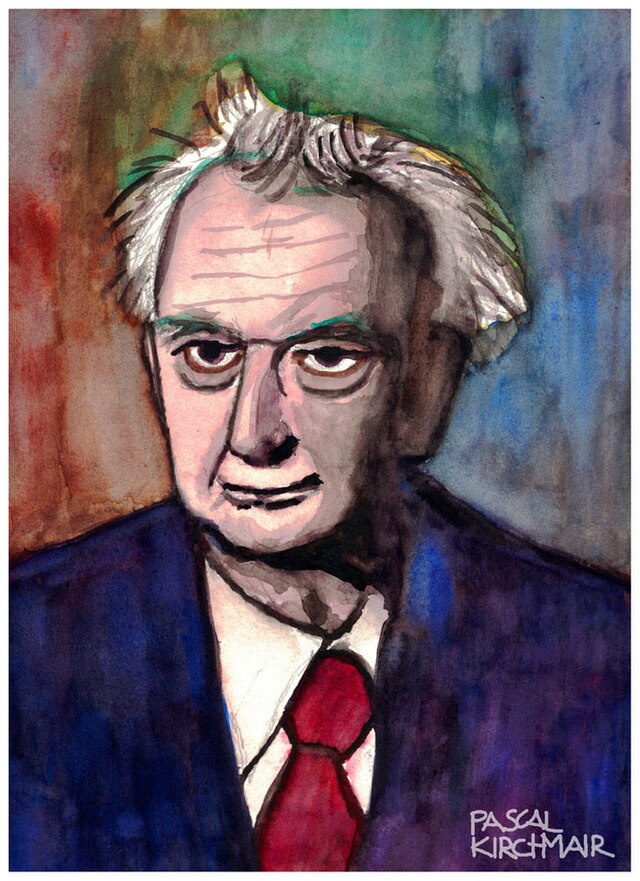
Dasein, Consciousness, and Existenz
Jaspers distinguishes several modes of being. Dasein is simple empirical being-there — the biological and psychological life I share with animals. Consciousness-in-general is the universal, impersonal knowing subject of science and logic. Existenz is something different: the unique, free, historically situated self that I am when I claim my existence as my own and take responsibility for it. Existenz cannot be objectified or scientifically described, because it is not a thing but a freedom — the capacity to be oneself in a situation that admits no escape.
The Four Boundary Situations
Boundary situations (Grenzsituationen) are the inescapable conditions that define human existence and that, when genuinely confronted, awaken Existenz. Jaspers identifies four: death (the absolute limit of all finite existence), suffering (pain and loss that cannot be avoided or explained away), struggle (the conflict with other wills that pervades social life), and guilt (the responsibility for harm that inevitably accompanies free action). These are not problems to be solved — they are the structure of finite freedom. The person who faces them honestly, rather than fleeing into distraction or ideology, is on the way to authentic Existenz.
Shipwreck and Transcendence
Boundary situations do not offer exits. They are, as Jaspers puts it, situations in which we "fail" — in which the world of objects, projects, and purposes that usually sustains everyday life collapses and offers no foothold. In this failure — this "shipwreck" — Existenz becomes possible: freed from the false supports of worldly success and social approval, the individual can hear the call of Transcendence. The boundary situation is the place where Existenz and Transcendence meet, where the cipher-language of being becomes audible to a self stripped of its usual defences.
The analysis of Existenz and boundary situations is the centrepiece of Jaspers's three-volume Philosophy (1932), compressed into Philosophy of Existence (1938). The concept of the boundary situation was Jaspers's most original contribution and influenced Sartre, Heidegger, and the broader existentialist movement.
Related Concepts