Three Qualitatively Distinct Spheres
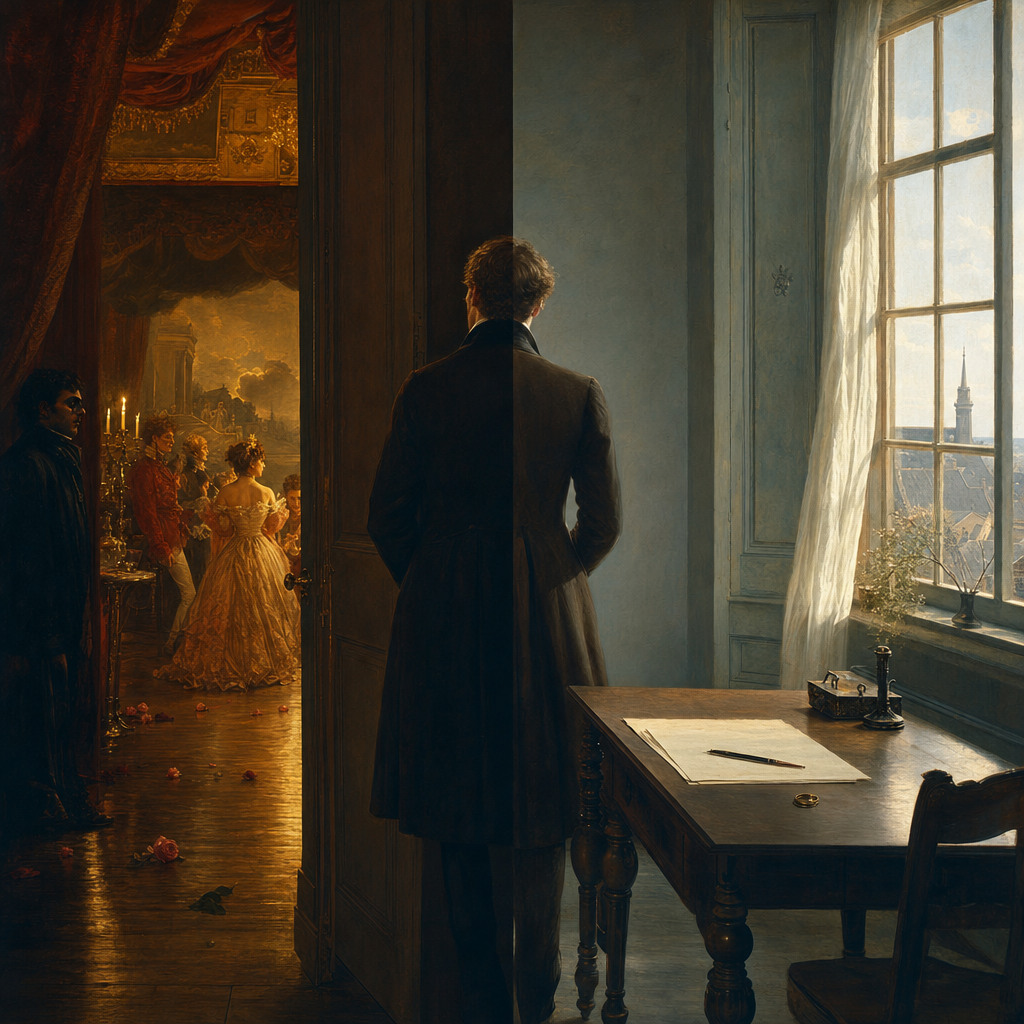
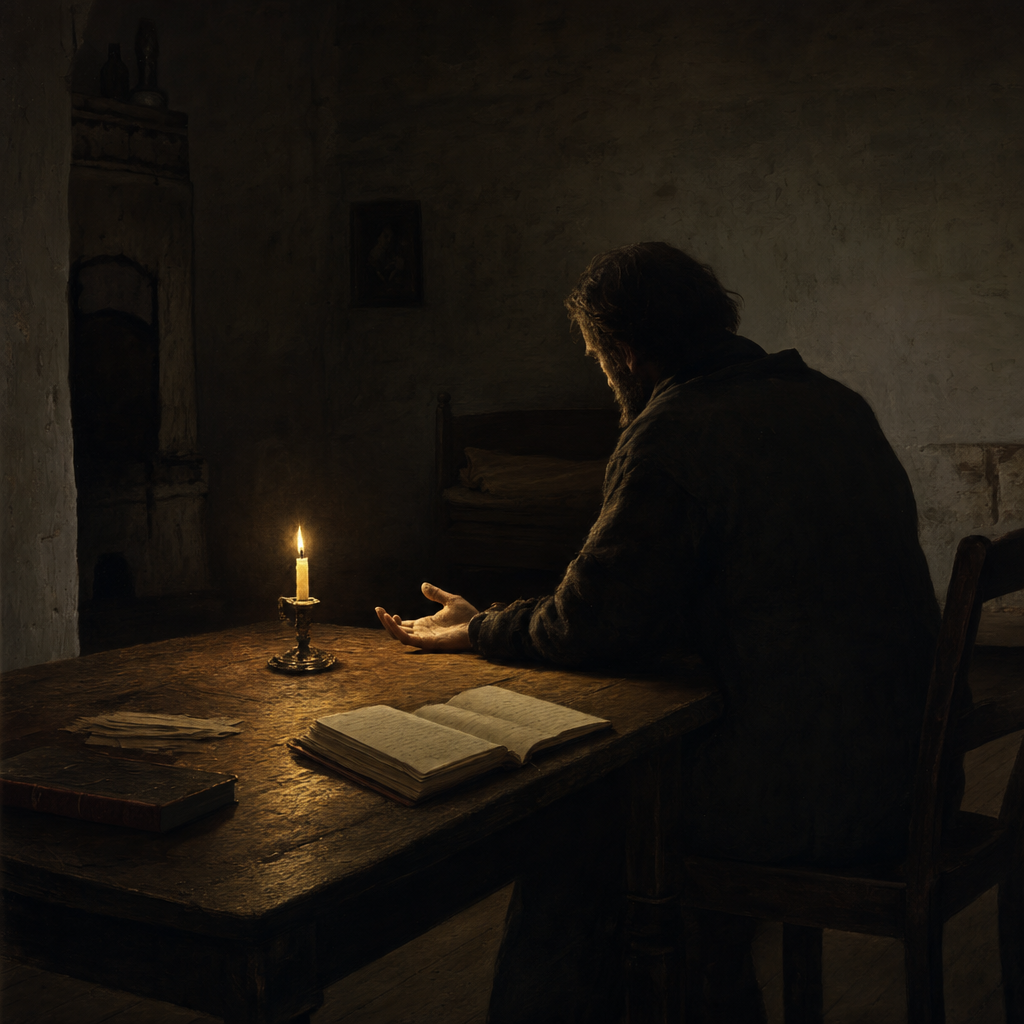
The aesthetic, ethical, and religious are not points on a single continuum of moral development; they are qualitatively distinct modes of being, each with its own logic, its own understanding of selfhood and time, and its own characteristic despair. The aesthetic person lives in immediacy and sensation; the ethical person lives in duty and universal obligation; the religious person lives in absolute relation to the absolute. There is no smooth transition between them: each requires a leap, a discontinuous existential movement that cannot be made gradually or rationally prepared for.
Religiousness A and Religiousness B
Climacus distinguishes within the religious stage between Religiousness A — immanent religion, the inward appropriation of the eternal — and Religiousness B — specifically Christian faith, which involves a paradox that no natural religiosity can generate. Religiousness A is the religion of suffering, resignation, and the passion of inwardness before the eternal; it is humanly possible, though achieved only through enormous inward effort. Religiousness B adds the specifically Christian claim that the eternal has entered time in an absolutely paradoxical form — a claim that offends reason and that can only be appropriated through the leap of faith.
The Indirect Path Between Stages
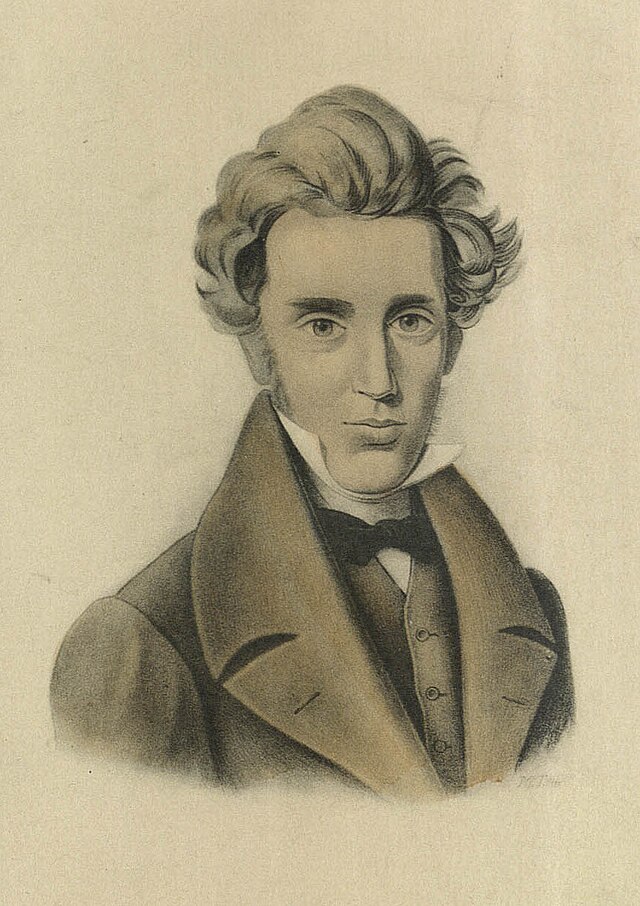
Because the stages are qualitatively distinct and the transitions between them are leaps, no direct communication can move a person from one to another. This is why Kierkegaard writes pseudonymously, why he writes under multiple voices, why he refuses to preach or exhort directly. To communicate existence directly is to treat it as information to be conveyed; but existence must be appropriated, not conveyed. The author who wants to help someone move from aesthetic to ethical existence must first meet them where they are — in the aesthetic — and then, by various indirect means, create the conditions in which the leap might become possible. Communication of existence is always indirect.
The stages are introduced in Either/Or (1843), developed in Stages on Life's Way (1845), and receive their most systematic treatment in the Concluding Unscientific Postscript (1846). They should be understood as ideal types rather than biographical stages: a single person can exhibit features of more than one stage simultaneously.
Related Concepts