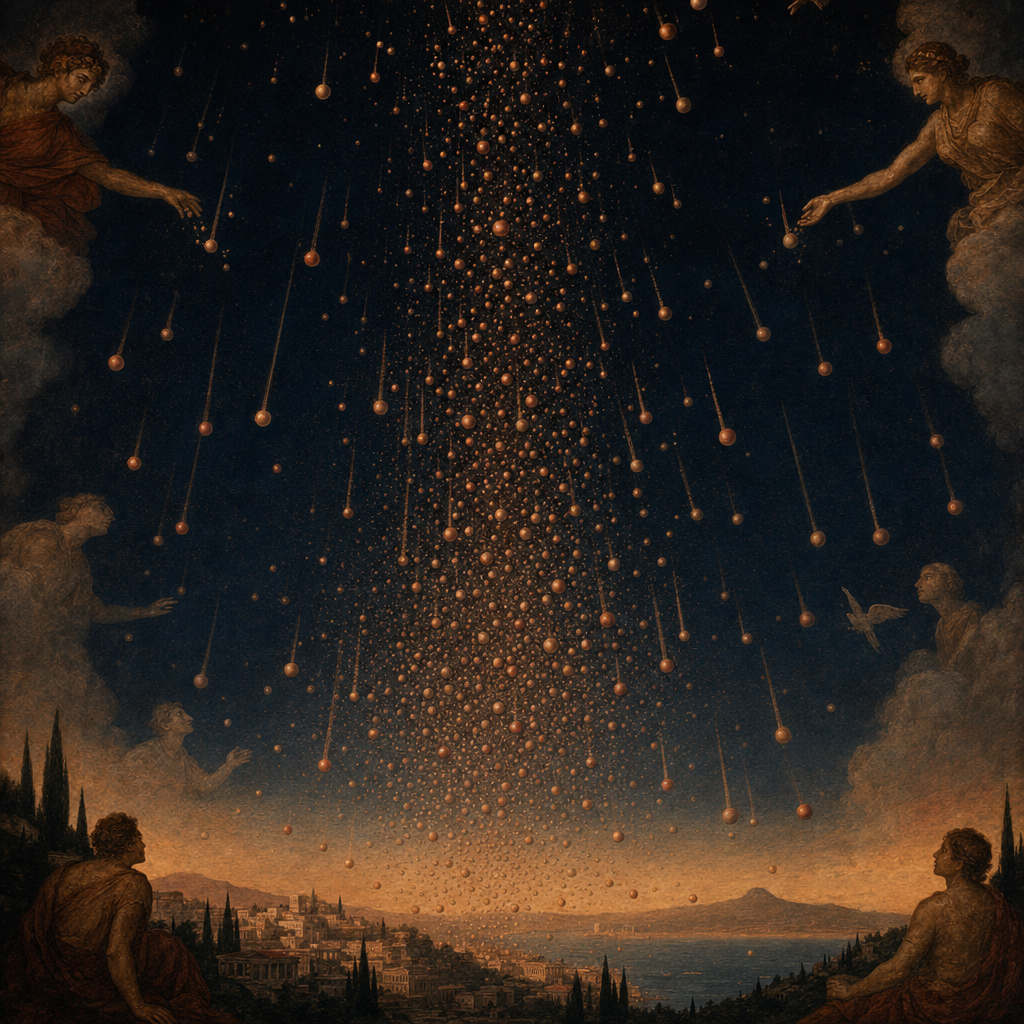
On the Nature of Things (De Rerum Natura) is the great Epicurean poem of ancient Rome — a dazzling attempt to liberate the human mind from the twin fears of the gods and death. Written in six books of Latin verse, Lucretius follows the atomic philosophy of Epicurus and Democritus to its logical end: all things, including the soul, are composed of indivisible atoms moving through void, and when we die our atoms simply disperse, leaving nothing to suffer. The poem ranges from the building-blocks of matter and the swerve of atoms through the nature of mind, perception, sexuality, the origin of civilisation, and the mechanics of plague — always in service of the one Epicurean argument: understand nature and you will cease to be afraid.
6 chapters · Public domain
1
Book I — The Atoms and the Void
~51 min · 25 pages
›2
Book II — Atomic Motion and the Shapes of Matter
~58 min · 28 pages
›3
Book III — The Soul and Its Mortality
~52 min · 26 pages
›4
Book IV — The Senses and Perception
~64 min · 31 pages
›5
Book V — The World and the Rise of Civilisation
~77 min · 38 pages
›6
Book VI — Storms, the Earth, and the Plague
~67 min · 32 pages
›