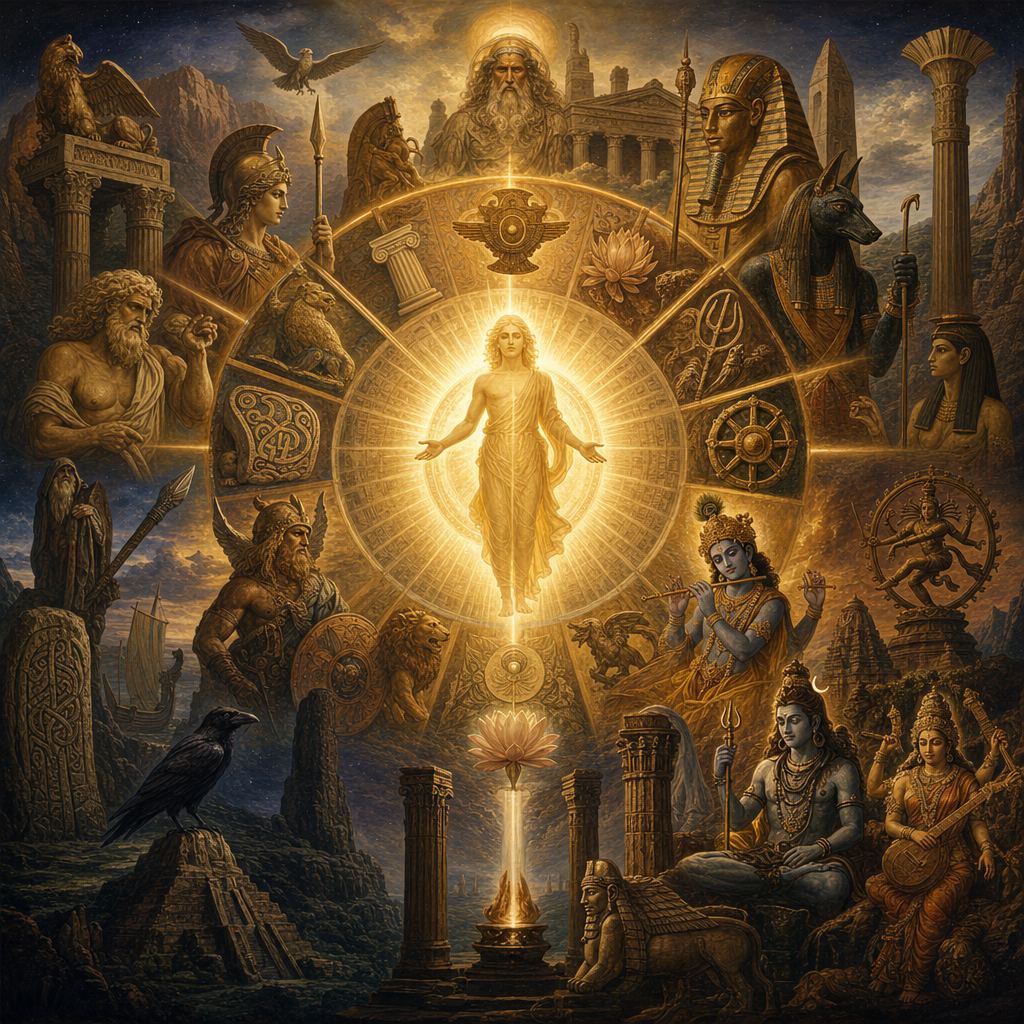
Delivered as lectures in Berlin from 1841 — where Marx, Kierkegaard, Bakunin, and Engels were in the audience — the Philosophy of Mythology marks Schelling's most sustained engagement with the positive philosophy he contrasted against Hegel's purely rational idealism. Mythology, for Schelling, is not primitive error but the genuine self-disclosure of the Absolute in human consciousness through a succession of divine figures — a theogonic process that Christianity later fulfils but does not cancel. Reading Greek, Egyptian, Indian, and Norse mythologies as successive moments in a single drama of divine self-revelation, the work established the philosophical study of comparative mythology and influenced later figures from Nietzsche to Jung.
This work isn't available here yet. In the meantime you can purchase a copy on Amazon, or check back later, as we are always adding books to our library.
As an Amazon Associate we earn from qualifying purchases.