Socrates Against the Learned
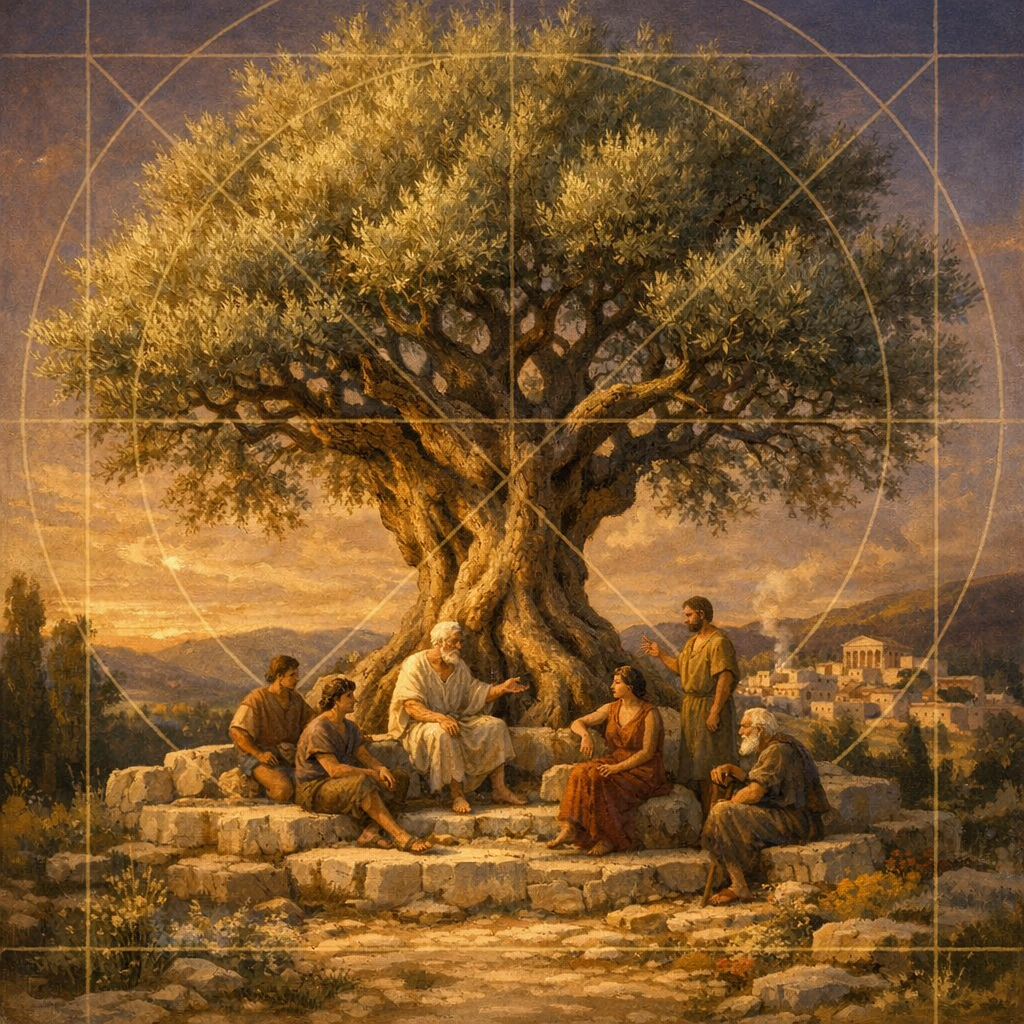
Rousseau seizes on the Socratic mission — to expose the pretensions of poets, artists, and craftsmen who mistake skill in their trade for wisdom about good and evil — as a template for his own attack on the philosophers of his day. Socrates, declared wisest by the oracle, turned his wisdom into a demonstration that he alone knew he knew nothing. For Rousseau, this is not intellectual modesty but a profound moral insight: genuine virtue requires no learning.
Thus we find Socrates, the wisest of men in the judgment of the god, and the most learned of all the Athenians in the opinion of all Greece, speaking in praise of ignorance.
Athens and Sparta
The contrast of Athens and Sparta runs through the Discourse as a study in the consequences of intellectual culture. Athens chose letters and philosophy, and produced the most brilliant city in Greece — and fell into dependence, luxury, and eventual enslavement. Sparta forbade the arts, emphasised physical and moral education, and produced the warriors and statesmen who twice turned back Persia. For Rousseau, the choice is clear: the society that prizes virtue over brilliance will outlast the society that prizes brilliance over virtue.
The Defence of Virtue
Rousseau pre-empts the objection that he is simply anti-intellectual. It is not science he attacks, he insists, but the pretension that science produces virtue. Learning in the hands of the truly wise — a Socrates, a Bacon, a Newton — can serve humanity. The danger is that the prestige of scholarship democratises itself into a culture of vanity where everyone plays at learning and no one practises virtue.
The Discourse on the Arts and Sciences (1750). G.D.H. Cole translation, 1913.
Related Concepts