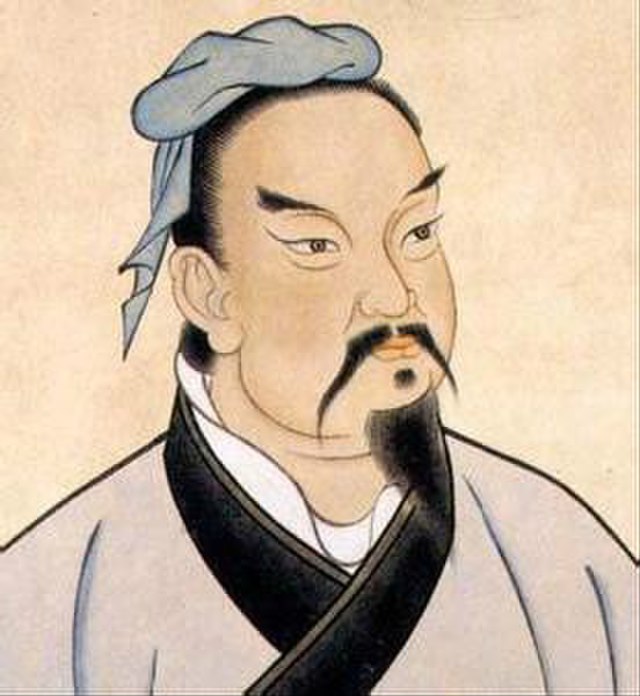
The Economics of Conquest
Chapter III opens with an economic argument: the best outcome is to take the enemy's country whole and intact. To shatter it is inferior, because victory then costs what it has destroyed. Sun Tzu is a strategist of minimum expenditure. The ideal is to capture armies entire, cities without sieges, kingdoms without prolonged campaigns. The general who achieves this has won more than territory — he has preserved the very wealth that makes conquest worthwhile.
supreme excellence consists in breaking the enemy’s resistance without fighting.
The Four Levels of Generalship
Sun Tzu ranks the methods of warfare in descending order of excellence. The best is to baulk the enemy's plans before they are executed — to defeat strategy with strategy. Second is to prevent the enemy's forces from uniting. Third is to engage the enemy in the field. The worst is to besiege walled cities, which consumes months of preparation and men like swarming ants against the walls. The hierarchy reveals a consistent principle: the earlier in the causal chain a general can intervene, the less force he will need.
Self-knowledge is the final condition of this bloodless victory. An enemy who knows you fully will eventually find a way to resist; an enemy who is unknown to you cannot be outmanoeuvred. Sun Tzu's most enduring insight is that total strategic intelligence — knowing oneself and knowing the adversary — renders the outcome certain before the campaign begins.
If you know the enemy and know yourself, you need not fear the result of a hundred battles.
The principle of victory without fighting is the argument of Chapter III, "Attack by Stratagem," and is the philosophical centre of the entire treatise.
Related Concepts