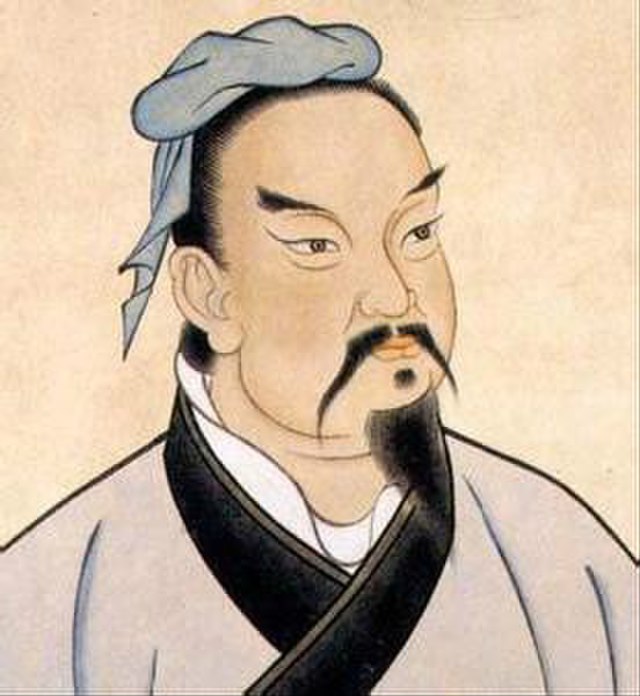
The Framework of Victory
Sun Tzu opens not with tactics but with a diagnostic framework. Before drawing a sword, the wise commander asks which side commands these five factors more completely. The Moral Law — the alignment of people with their ruler — is placed first, because no army fights well for a cause it does not believe in. The conditions of Heaven (weather, time, season) and Earth (terrain, distance, ground) are outside human control but within the reach of preparation. The Commander's virtues — wisdom, sincerity, benevolence, courage, and strictness — are the personal qualities that translate strategic knowledge into decisive action.
These are: (1) The Moral Law; (2) Heaven; (3) Earth; (4) The Commander; (5) Method and discipline.
Method and Discipline
The fifth factor — Method and discipline — encompasses the administrative sinews of military power: the marshalling of subdivisions, the gradations of rank, the maintenance of supply lines, and the control of expenditure. Sun Tzu refuses to separate strategy from logistics. An army whose roads are broken and whose treasury is empty cannot execute even the most brilliant plan. Victory belongs to the commander who subordinates every decision to a disciplined system that sustains the force through all conditions.
These five factors also serve as the basis of comparison between opposing forces. Sun Tzu gives seven questions — including which sovereign commands greater moral authority, which general possesses greater ability, and which side enforces discipline more rigorously — as the calculus of pre-battle estimation. The general who calculates more carefully before the battle is fought will prevail.
he who knows them will be victorious; he who knows them not will fail.
The five factors are introduced in Chapter I, "Laying Plans," and recur as an implicit framework throughout the treatise. Lionel Giles's 1910 translation remains the standard scholarly English edition.
Related Concepts