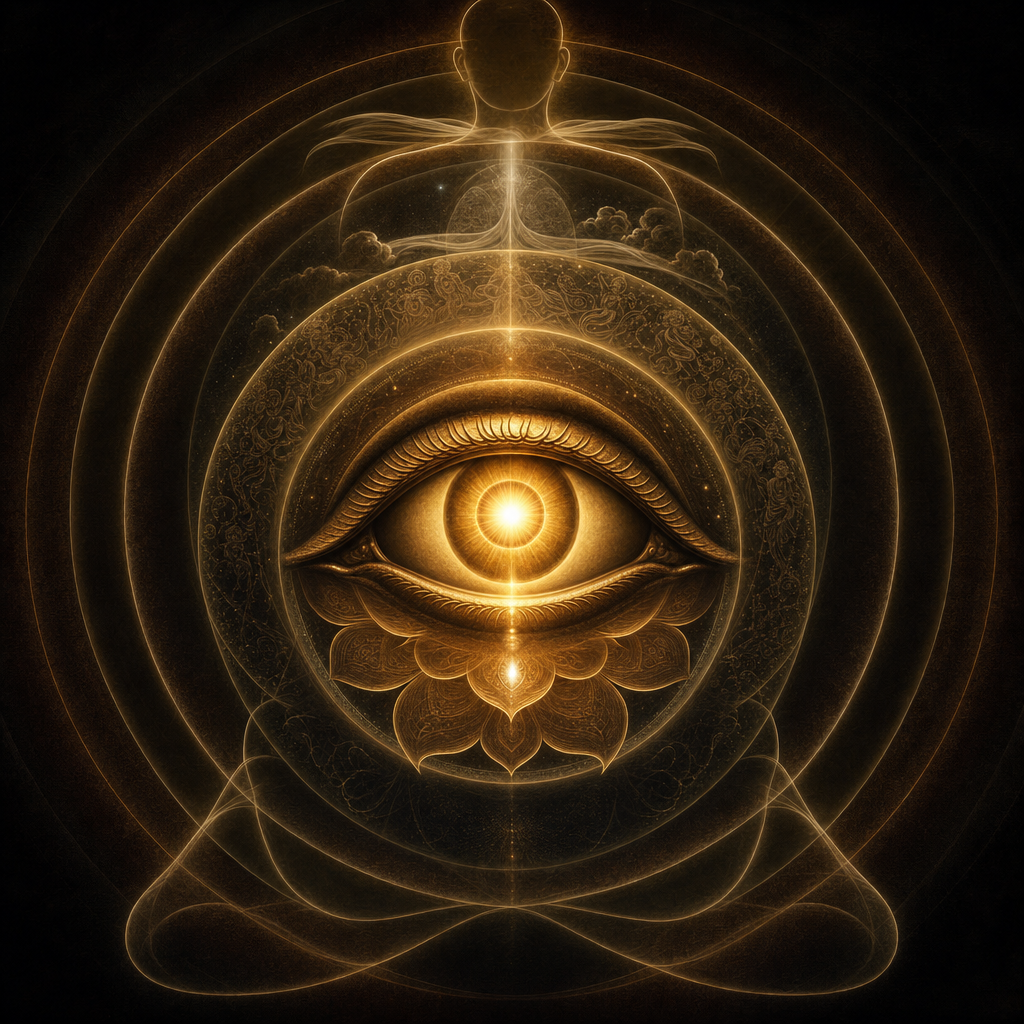
The Three States and Their Limits
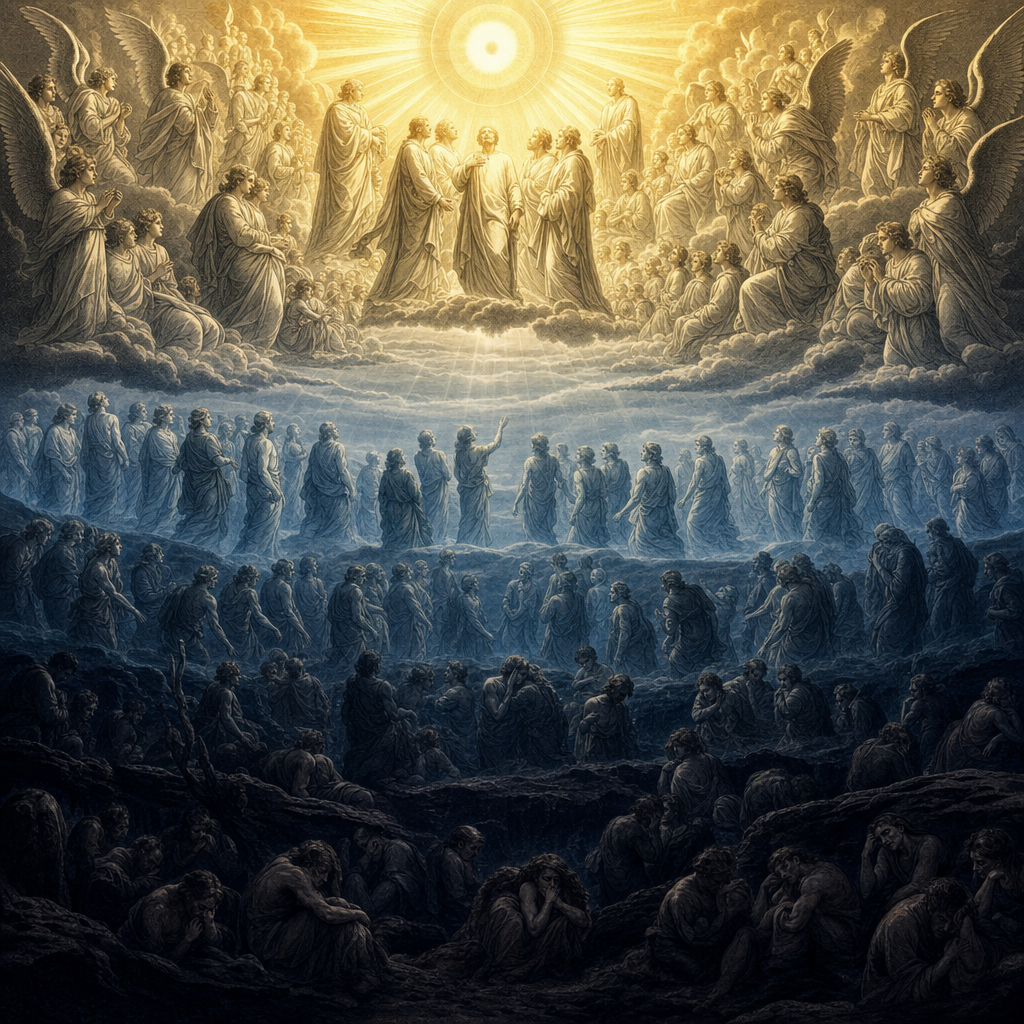
In waking, consciousness is turned outward, engaged with the world of gross objects through the five senses. In dreaming, consciousness is turned inward, engaged with the subtle objects it projects from its own reservoir of impressions and desires. In deep sleep, consciousness is turned neither outward nor inward; it rests in an undifferentiated bliss, aware of nothing — yet the deep sleeper returns from sleep having experienced refreshment, peace, and rest, which implies that some form of awareness was present even there, registering the absence of objects as pleasurable. The limitation of all three states is that none of them is the self: each is a particular configuration of experience that arises and passes, and the self is what was present through all of them without being identified with any.
The Silent Witness
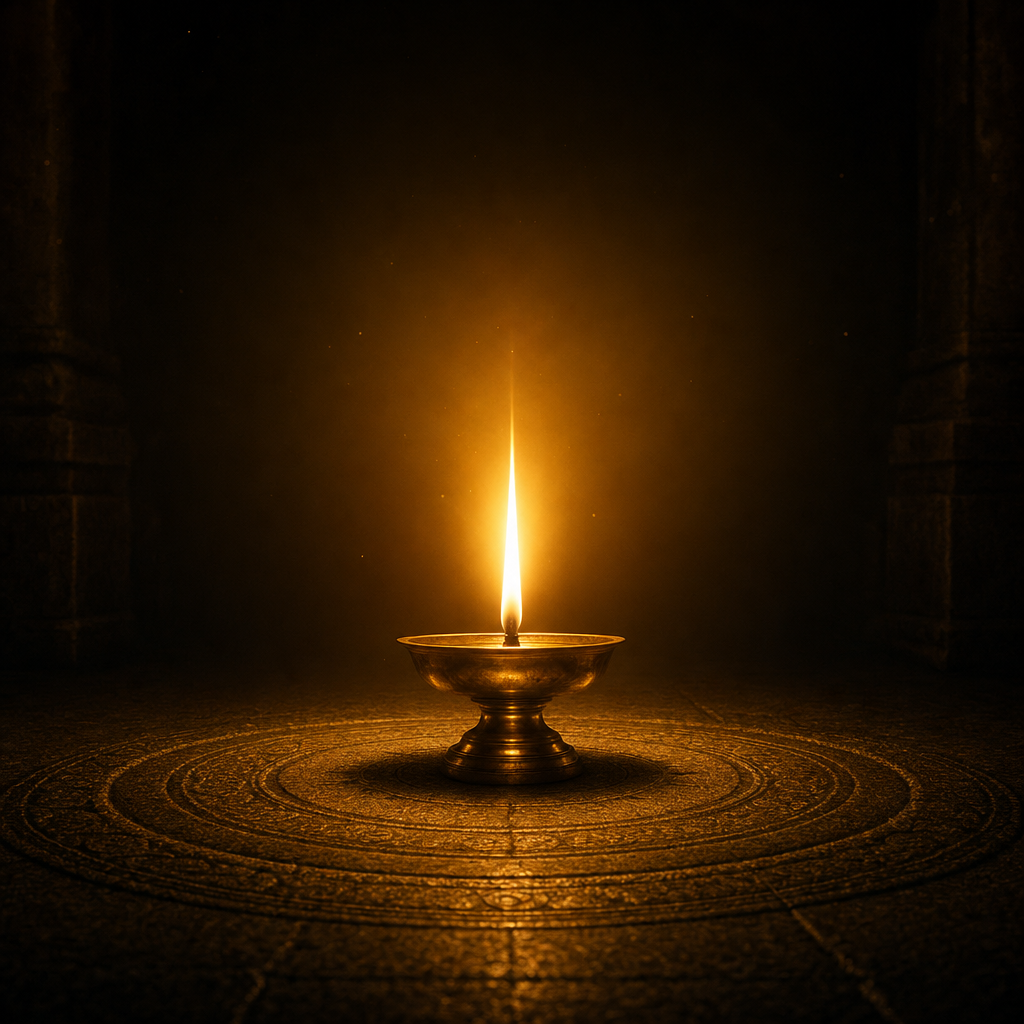
Turiya is the name the Mandukya gives to this silent witnessing presence — the consciousness that persists unchanged through waking, dreaming, and deep sleep without being modified by any of them. It is not a fourth state in addition to the three but the ground of all three: the ocean, of which waking, dreaming, and deep sleep are waves. Shankara's commentary on the Mandukya, drawing extensively on Gaudapada's Karika, emphasises that turiya is not something to be achieved or entered — it is already the case, always, the very selfhood that was present through all the apparent changes of state. The practice of recognising turiya is the practice of noticing what is invariant in all experience: the witnessing that is present now, in waking, as it was present in last night's dream, as it was present in the gap between waking and sleeping.
Turiyatita
The later Advaita tradition introduces a further term: turiyatita, "beyond the fourth." If turiya is described as the background of the three states, it might appear to stand over against them as a separate reality, a fourth thing in addition to the other three. But this would reintroduce duality. The liberating recognition, in the turiyatita teaching, is that there are not four states but one: waking, dreaming, and deep sleep are all nothing other than turiya appearing in different modulations, as waves are nothing other than water appearing in different forms. The liberated person does not live in turiya as in a special state; they live in waking, dreaming, and deep sleep as the one who knows that turiya is the only reality. The states continue; the identification with states has dissolved.
The Mandukya Upanishad with Gaudapada's Karika and Shankara's commentary on both is considered by many Advaitins to be the most philosophically concentrated statement of the Advaita teaching. The turiya doctrine is closely related to the AUM analysis in the Mandukya: A corresponds to waking, U to dreaming, M to deep sleep, and the silence after AUM to turiya. Shankara's commentary runs to nearly two hundred pages for a twelve-verse text.
Related Concepts