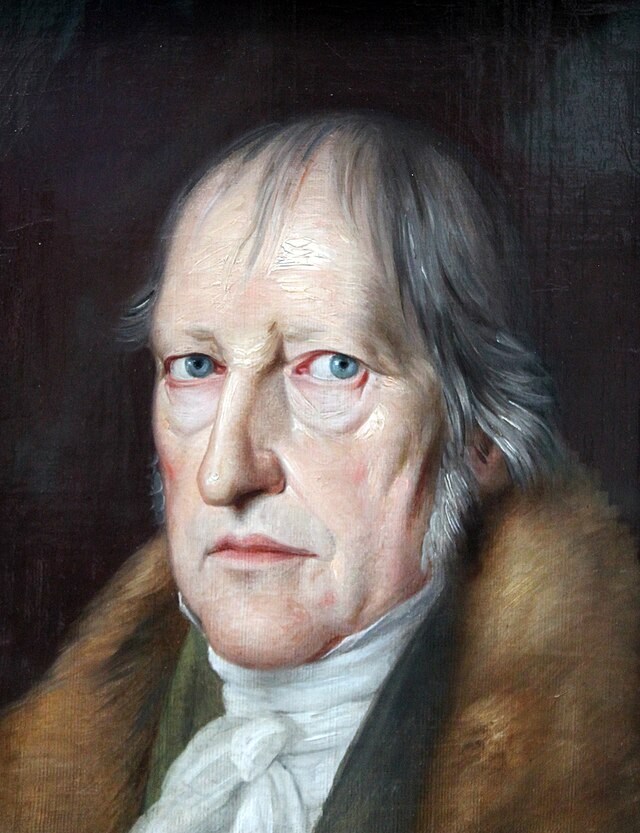
Symbolic Art: Form Overwhelmed by Content
Symbolic art — characteristic of ancient Egypt and the Orient — is the art of mystery and inadequacy. Spirit is present but has not yet found a sensuous form adequate to itself. The content is vast, cosmic, and indeterminate; the form reaches for it but cannot contain it. Egyptian pyramids and sphinxes are the paradigm: enormous, powerful, charged with spiritual significance, but unable to express clearly what that significance is. They are riddles — and the riddle, for Hegel, is the characteristic form of symbolic art: a question without a fully legible answer.
Classical Art: Perfect Adequacy
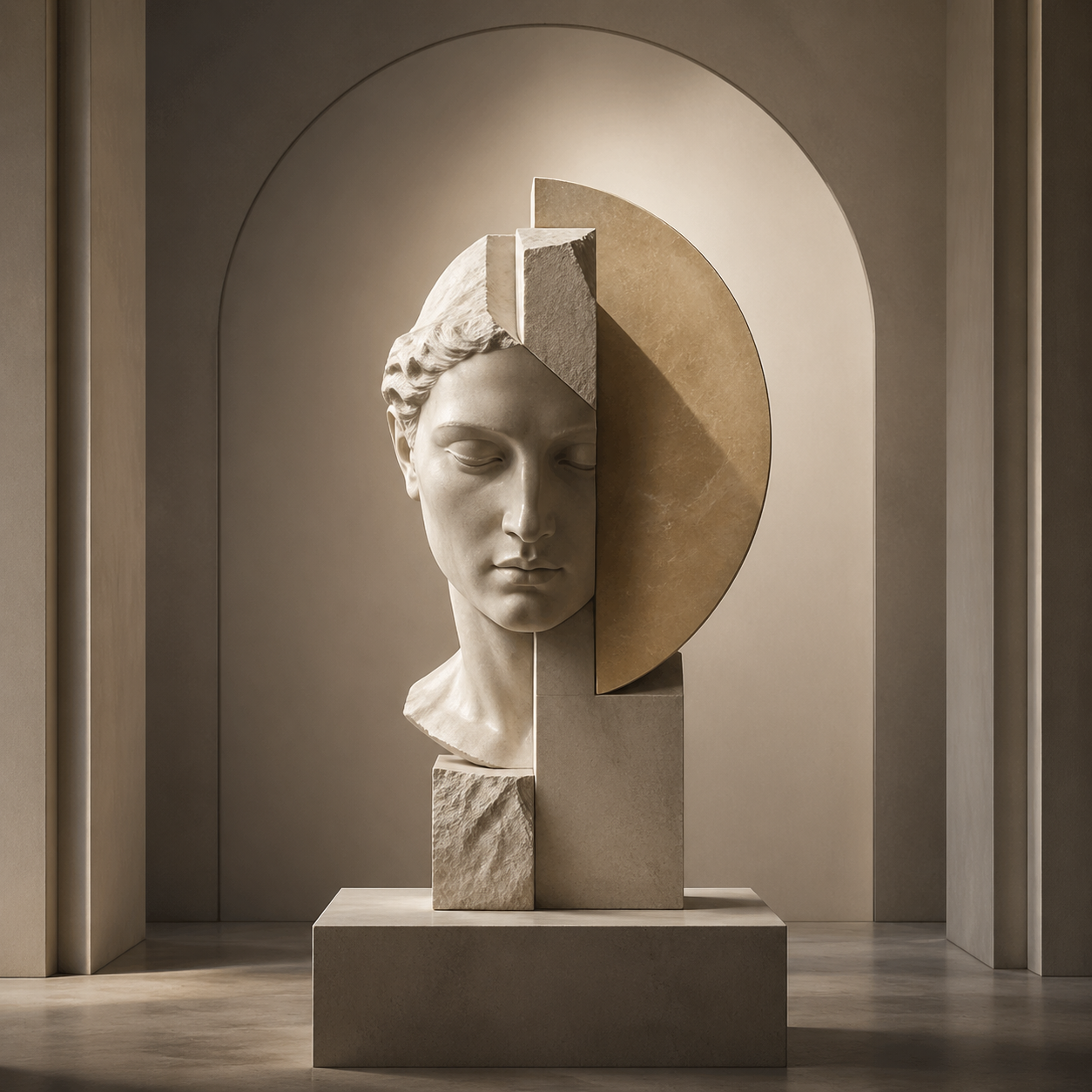
Classical art — Greek sculpture at its peak — achieves what no other art form achieves: the perfect adequacy of content and form. Spirit, in its classical moment, has found in the human form its ideal sensuous expression. The Greek gods, rendered in marble, are neither mysterious (like Egyptian symbols) nor inward (like Christian subjects): they are fully present in their sensuous form, serene, complete, the unity of the human and the divine made visible. This perfection is both the summit of art and the beginning of its limitation: when content and form are perfectly matched, there is nowhere further to go within that form.
Romantic Art: Content Overwhelms Form
Romantic art — the art of Christianity and modernity — inverts the symbolic: now the spiritual content is too rich and too inward to be adequately expressed in any sensuous form. The Christian subject — the Incarnation, the Passion, the inner life of the soul — cannot be fully contained in marble or mosaic. Paint allows greater interiority; music allows pure inwardness without spatial form at all. Romantic art strains against its sensuous medium, using it but also overflowing it. This is why, for Hegel, painting, music, and poetry are the characteristic Romantic arts, and why they tend toward the dissolution of their own sensuous form.
Hegel's three art forms map onto three historical periods but are not purely historical; they are also logical types that can appear within any era. A contemporary work can be symbolic, classical, or romantic in Hegel's sense regardless of when it was made. This has made the schema useful for art criticism beyond the historical periods Hegel had primarily in mind.
Related Concepts