The Silenus Figure
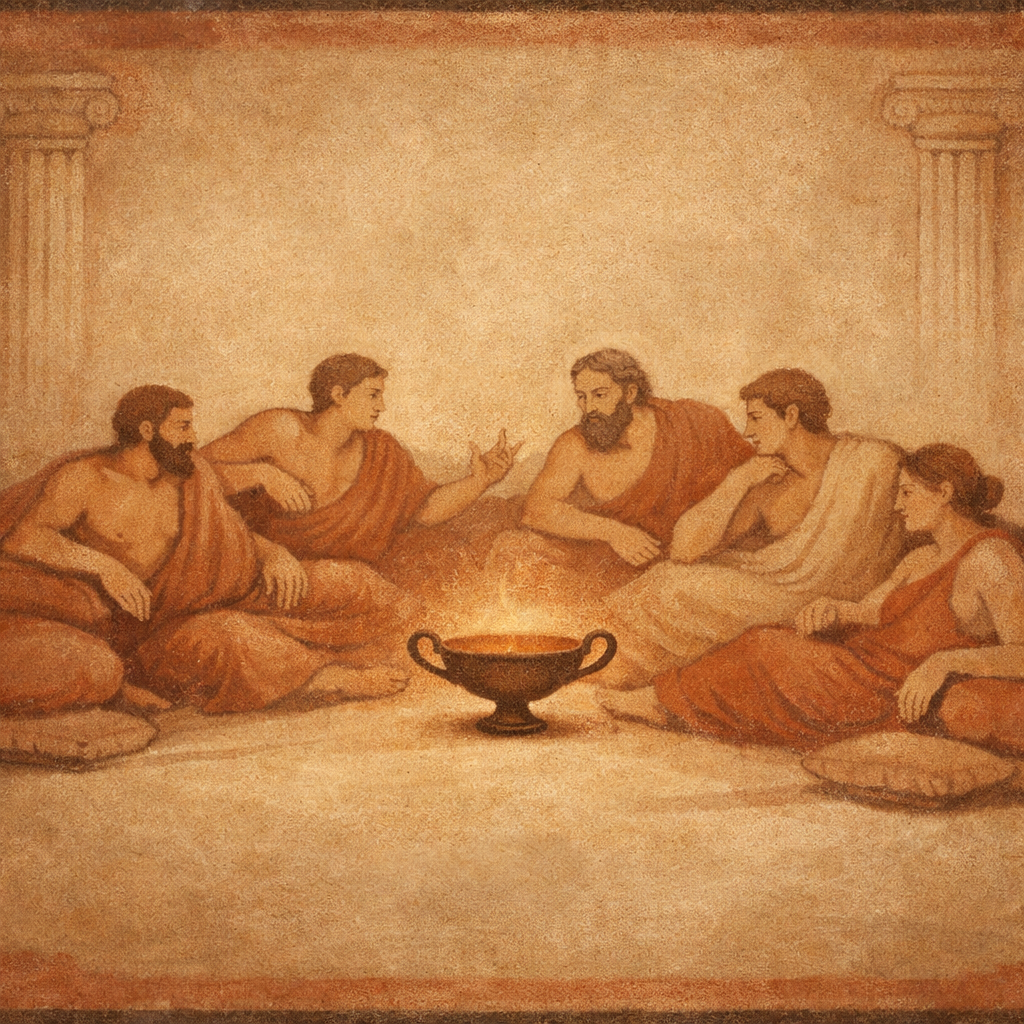
Alcibiades reaches for an image: Socrates is like the carved Sileni sold in Athenian workshops — squat, ugly figurines of a satyr, but designed to be opened, and containing inside them golden images of the gods. Marsyas the satyr could enchant people with his flute; Socrates enchants people with his words alone, requiring no instrument. The comparison is deliberately paradoxical: Socrates is physically unattractive, poorly dressed, walks barefoot, and claims to know nothing. Yet the effect of his conversation is unlike anything else in human experience.
he is exactly like the busts of Silenus, which are set up in the statuaries' shops, holding pipes and flutes in their mouths; and they are made to open in the middle, and have images of gods inside them.
The Failed Seduction
Alcibiades then tells the story of his attempt to seduce Socrates. He arranged to be alone with him, to wrestle with him, to share his bed. Each time, Socrates was friendly, perfectly at ease, and entirely unmoved. Nothing happened. The humiliation was profound: Alcibiades had offered what he believed was his greatest gift — his beauty and youth, prized above all in Athens — and Socrates had, in effect, found it uninteresting. The encounter left Alcibiades feeling that Socrates had contemned what all others most desire, and this imperviousness was itself a kind of divine rebuke.
The Frozen Philosopher
Alcibiades closes with a scene from the military campaign at Potidaea. One morning Socrates became absorbed in a philosophical problem and stood motionless, thinking, from dawn through noon and into the night. Other soldiers noticed, brought out their mats, and slept in the open to watch him. In winter, when others suffered from the cold, he walked barefoot on the ice and wore the same thin cloak. He was never drunk, though he could outlast anyone at the symposium table. He was wounded in battle and never fled. This is not the portrait of an ascetic or a mystic — it is of a man whose inner life simply commanded a different relationship to the body than ordinary people have.
There he stood until the following morning; and with the return of light he offered up a prayer to the sun, and went his way
Alcibiades's speech appears in Chapter 7 of the Symposium and is unique in the Platonic corpus: it is not a philosophical argument but a portrait. It has been a touchstone for every subsequent attempt to understand what kind of person Socrates actually was.
Related Concepts