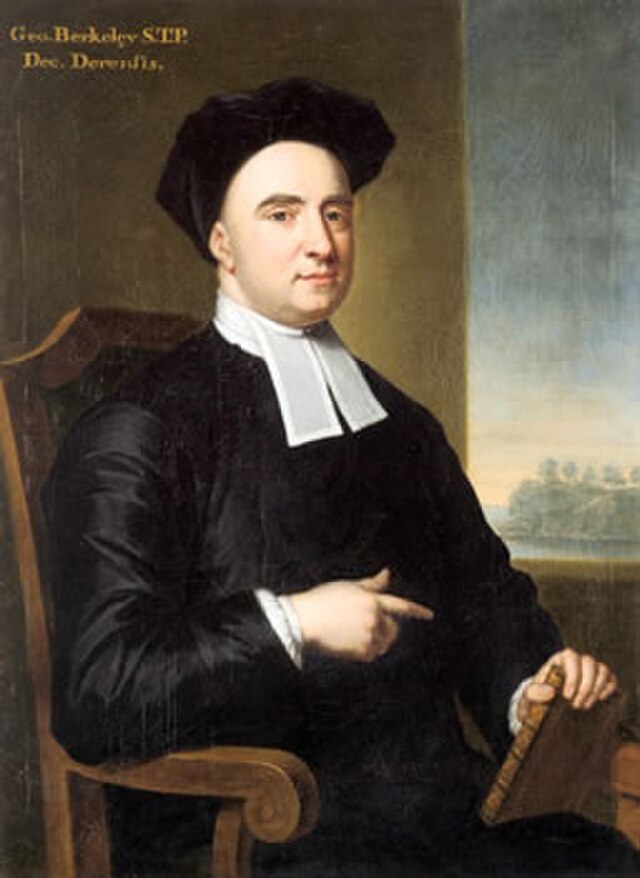
Heat and Pain
The First Dialogue opens the assault where it is hardest to resist. Philonous asks Hylas whether a very great heat is not a very great pain — and pain, both agree, cannot exist in an unperceiving thing. The material fire, then, does not contain the heat we feel; the heat is a sensation, and sensations live only in minds.
But is not the most vehement and intense degree of heat a very great pain?
The Argument Generalized
What works for heat works for the rest. Tastes reduce to pleasure and disgust, sounds to vibrations felt, colours to appearances that shift with light and eye. The so-called secondary qualities are conceded to be mind-dependent almost at once. Berkeley’s decisive move is to show that the primary qualities — extension, figure, motion — cannot be prised loose from them, since we cannot even conceive a shape without some colour or a body without some perceptible bulk.
From Sensation to Idealism
Hylas retreats position by position, and each retreat is irreversible. If every sensible quality is in the mind, then the sensible thing — which is nothing but its qualities gathered together — is in the mind too. The dialogue form makes the descent feel inevitable: the reader, having granted the first small step about heat, finds the whole material world dissolved by the same reasoning.
The argument from heat and pain opens the First Dialogue Between Hylas and Philonous (1713).
Related Concepts