A New Discipline
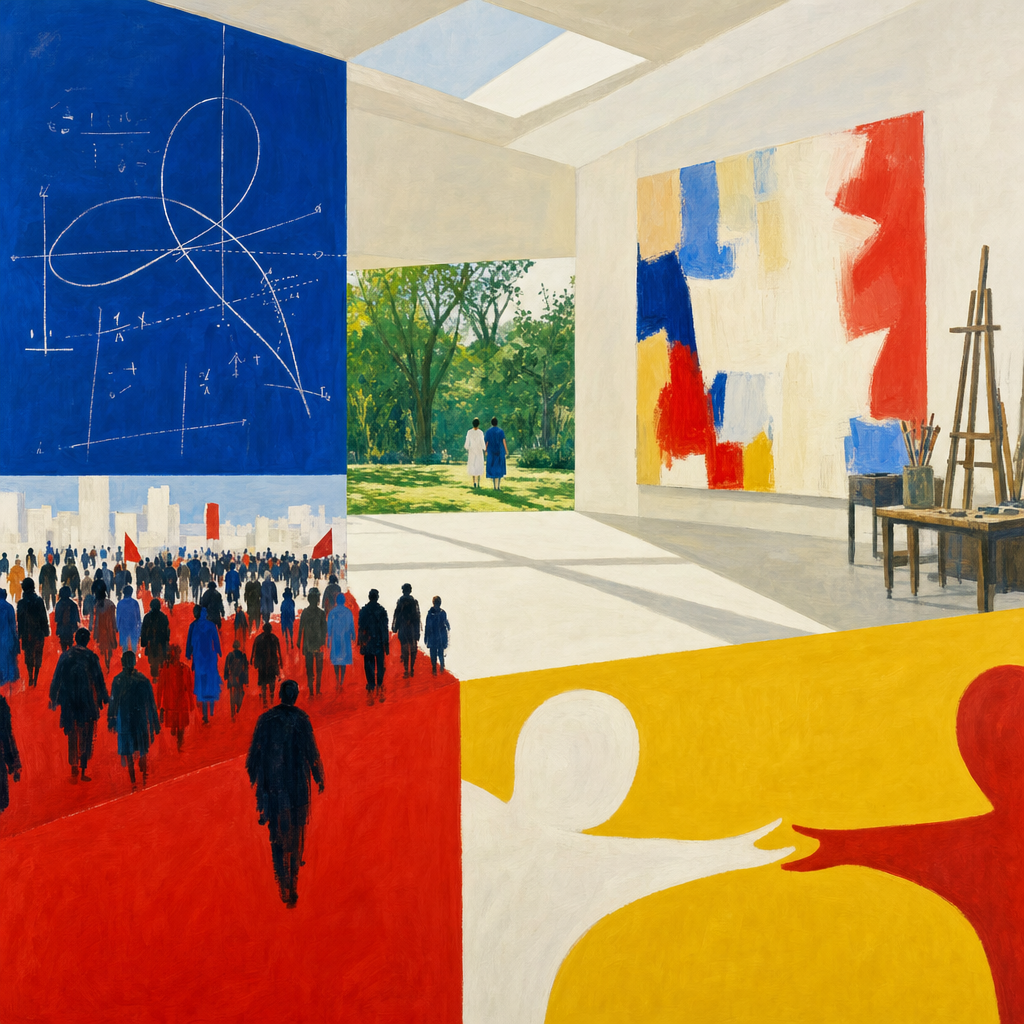
Ibn Khaldun opens the Muqaddimah by identifying a fundamental flaw in existing historical writing: historians record events without understanding their causes, and so they are unable to distinguish the plausible from the implausible, the typical from the exceptional. What is needed is a philosophy of history — a theoretical framework that explains why societies develop as they do. This framework Ibn Khaldun calls ʿilm al-ʿumrān: the science of human civilisation, or the science of culture. It is, he insists, an entirely new discipline, not derived from existing Islamic philosophy or theology.
The Social and Economic Foundations
The Muqaddimah contains some of the earliest systematic economic analysis in any tradition. Ibn Khaldun argues that the value of commodities derives from the labour embodied in them; that population density and the division of labour drive economic development; that excessive taxation destroys the economic base it relies on; and that luxury consumption, while enjoyable, is a symptom of the decay of social solidarity rather than a sign of genuine civilisational health. These insights anticipate Adam Smith's division of labour, the labour theory of value later developed by Ricardo and Marx, and the Laffer curve in public finance.
The Limits of Reason
Despite the systematic ambition of the Muqaddimah, Ibn Khaldun is acutely aware of the limits of the science he is founding. Human affairs are too complex and variable to be reduced to mechanical laws; the historian-sociologist can identify tendencies, cycles, and typical patterns, but not predict specific outcomes. The science of civilisation is probabilistic, not deterministic. Moreover, Ibn Khaldun acknowledges that divine providence can override natural causes — the career of the Prophet Muhammad, for example, cannot be explained by ʿaṣabiyya alone. The science operates within the natural order; what transcends that order lies beyond its scope.
Ibn Khaldun's claim to have founded a new science was taken seriously by later Islamic scholars and, from the nineteenth century onward, by Western social scientists who rediscovered the Muqaddimah. Arnold Toynbee called him "the greatest work of its kind that has ever yet been created by any mind in any time or place."
Related Concepts