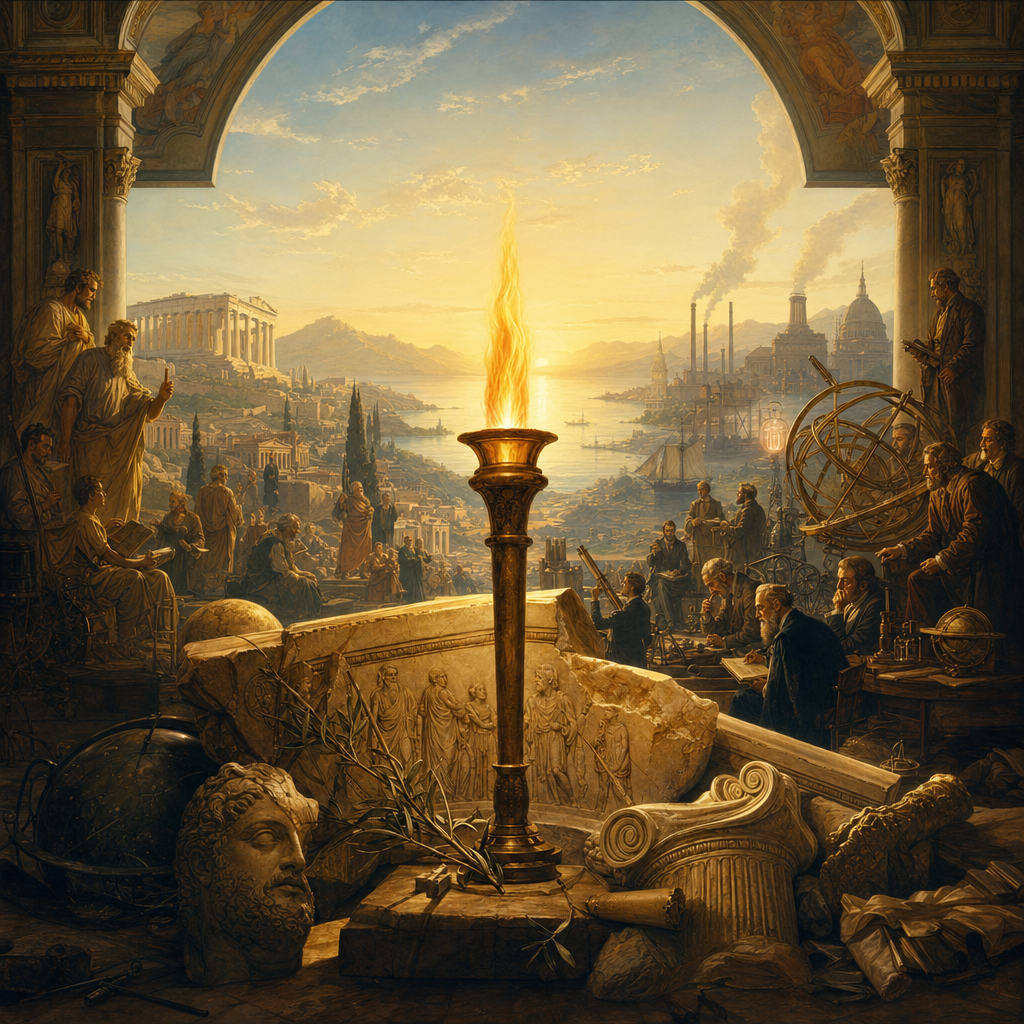
The Four Procedures
Science (the paradigm of which is mathematics) produces truths through the axiomatic capture of infinity — the creation of new mathematical objects and concepts that exceed any existing encyclopaedic knowledge. Art produces truths through the sensible form: a genuine artwork is a truth procedure in which a new configuration of the sensible opens up possibilities of experience that were previously unavailable. Politics — not the administration of the state but the rare event of genuine emancipatory rupture — produces truths about the capacity of humanity for collective self-determination. Love — not mere sentiment or biological attraction but the commitment of two people to thinking the world from the perspective of their difference — produces truths about what it means to exist as a sexed being and to build something with another.
Generic Truths
What makes these procedures producers of truth, rather than merely of knowledge or opinion, is their generic character. A truth is not a particular claim that can be verified by the existing procedures of knowledge; it is an infinite totality that no finite piece of knowledge can exhaust. The mathematical continuum, the truths of political revolution, the truth of a great artwork — none of these can be fully captured by any existing catalogue of information. They are generic: they cut across all the defined categories of knowledge without belonging to any of them. This is why truth is always excessive relative to knowledge — it is the infinity that no finite knowledge can contain.
Philosophy as the Thinking of Compossibility
Philosophy does not produce truths in Badiou's sense. Its task is rather to receive and think the truths produced by its four conditions, to affirm their existence, and to think their compossibility — the fact that mathematical, artistic, political, and amorous truths are all genuine forms of truth and that their co-belonging constitutes the epoch of philosophy. When philosophy is "sutured" to a single condition — when it reduces itself to the handmaiden of mathematics (logical positivism) or of art (Heideggerian poetics) or of politics (Marxist-Leninist dialectical materialism) — it loses its own specificity and distorts the condition it has attached itself to. Philosophy's vocation is to maintain the space in which all four conditions can be thought together.
The doctrine of the four truth procedures is introduced in Manifesto for Philosophy (1989) and developed in Conditions (1992) and Infinite Thought (2003). The seminar series Court Traité d'ontologie transitoire (1998) contains Badiou's most detailed analyses of specific artistic and political truth procedures.
Related Concepts