The Common Form, Four Expressions
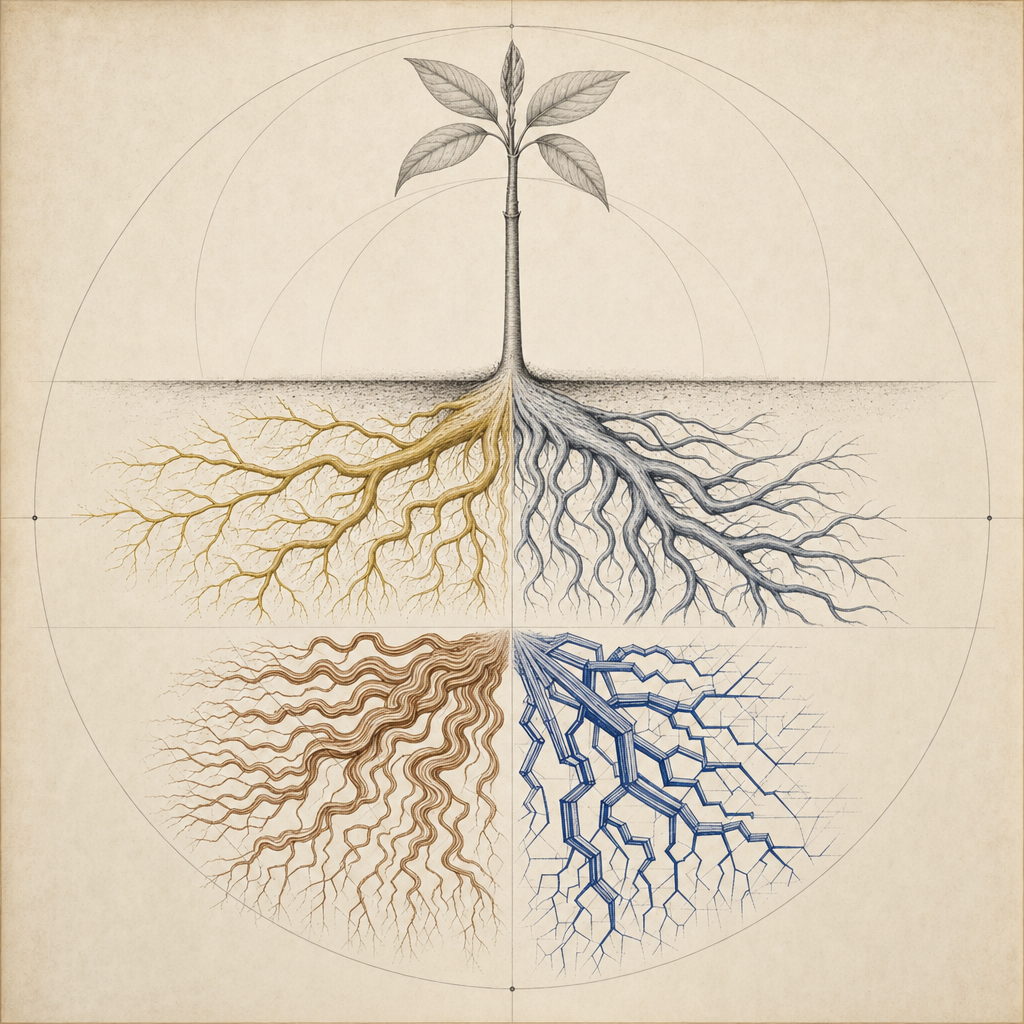
Leibniz invoked the principle of sufficient reason as a single self-evident axiom governing all of reality. Kant tried to give it a more restricted transcendental grounding. Schopenhauer argues that both were wrong to treat it as unitary. The common logical form — nothing is without a reason why it is rather than not, or is thus rather than otherwise — covers four different and irreducible kinds of necessary connection, each operative within a different class of objects. Conflating them is the source of persistent philosophical confusion, including Kant's paralogisms and the ontological argument for God's existence.
Method: Roots, Not Derivations
The title speaks of "roots" deliberately. Schopenhauer is not trying to derive the four forms from a single higher principle — that would be to treat them as a unified law, which is precisely what he denies. Instead, he traces each form back to the specific class of representations in which it operates: objects of outer experience (causality), concepts and propositions (logical grounds), mathematical objects (grounds of being), and actions (motivations). Each root is irreducible to the others.
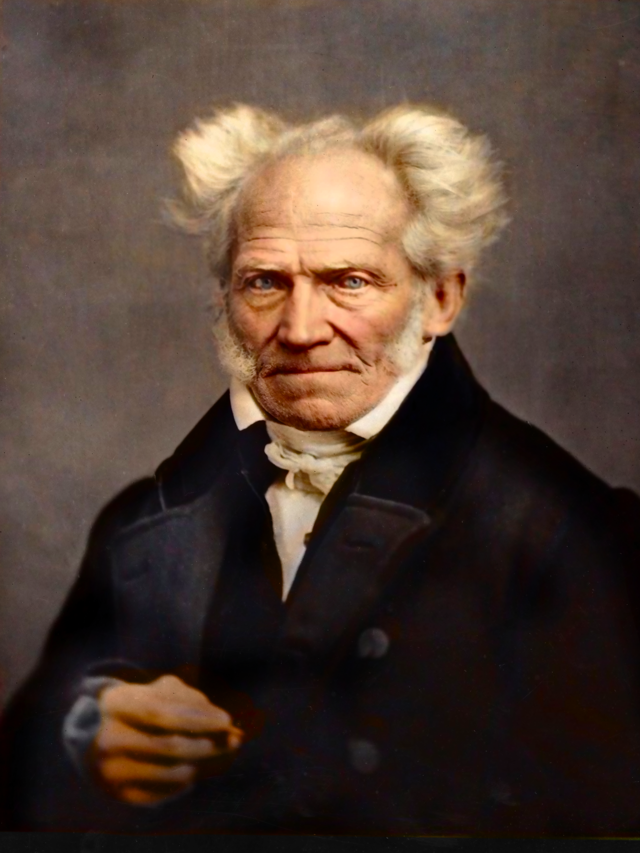
The first edition of On the Fourfold Root appeared in 1813 as Schopenhauer's doctoral dissertation at Jena. A substantially revised and expanded edition appeared in 1847, which Schopenhauer regarded as the correct version. The work is indispensable for understanding the epistemological foundations of The World as Will and Representation.
Related Concepts