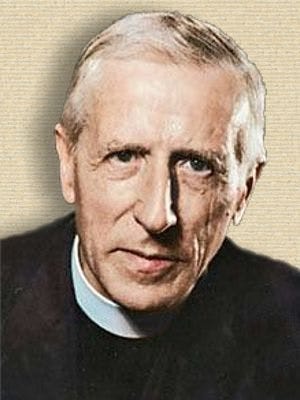
The Compression of the Noosphere
Teilhard observes that humanity's situation is physically unique: we live on the surface of a sphere, and population growth and communication intensification are compressing us toward each other in a way that has no biological precedent. This is not merely demographic pressure but evolutionary pressure — the noosphere is being forced toward higher integration. The same process of complexification that drove the emergence of multicellular organisms from single cells is operating at the scale of the entire human species.
Union Differentiates
Teilhard insists on a principle that runs counter to many fears about globalisation: in true union, differentiation is not suppressed but enhanced. The unity toward which planetisation moves is not uniformity — a grey homogeneous mass of interchangeable humans — but a unity that perfects and preserves the individuality of each person. Just as cells in an organism are more complex and specialised than free-living cells, persons in a fully integrated noosphere will be more themselves, more unique, more deeply personal, not less.
Love as the Energy of Convergence
The engine of planetisation is love — understood not sentimentally but cosmologically as the affinity of beings for each other, the tendency of consciousness to seek union with other consciousness. Teilhard argues that love is a form of energy, as real as heat or gravity, that draws persons together. At the planetary scale, love is the force that will ultimately complete the convergence of the noosphere — and it is this cosmological love that Teilhard identifies with the love revealed in the Gospel and concentrated in the Omega Point.
"Planetisation of Mankind" (1945) is among the central essays collected in The Future of Man (1959). The concept of union-differentiates draws on Teilhard's general metaphysics of personalisation, developed most fully in The Phenomenon of Man.
Related Concepts