The Original Nature
In the beginning there were three sexes: male (descended from the sun), female (from the earth), and androgynous (from the moon, which partakes of both). Each being was round, with four hands, four feet, one head with two faces looking in opposite directions, and two sets of genitals. They moved by rolling — eight limbs making rapid somersaults — and their strength was prodigious. This power led to hubris: they attempted to scale Olympus and challenge the gods.
the original human nature was not like the present, but different. The sexes were not two as they are now, but originally three in number; there was man, woman, and the union of the two, having a name corresponding to this double nature, which had once a real existence, but is now lost, and the word 'Androgynous' is only preserved as a term of reproach.
The Punishment
Zeus found a solution more elegant than destruction. He cut each being in two, instructing Apollo to turn the face toward the wound so that mortals would always contemplate the scar of their division, and to heal the skin over the cut. The result was the human form as we now know it: upright, two-legged, and forever incomplete. Zeus warned that if the halves continued to misbehave he would cut them again, leaving them to hop about on a single leg. The gods needed mortals to sacrifice and worship — annihilation would serve no one.
The Longing for Wholeness
Each half immediately sought its other half and clung to it, refusing to eat or work apart, until the pair began dying of neglect. Zeus again intervened, moving the genitals to the front so that the reunion could be physically consummated and the two could part again to live. But the myth's deeper claim is not about physical desire. The longing each of us feels for another person is the memory of a prior wholeness. The beloved is not just attractive — they are, in some obscure but felt sense, what we were before.
Each of us when separated, having one side only, like a flat fish, is but the indenture of a man, and he is always looking for his other half.
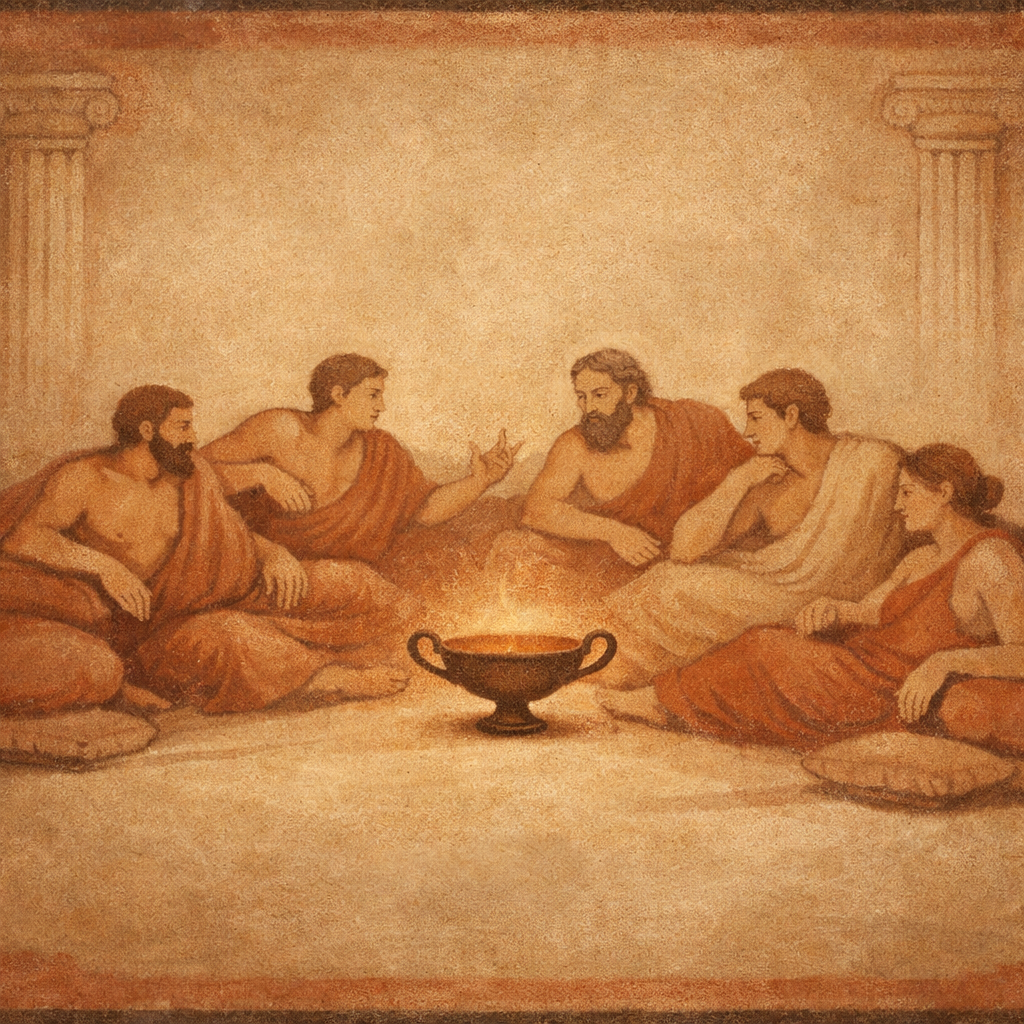
Aristophanes's myth appears in Chapter 4 of the Symposium. It is the source of the popular expression 'other half' and remains the most influential piece of philosophical writing about romantic love in Western culture.
Related Concepts