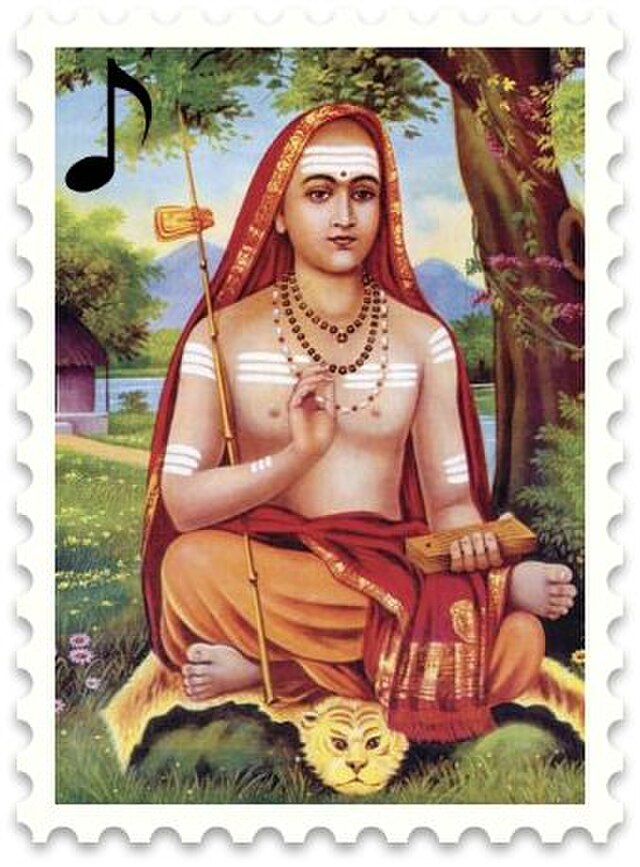
The Nature of Jivanmukti
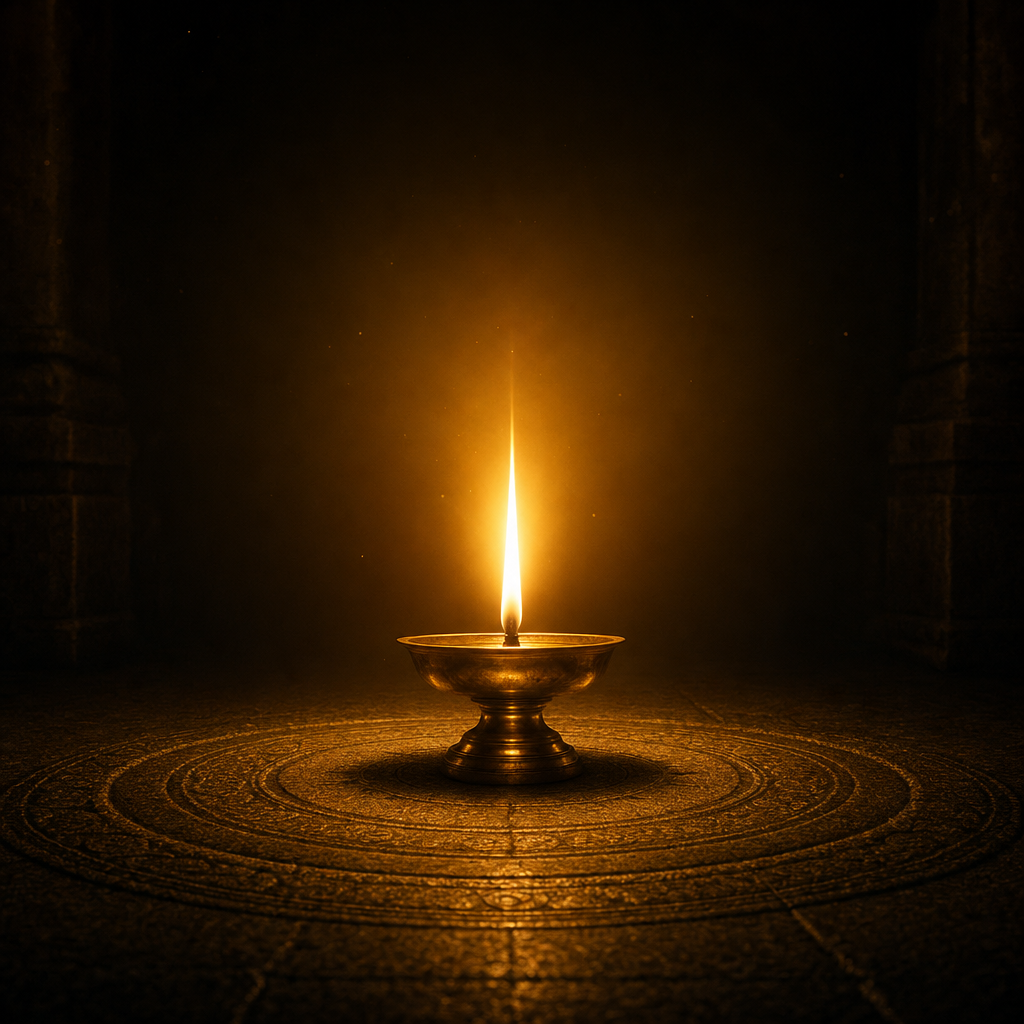
The jivanmukta — the one liberated while living — has achieved the complete dissolution of the false sense of individual selfhood through the recognition of identity with Brahman. This recognition is not a changed state of consciousness but the removal of a superimposed state: the clarity that results when the distorting medium of ignorance is burnt away by knowledge. The jivanmukta continues to eat, move, speak, and apparently act as other people do — but without the inner identification that would constitute bondage. They are, as the Gita's image has it, like a lamp in a windless place: perfectly still in themselves, unaffected by the sensory and emotional weather that still affects the body-mind they inhabit.
The Sthitaprajna
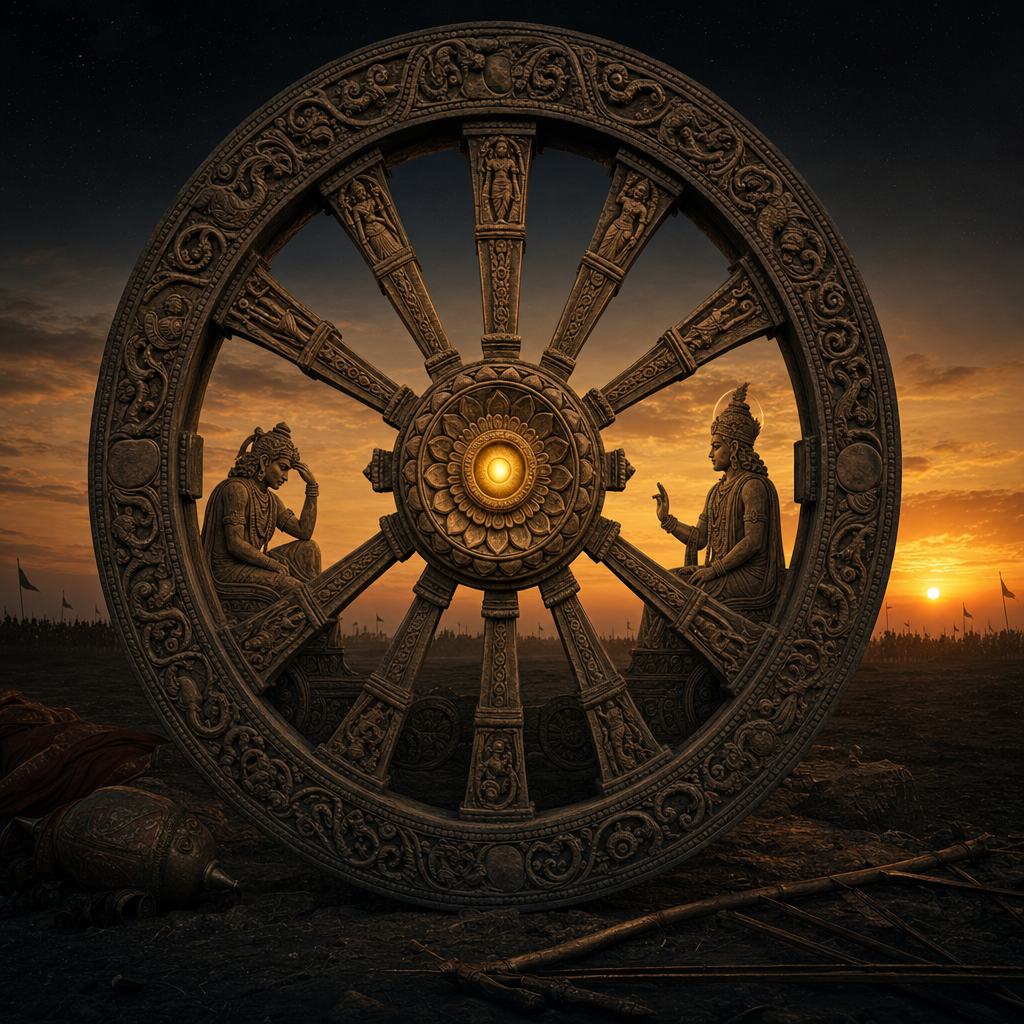
Shankara reads the Gita's portrait of the sthitaprajna — the person of stable wisdom — as precisely a description of the jivanmukta. When Arjuna asks Krishna what marks the person of stable wisdom, how they sit, how they move, how they speak, the answer builds a portrait not of a person who has suppressed their faculties or retreated into non-engagement, but of one whose engagement with the world is no longer driven by craving or aversion. They are content in themselves; they are not agitated by sorrow or elated by pleasure; they are free from desire, fear, and anger. These qualities are not virtues to be cultivated but the natural expression of a self that knows it lacks nothing.
After Liberation
The question of what happens to the liberated person at death — videhamukti, liberation at the dissolution of the body — is, for Shankara, in a sense a non-question. The jivanmukta was never in bondage once knowledge arose; their continued embodiment was not bondage but the natural exhaustion of prior action's momentum. When the body finally ceases, there is no person for whom something happens, since the person was already dissolved at liberation. What persists is not an individual soul but the unchanging Brahman that was always the only reality — the same Brahman that was always there, now no longer even apparently concealed by a body it was never actually identified with.
The doctrine of jivanmukti is implicit throughout Shankara's Gita and Upanishad commentaries and becomes an explicit topic of the later Advaita tradition, most fully developed in the Jivanmuktiviveka of Vidyaranya (14th century). The Yoga Vasishtha also explores it extensively. Questions about the relationship between jivanmukti and the continued body's karma remain a subject of Advaita philosophical discussion.
Related Concepts