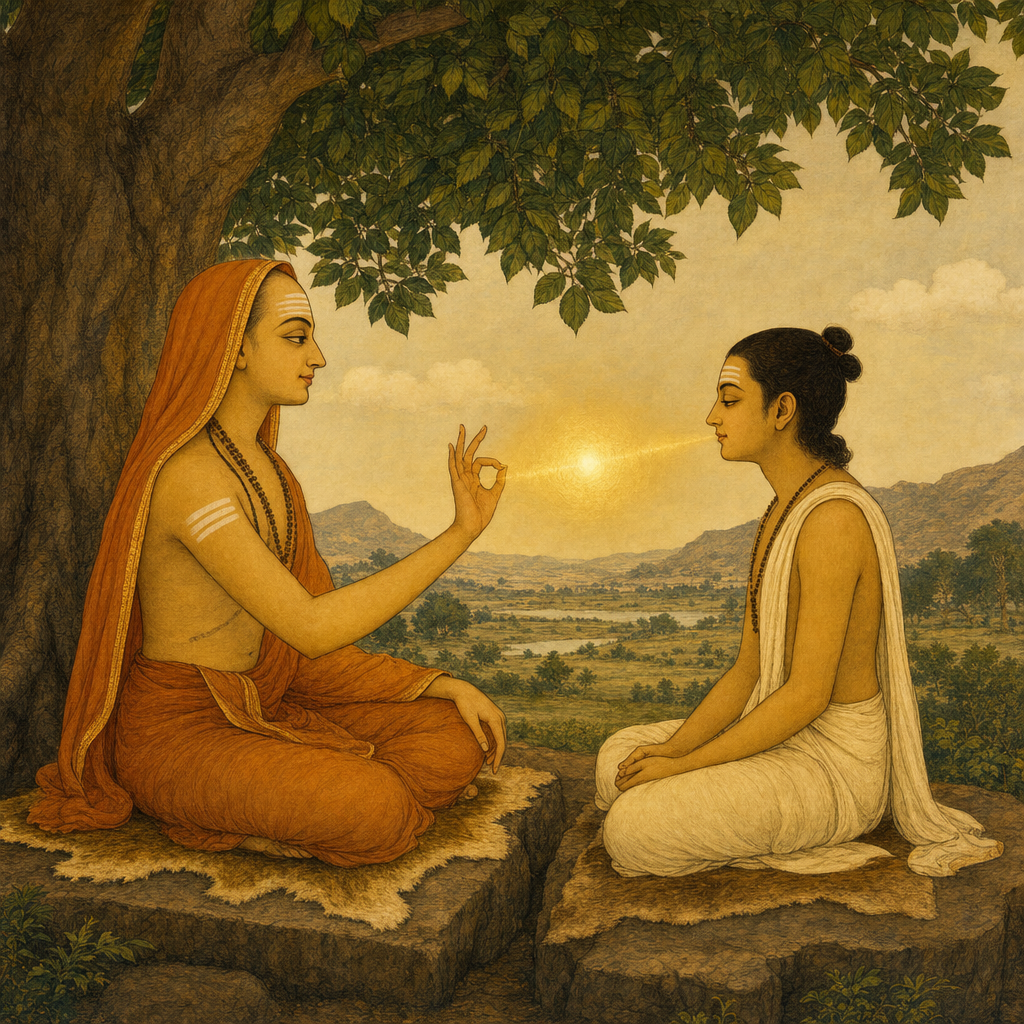
Shankara's commentary on the Bhagavad Gita — the great dialogue between the warrior Arjuna and his divine charioteer Krishna on the eve of the Kurukshetra war — is among the most influential interpretations of a text that has attracted more commentaries than perhaps any other in Indian philosophy. Shankara reads the Gita through the lens of Advaita Vedanta: the highest teaching is jnana, the knowledge that the individual self (atman) is identical with Brahman, the absolute. Action without the agent's identification with action — the famous doctrine of nishkama karma, desireless action — is understood as a discipline that prepares the intellect for the final recognition of non-duality. The commentary defends the supremacy of the path of knowledge over the paths of action and devotion, situating both as legitimate but subordinate approaches to a liberation that is ultimately a matter of understanding rather than doing or feeling.
This work isn't available here yet. In the meantime you can purchase a copy on Amazon, or check back later, as we are always adding books to our library.
As an Amazon Associate we earn from qualifying purchases.