Beneath the Warring Doctrines
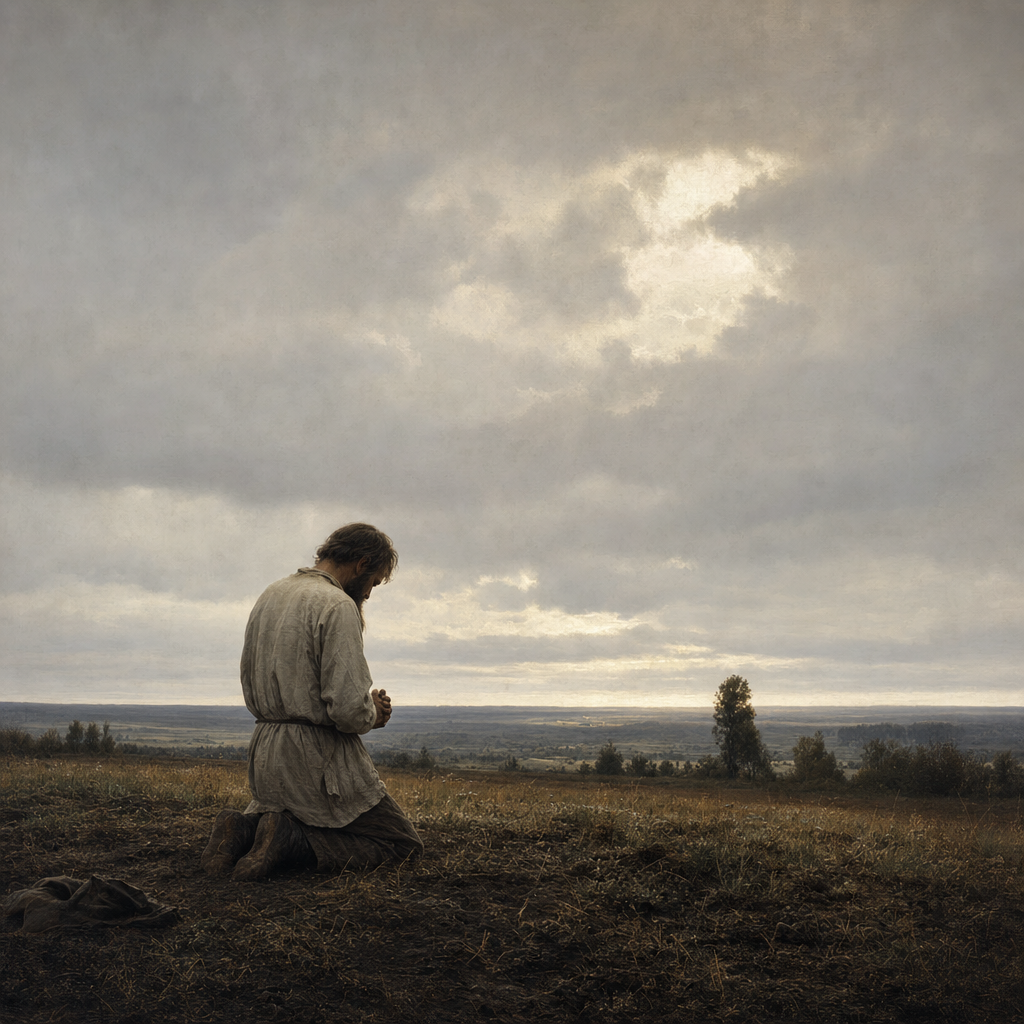
The doctrines of the world's religions cancel each other: they disagree about God, about the soul, about what salvation consists in and how it is achieved. But beneath the doctrines, James finds a consistent structure of experience. The differences are at the level of interpretation — the raw experience has a common shape that appears across traditions, cultures, and centuries.
Uneasiness and Its Solution
1. The uneasiness, reduced to its simplest terms, is a sense that there is _something wrong about us_ as we naturally stand.
2. The solution is a sense that _we are saved from the wrongness_ by making proper connection with the higher powers.
These two elements — diagnosis and cure — constitute the essence of religion as James finds it. The diagnosis is not primarily intellectual but experiential: a felt sense of inadequacy, incompleteness, or estrangement from what should be one's natural condition. The cure is equally experiential: a felt sense of relief, reconnection, and empowerment that comes through prayer, surrender, or mystical contact.
The Pragmatic Vindication
What can philosophy say about the truth of this experience? James is careful. The religious experience is real as an experience; its effects on character and conduct are measurable; but whether it correctly represents a supernatural reality is a further question that experience alone cannot settle. What it does show is that there is "something more" — that the ordinary field of consciousness is not the whole of what shapes our lives. For pragmatism, this is enough: the religious hypothesis has cash-value, and the will to believe in it is not irrational.
The concluding analysis of the common nucleus of religion appears in Lecture XX of The Varieties of Religious Experience (1902). The formulation of "uneasiness and its solution" is James's single most often-quoted characterisation of religion.
Related Concepts