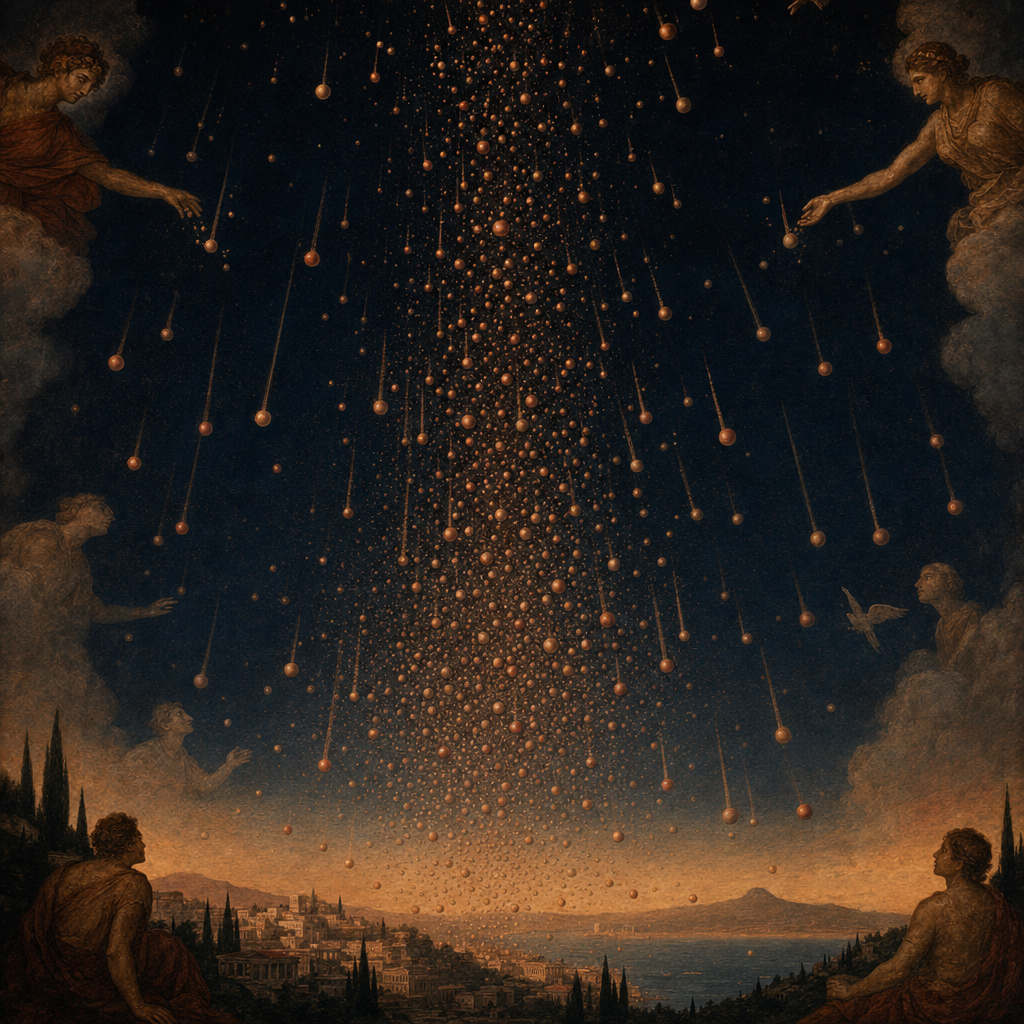
The Argument from Infinity
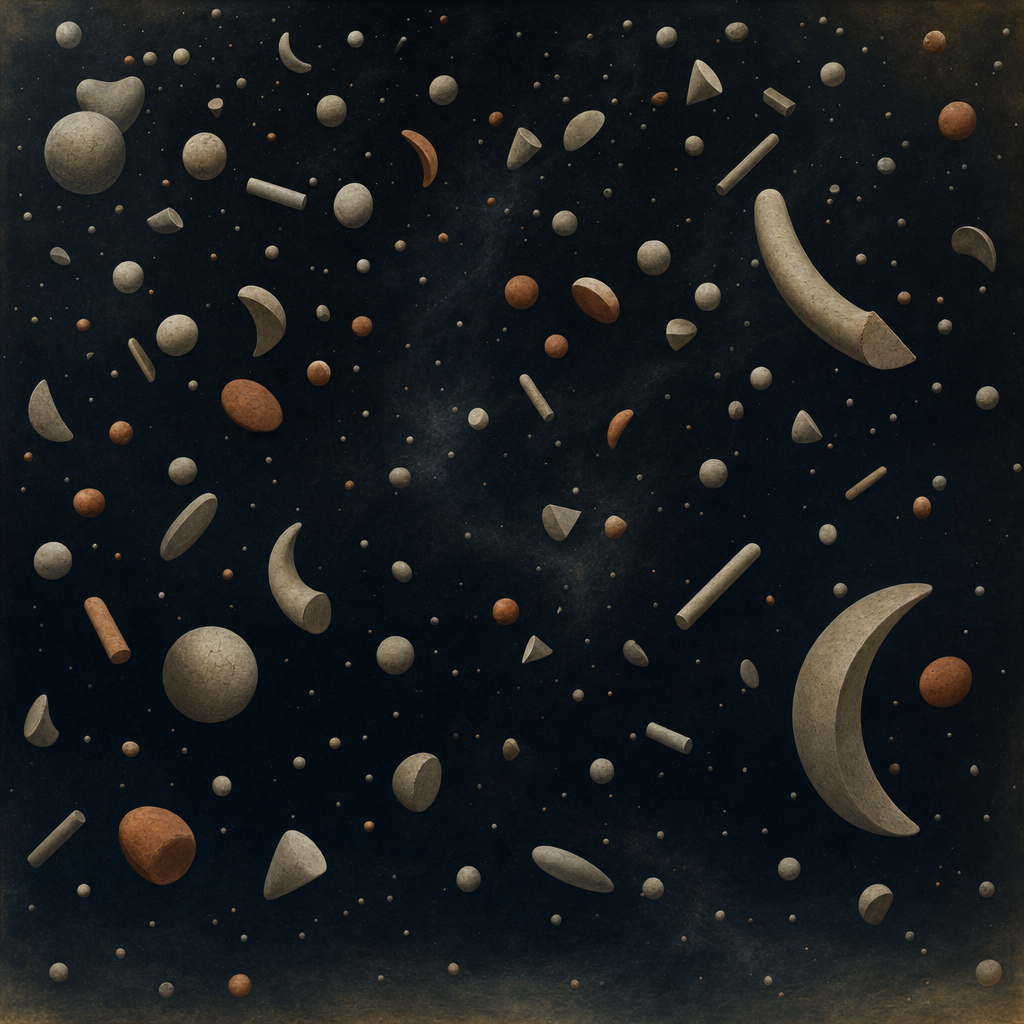
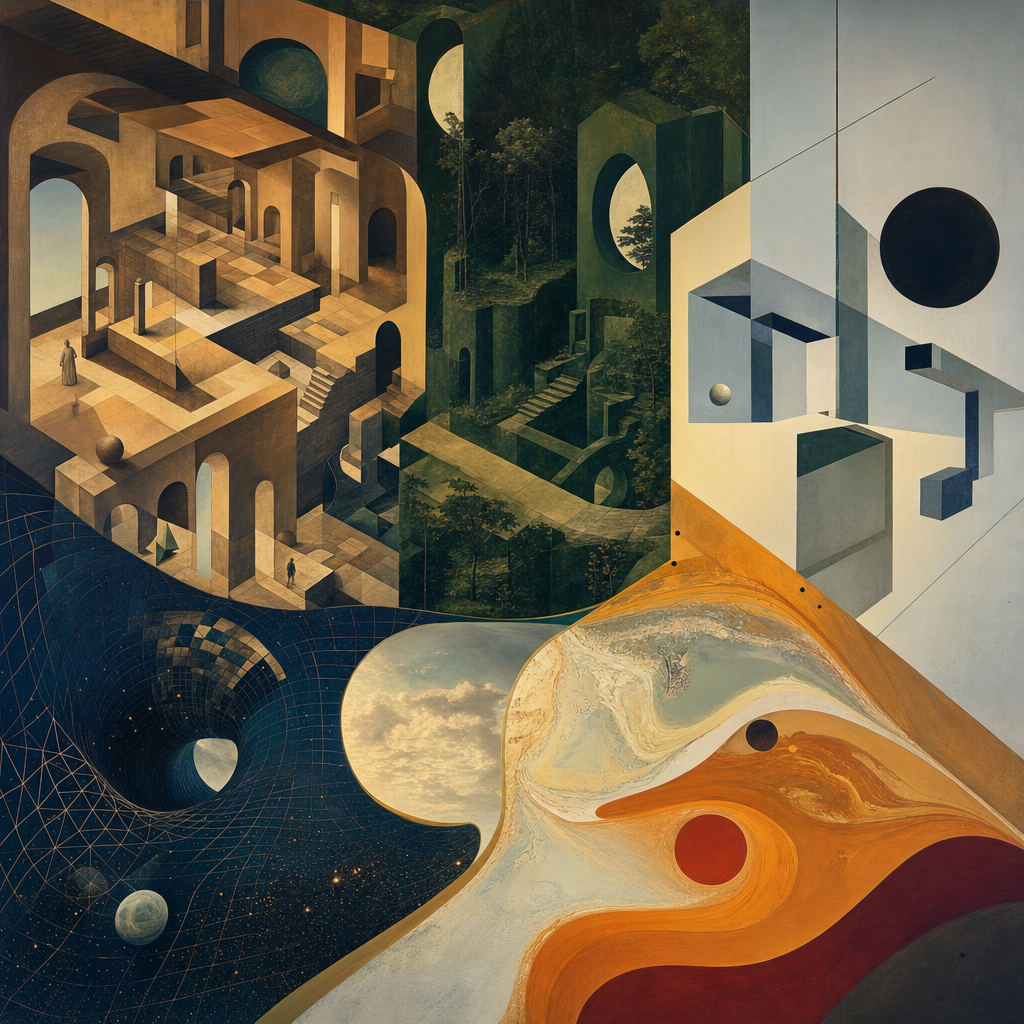
Epicurus argues that the universe — matter and void — is boundless in extent. If matter is infinite and void is infinite, then the number of possible atomic combinations is also infinite. It follows that world-forming aggregations must occur not once but countless times, across the infinite extent of the void. Some of these worlds will be similar to ours — perhaps very similar, with similar plants and animals and rational beings — others will be radically different or hostile to life. No single world, including ours, occupies any privileged position in this infinite manifold: we are one outcome among an unlimited number.
The Therapeutic Consequence
The infinity of worlds is not merely a cosmological curiosity for Epicurus — it is philosophically liberating. If our world is one among infinitely many, formed by natural processes without divine design, then it is not the object of special providential care. The events of human history — wars, plagues, earthquakes — are not divine punishments or signs of cosmic attention to our species; they are the natural consequences of atoms doing what atoms do. This removes what Epicurus regards as one of the deepest sources of human anxiety: the belief that the cosmos is watching and judging us, that our sufferings are deserved and our fate predetermined.
Science and Humility
The plurality of worlds also functions as an antidote to intellectual arrogance. Our experience is confined to one world among infinitely many; the full range of natural possibilities vastly exceeds anything we can observe or imagine. Epicurus draws from this a characteristic epistemic humility: where multiple explanations of a phenomenon are consistent with the evidence, we should hold them all open rather than dogmatically selecting one. The infinite variety of possible worlds makes this humility appropriate not just for distant cosmological questions but for any domain where our evidence is limited and our imagination constrained by familiarity.
The argument for infinite worlds appears in the Letter to Herodotus and is developed by Lucretius in De Rerum Natura (Book II, 1048–1089). The theory was controversial in antiquity and anticipates modern cosmological multiverse hypotheses in its basic structure, though by entirely different routes.
Related Concepts