The Two Aphrodites
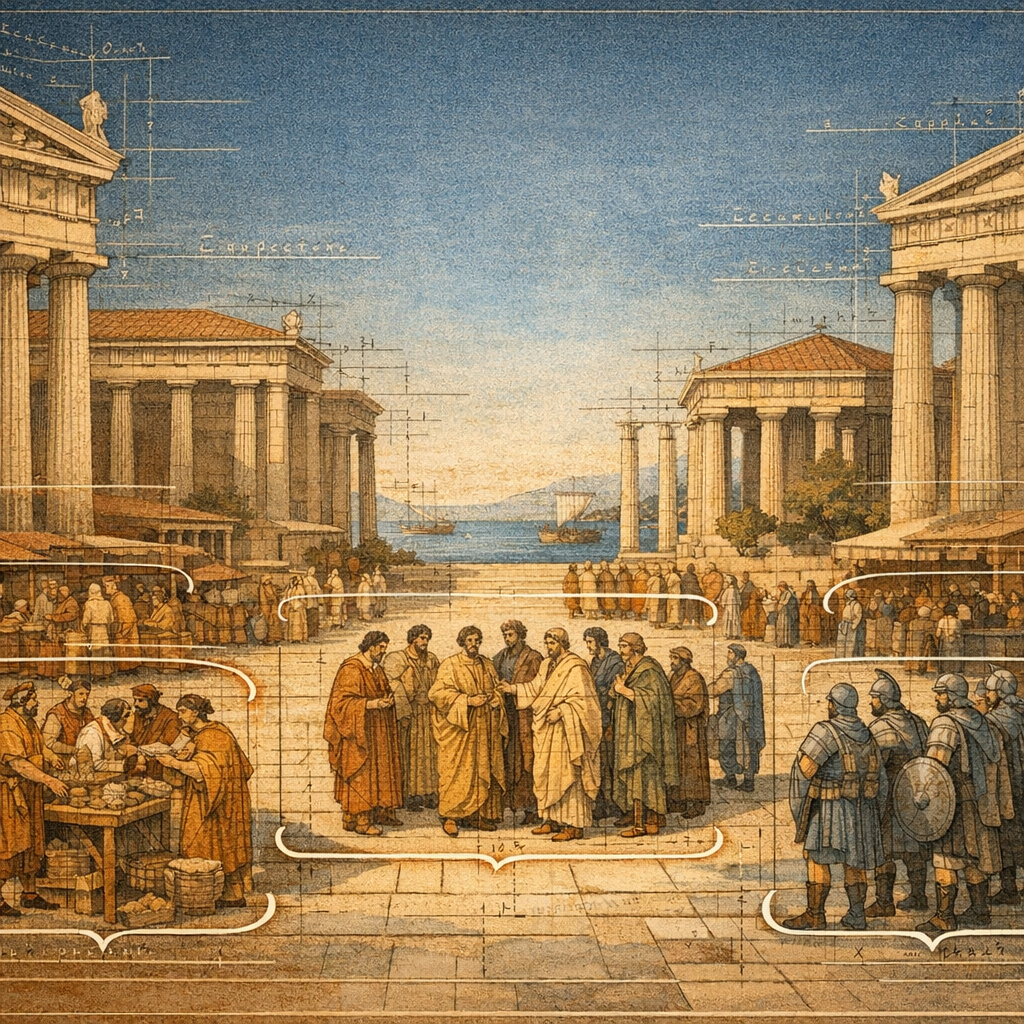
Common Aphrodite is the younger goddess, daughter of Zeus and Dione, who partakes of both male and female. Her Love is similarly mixed: it aims at bodies rather than souls, women as well as men, and is concerned with gratification rather than improvement. It is the love of the meaner sort of men — transient, opportunistic, and indifferent to virtue. Heavenly Aphrodite is older, motherless, born only of Uranus (the sky), and therefore purely of the male. Her Love is directed toward what is more vigorous and intelligent — not the young in body but the young in mind, not for pleasure but for the cultivation of excellence.
The Love who is the offspring of the common Aphrodite is essentially common, and has no discrimination, being such as the meaner sort of men feel, and is apt to be of women as well as of youths, and is of the body rather than of the soul
The Test of Nobility
The distinction is not merely descriptive but normative. Common love is fickle because its object — physical beauty — fades. The common lover, when the bloom of youth passes, 'takes wing and flies away, in spite of all his words and promises.' The heavenly lover is faithful, because his object — the character and intelligence of the beloved — grows rather than diminishes with age. For Pausanias, genuine love is inseparable from the project of mutual improvement: the lover inspires and the beloved is shaped, and both are better for the relationship.
Love and Political Freedom
Pausanias adds a political dimension absent from Phaedrus's speech. In Ionia and countries under despotism, philosophical friendship and love of wisdom are suppressed — not because they are ignoble but because they are incompatible with tyranny. Strong bonds of philosophical love inspire the kind of courage and solidarity that threatens authoritarian power. The love of Aristogeiton and Harmodius, the tyrannicides, showed Athenian tyrants what erotic and intellectual friendship could do. For Pausanias, heavenly love is not just a personal virtue but a political one.
Pausanias's speech appears in Chapter 2 of the Symposium. His distinction between two kinds of Aphrodite and two kinds of love became influential in later discussions of Platonic versus 'vulgar' love, and echoes throughout Renaissance Neoplatonism.
Related Concepts