Where Dream-Wishes Come From
I thus find a threefold possibility for the origin of a wish. Firstly, it may have been incited during the day, and owing to external circumstances failed to find gratification, there is thus left for the night an acknowledged but unfulfilled wish. Secondly, it may come to the surface during the day but be rejected, leaving an unfulfilled but suppressed wish. Or, thirdly, it may have no relation to daily life, and belong to those wishes that originate during the night from the suppression.
For Freud, the unconscious is not simply the "not-yet-conscious" — it is a distinct psychic system with its own laws, its own logic, and above all its own wishes. These wishes are infantile in origin: they were formed in childhood, repressed because they were unacceptable, and have remained active in the unconscious ever since, ready to seize any opportunity — including the loosened censorship of sleep — to press toward satisfaction.
The Topographic Model
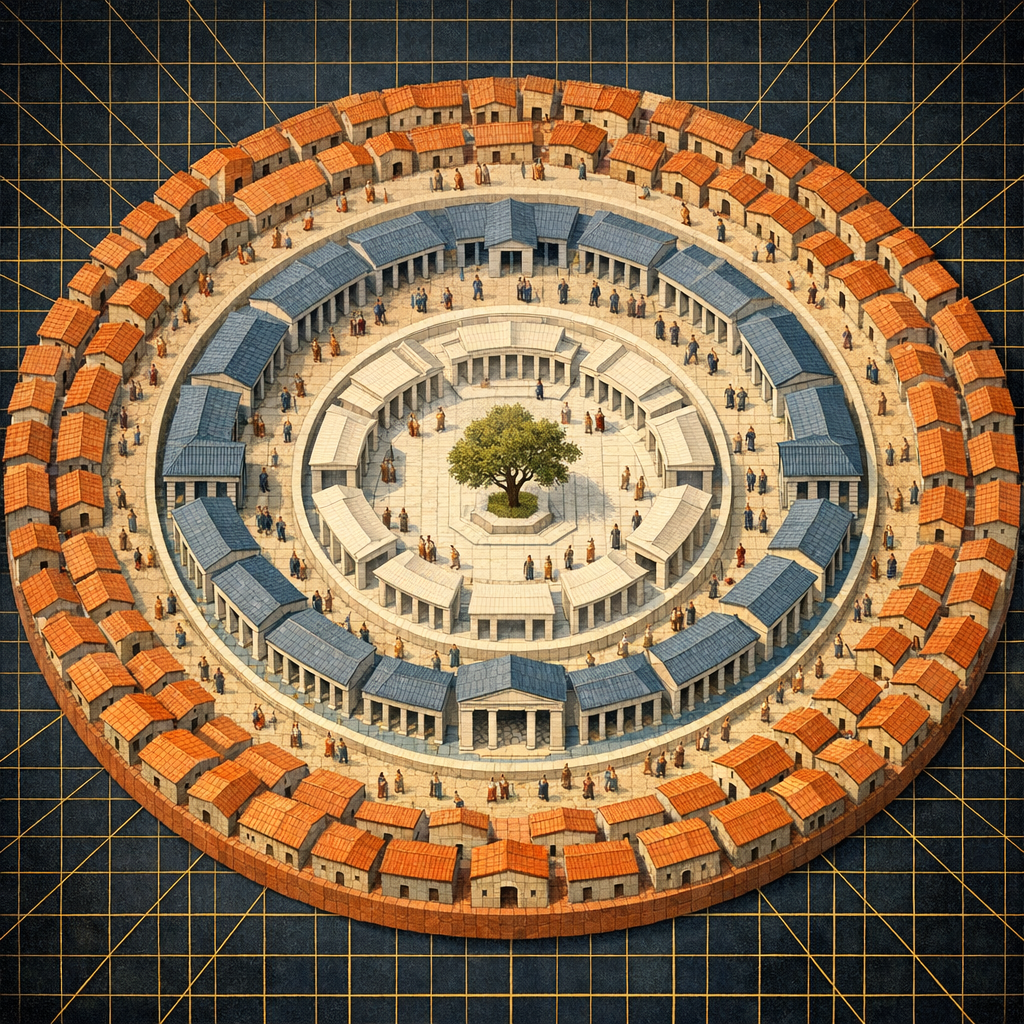
The dream gives Freud his first systematic account of the psychic apparatus. The Unconscious (Unc.) is the system where repressed wishes reside, operating by primary process — condensation, displacement, wish-fulfilment. The Preconscious (Forec.) stands between the Unconscious and Consciousness, managing the censor. Consciousness is not the seat of the mind but its perceptual surface — a sense organ for psychic qualities, not the origin of thought.
This model makes the dream philosophically significant: it is direct evidence of an unconscious mental life. The dream is not an imperfect form of thinking; it is thinking in a different register — older, more archaic, more honest about desire. The analysis of dreams thus opens onto the deepest layer of human psychology, revealing the infantile wishes that structure all psychic life.
The topographic model (Unc./Forec./Cs.) introduced in Chapter VII of The Interpretation of Dreams was later replaced by the structural model (id/ego/superego) in The Ego and the Id (1923), though the earlier model remained important for clinical work.
Related Concepts