The Structure of Cosmic History
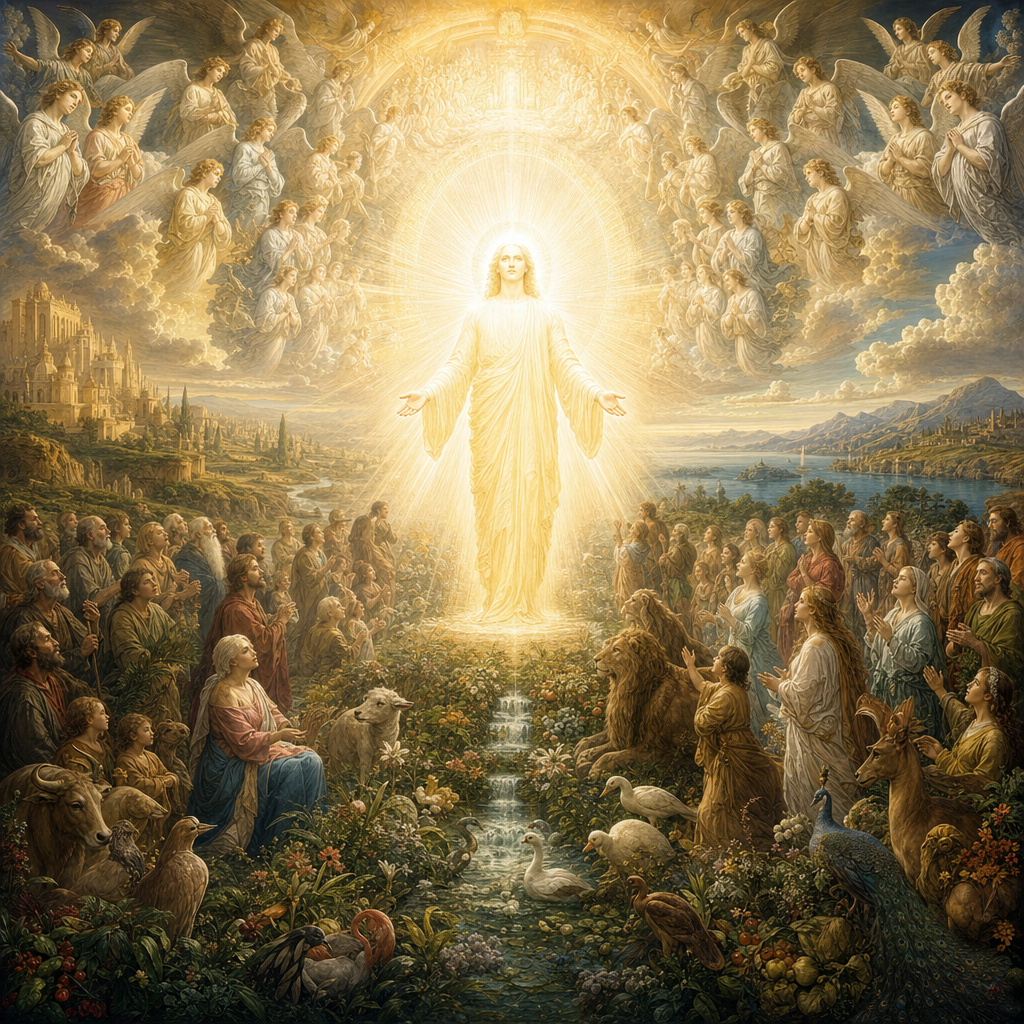
Zoroastrian cosmology divides cosmic history into a series of ages. The original creation was good — aligned with Asha, as Ahura Mazda intended. Angra Mainyu's assault corrupted and mixed evil into the good creation, producing the imperfect, suffering world we inhabit. But this mixture is not permanent: the cosmic conflict will end with Angra Mainyu's defeat, the purification of creation from all evil, and the restoration of the original good order — not a return to an innocent beginning but an advance to a perfected end, enriched by the struggle that preceded it.
Resurrection and Universal Salvation
Frashokereti involves the resurrection of all the dead — righteous and wicked alike — for a final judgment. The wicked will undergo a purification through molten metal that burns away the evil without destroying the person; the righteous will pass through it unharmed. After this ordeal, all human beings will be united in a renovated world free from death, disease, falsehood, and suffering. Zoroastrian eschatology is thus, in its final moment, universalist: everyone is eventually saved, and the renovation of creation leaves no one behind.
The Ethical Urgency of Eschatology
Frashokereti is not merely a belief about the future; it is a call to action in the present. Every choice for Asha hastens the renovation; every choice for Druj delays it. Human beings are not passive spectators of a cosmic drama written in advance but active participants whose moral choices make a real difference to the outcome. The eschatological hope gives the ethical life its ultimate context and its ultimate stakes: what each person does each day is a contribution to or against the renovation of the world.
The Abrahamic Legacy
Frashokereti is widely regarded as one of the most important sources of the eschatological traditions of Judaism, Christianity, and Islam. The resurrection of the dead, the final judgment, the cosmic conflict between good and evil, the renovation of the world — all of these themes appear in Zoroastrian theology centuries before their appearance in Jewish apocalyptic literature, and the historical influence of Zoroastrianism on Jewish theology during the Babylonian exile (6th century BC) is well documented. The eschatological imagination of the Western world is, in significant part, Zoroastrian in origin.
The Avestan word frashokereti (or frashegird in Middle Persian) comes from a root meaning "to make wonderful" or "to make excellent." The concept is most fully developed in later Zoroastrian texts, particularly the Bundahishn and the Denkard, rather than in the Gathas themselves, where the eschatological vision is present but less systematised. The Gathas' emphasis is on the individual's choice and its consequences at death; the full cosmic eschatology is elaborated in the younger Avestan literature.
Related Concepts