Three Criteria of Truth
Epicurus identifies three criteria by which claims can be judged. The first is sensation (aisthêsis): every perception is, as such, a reliable report of whatever is affecting the sense organs at the moment of perception. The second is prolepsis — the general concepts formed through repeated experience, such as "horse" or "justice", which provide the framework within which new perceptions are interpreted. The third is the feelings of pleasure and pain (pathê), which serve as infallible guides to what promotes or damages our well-being. None of these three criteria can be questioned from outside; they are the bedrock on which all inquiry must stand.
Error and Opinion
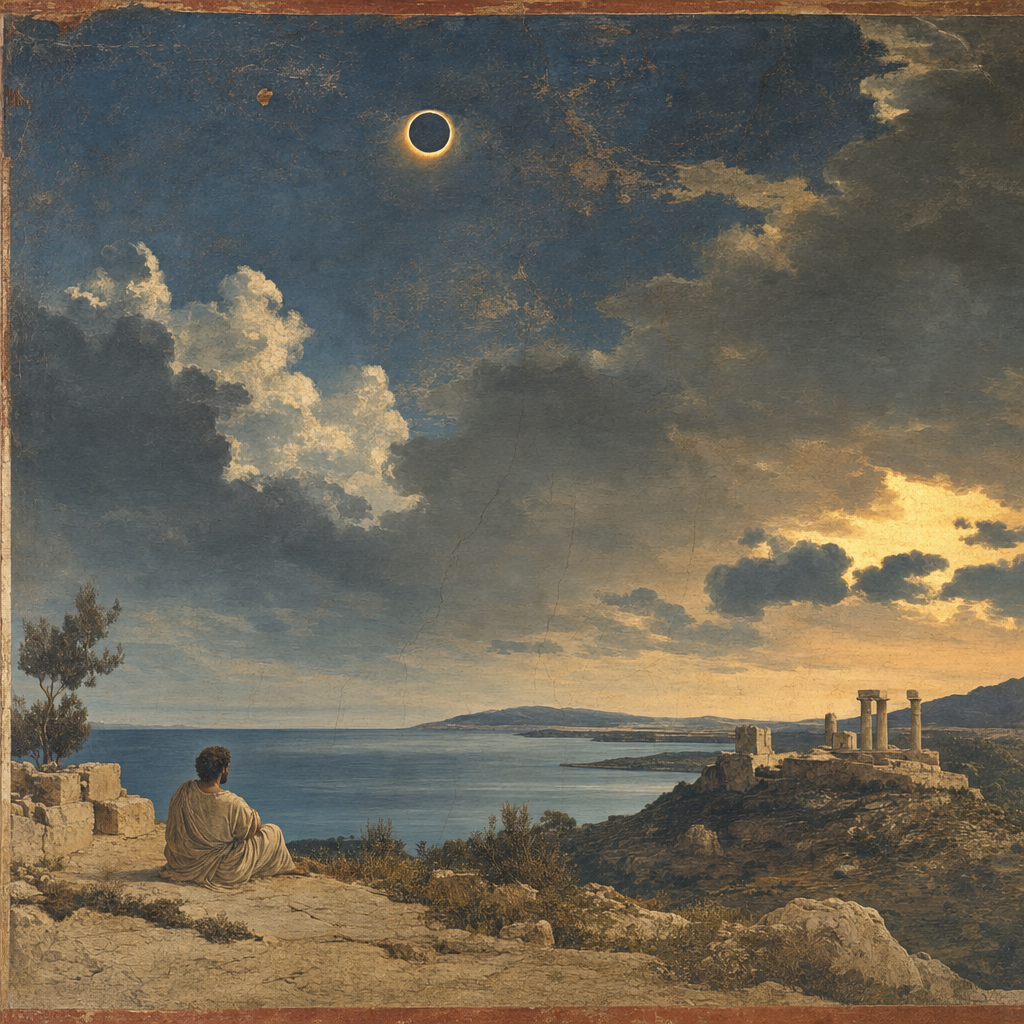
If sensation never lies, where does error come from? It comes from the opinion (doxa) that we add to what sensation delivers. When we see a tower in the distance and judge it to be small, sensation is telling the truth about what it sees; the error lies in our inference that the tower is small in itself. The Epicurean remedy for error is not to distrust sensation but to withhold judgement on the inferred claim until more evidence is available — to keep the opinion separate from the sensation and test it against further experience. This proto-empiricist epistemology anticipates many features of modern scientific methodology.
Empiricism and the Good Life
The canonic is not merely a technical epistemology — it is directly connected to the goal of ataraxia. Many of the fears that most disturb human beings — fear of death, fear of the gods, fear of fate — are not based on experience but on inferences that go far beyond what sensation can support. No one has experienced death; no one has seen a god intervening in human affairs; no one has witnessed a soul surviving the body. The Epicurean insistence on limiting belief to what is grounded in sensation dissolves these fears not by direct argument but by showing they have no experiential foundation to rest on.
The Canonic is introduced in the Letter to Herodotus and described at greater length by Diogenes Laertius in Book X of his Lives of the Eminent Philosophers. The term "Canonic" derives from Epicurus's own work titled Kanon, now lost. His empiricist epistemology influenced the later Stoic theory of kataleptic impressions and anticipates aspects of Locke's rejection of innate ideas.
Related Concepts