Empirical Unfreedom
Every action a person performs is necessitated by the motive acting on their character. Character is inborn, fixed, and utterly individual — it is what you are, not what you have chosen to become. Motive is the stimulus that activates the existing character in a given situation. Given the same character and the same motive, the same action will always follow: this is as certain as any causal necessity in physics. The feeling of deliberation — "I could have done otherwise" — is phenomenologically real but philosophically misleading. What we feel as weighing alternatives is really the character successively applying itself to a set of motives, each of which would produce a determinate response.
Transcendental Freedom
Yet we do hold people morally responsible, and our moral intuitions are not simply mistaken. Schopenhauer, following Kant, locates genuine freedom at the transcendental level: in the character itself, which is not the product of choices made in time but is a free act of will in the noumenal sense. What I am — my character, my will as it has expressed itself in this particular form — is, at the deepest level, what I have freely chosen to be, though this choice is not made in time and cannot be remembered or revised. Moral responsibility attaches to the person, not the act, because what is mine in the deepest sense is not what I do but what I am.
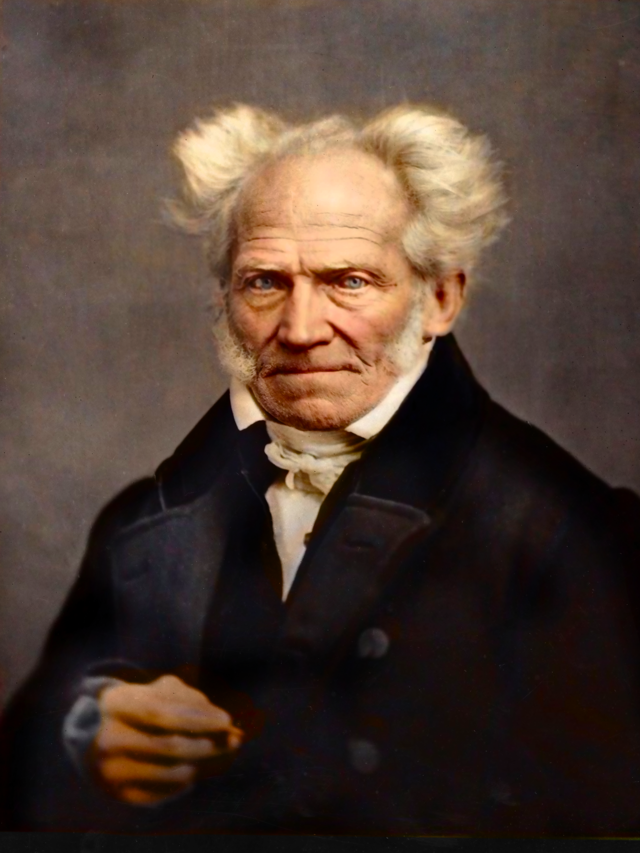
"On the Freedom of the Will" won the prize of the Royal Norwegian Society of Sciences in 1839 and was published in The Two Fundamental Problems of Ethics (1841). The companion essay on the basis of morality was rejected by the Danish Royal Society, a slight Schopenhauer never forgave.
Related Concepts