A Common Impetus
The evidence Bergson dwells on is convergence: the eye of the mollusc and the eye of the vertebrate, built on separate evolutionary lines, arrive at the same intricate structure. Neither chance variation nor a preset end explains this well. What explains it is a shared original impulse, carried from generation to generation through the germ, dividing among the lines of life while remaining one.
So we come back, by a somewhat roundabout way, to the idea we started from, that of an original impetus of life, passing from one generation of germs to the following generation of germs through the developed organisms which bridge the interval between the generations.
Harmony Behind, Not Ahead
Bergson is emphatic that the élan vital is not a goal drawing life forward. Its unity lies in the past, in a common source, not in a future to be realized — like a gust of wind that divides at a street corner into diverging currents that are yet one and the same gust. Each species keeps only a portion of the impulse and spends it in its own interest; the discord this produces is as real as the harmony.
It is due to an identity of impulsion and not to a common aspiration.
Creation, Not Combination
The deepest claim is that life genuinely creates — it produces effects in which it expands and transcends its own being, effects not contained in it beforehand. This is why the future cannot be read off the present, and why evolution is creative in the strong sense: not the rearrangement of given elements but the perpetual welling-up of the unforeseeable.
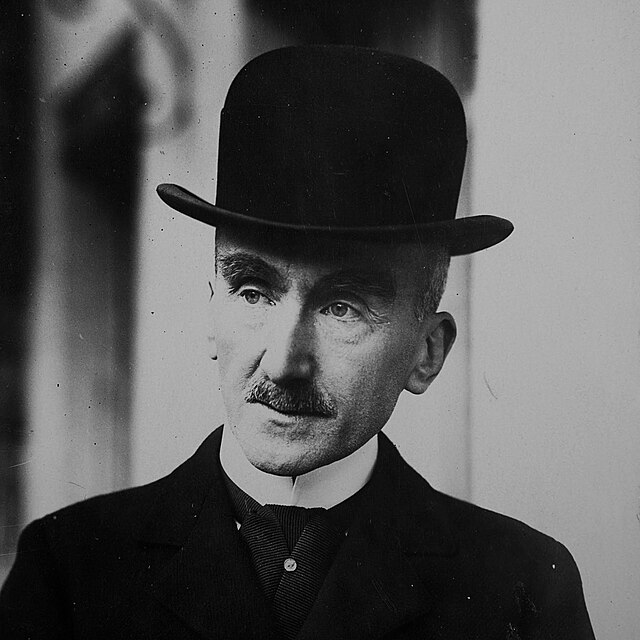
The doctrine of the élan vital is developed chiefly in Chapter I of Creative Evolution (1907, trans. Arthur Mitchell 1911).
Related Concepts