The Problem with Traditional Phenomenology
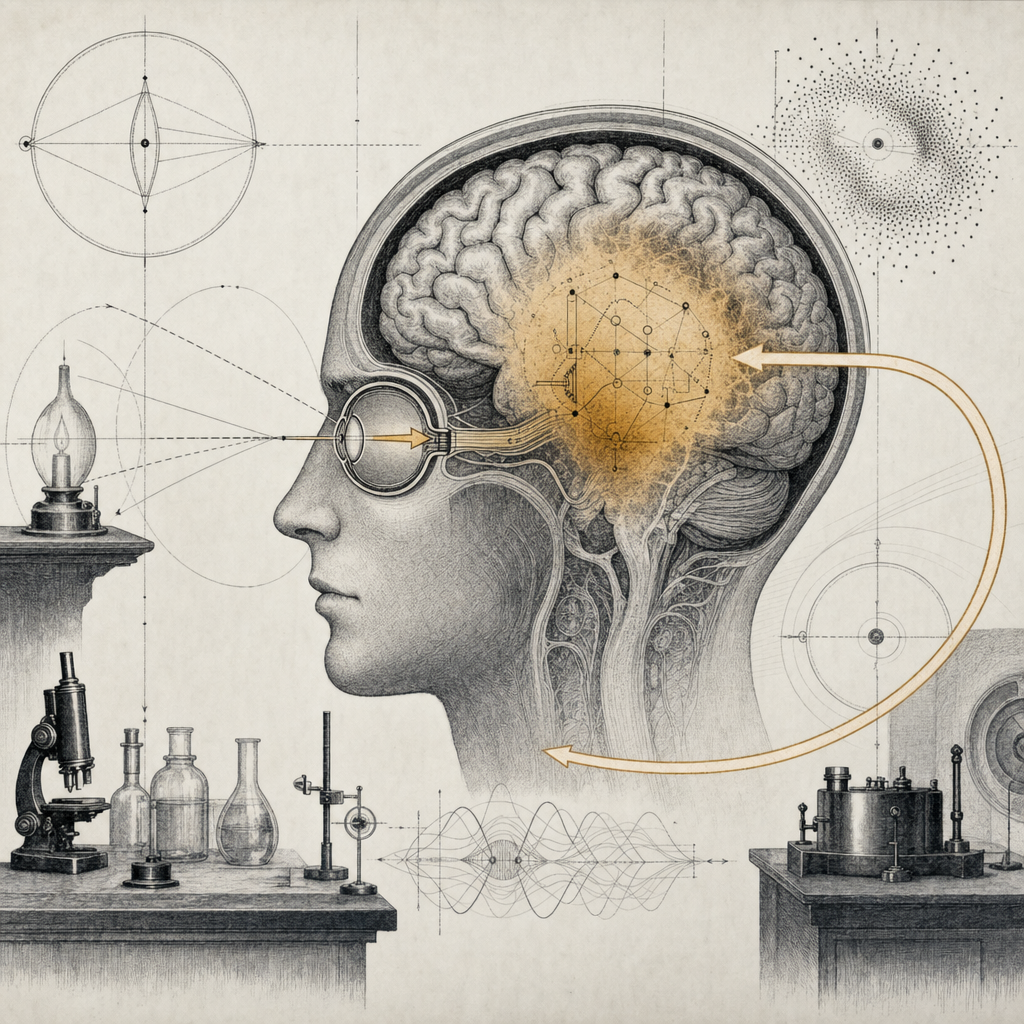
Traditional phenomenology — the philosophical study of first-person experience — treats introspective reports as authoritative: what you report experiencing is what you are experiencing, and any theory of consciousness that conflicts with first-person reports is ipso facto wrong. Dennett argues that this is exactly backwards. First-person reports are data that a theory of consciousness must account for, but they are not themselves theory-free deliverances of what is happening in the brain. People are wrong about their inner lives constantly — about what they are seeing, feeling, deciding, and remembering. Treating reports as incorrigible would make consciousness immune to scientific investigation.
Taking Reports at Face Value, Not at Face Value
Heterophenomenology involves treating subjects as intentional systems whose reports are taken as serious evidence about their inner states — without assuming that the reports are accurate descriptions of those states. The investigator takes a "benevolent" stance toward the subject's reports, treating them as sincere attempts to describe genuine internal states, while remaining open to the possibility that the description is systematically misleading. This is analogous to the stance an anthropologist takes toward a culture's mythology: treating it as expressing genuine beliefs and concerns without endorsing its literal truth.
The Third-Person Account of First-Person Facts
The goal of heterophenomenology is a complete third-person account of the facts that generate first-person reports. If a subject reports seeing a uniform blue field, the heterophenomenologist asks: what is happening in the subject's brain and body that produces this report? What computational processes, what neural states, what dispositions to behavior are active? The explanation of why the subject reports a uniform blue field is, Dennett argues, also the explanation of what it is like for the subject to see a uniform blue field — not because qualia are identical to brain states, but because there is nothing more to qualia than what a complete functional explanation would capture.
Heterophenomenology was first articulated explicitly in a 1982 paper and is developed at length in Consciousness Explained. It remains controversial: critics argue that it takes first-person facts seriously only in appearance, and that by refusing to accept introspective reports as authoritative it begs the question against the possibility of genuine phenomenal consciousness. Dennett's response is that accepting such reports as authoritative would make consciousness permanently mysterious rather than scientifically tractable.
Related Concepts