Intellect and Its Content
Intellect does not consult a blueprint before producing the Forms; the Forms are Intellect's self-thinking in its eternal activity. When Intellect thinks the Form of Justice, Justice is not a separate object that Intellect inspects — it is constituted in and through the act of Intellect's thinking. This identification of the thinker and the thought, of the act of knowing and the content known, is what Plotinus calls the unity of Intellect. The intelligible world is not made by Intellect; it is Intellect. This collapse of the distinction between creator and created applies, in diminished form, to all subsequent levels of reality.
The Artist and the Idea
When a sculptor works on a block of marble, what guides the chisel is not the marble but a Form in the sculptor's soul: the idea of the figure that the marble is to become. This inner Form is what is genuinely beautiful; the statue is beautiful only insofar as it participates in that inner Form. The making of the statue is the soul's attempt to externalise what it cannot sustain purely internally — a contemplation that has overflowed into action because the soul's contemplative power is insufficient to hold the vision still. The truest art, for Plotinus, is not the production of external objects but the philosophical work of contemplating and being transformed by the Forms themselves.
Nature as Unconscious Artist
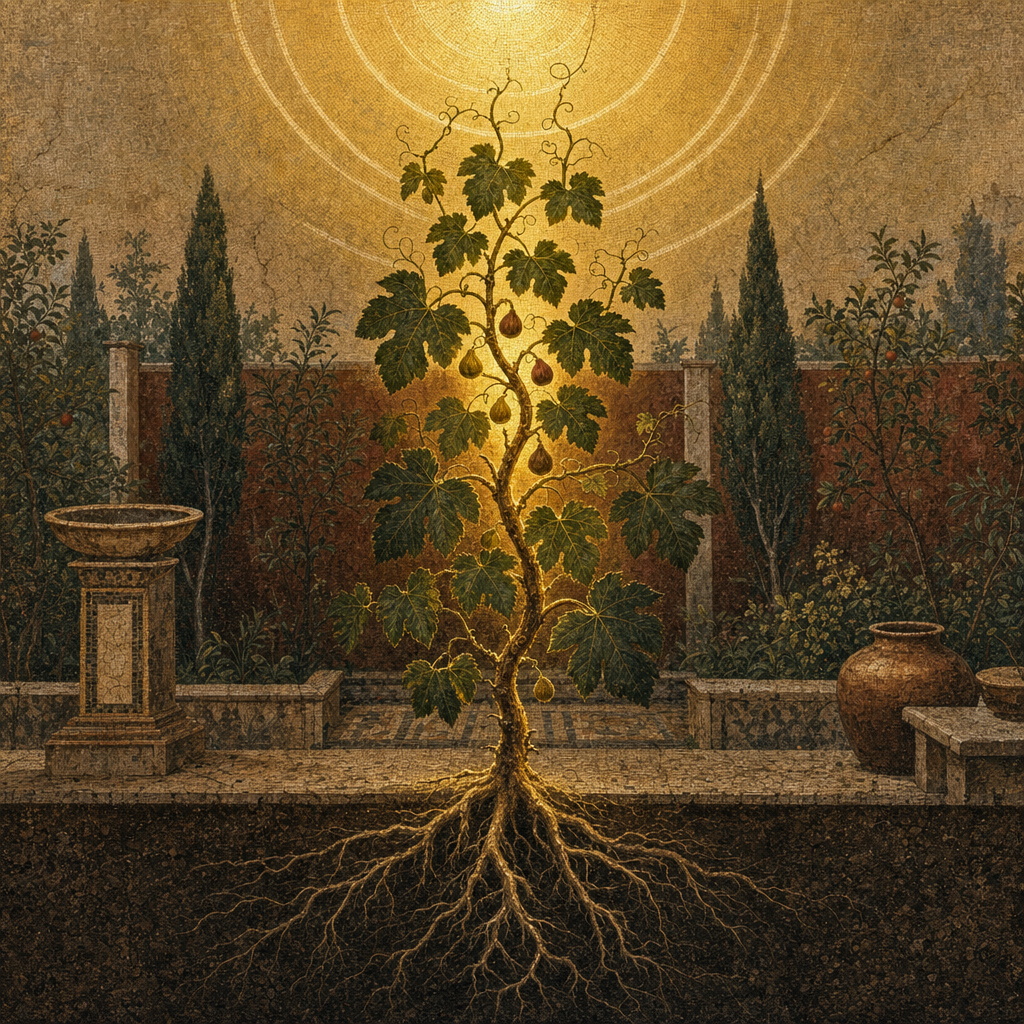
Nature produces with the ease and perfection of a great artist who has so thoroughly absorbed the principles of their art that they no longer need to think about them. The tree does not consult the Form of the tree before growing; it grows as the tree-form expresses itself through the matter available. This makes nature's productions, for all their imperfection, more genuinely beautiful than most human artefacts: they are direct expressions of intelligible Form, unmediated by the laborious translation from idea to matter that conscious craft requires. The beauty of natural objects is the closest most people will come, in ordinary experience, to perceiving the beauty of the Forms directly.
The account of nature as unconscious contemplator and the artist's dependence on inner Form appears in Ennead III.8 and is developed further in V.8 ("On Intelligible Beauty"). Plotinus's aesthetics significantly influenced Renaissance theories of artistic genius and the idea that the artist imitates nature's creative process rather than copying appearances.
Related Concepts