The Aristotelian Backdrop
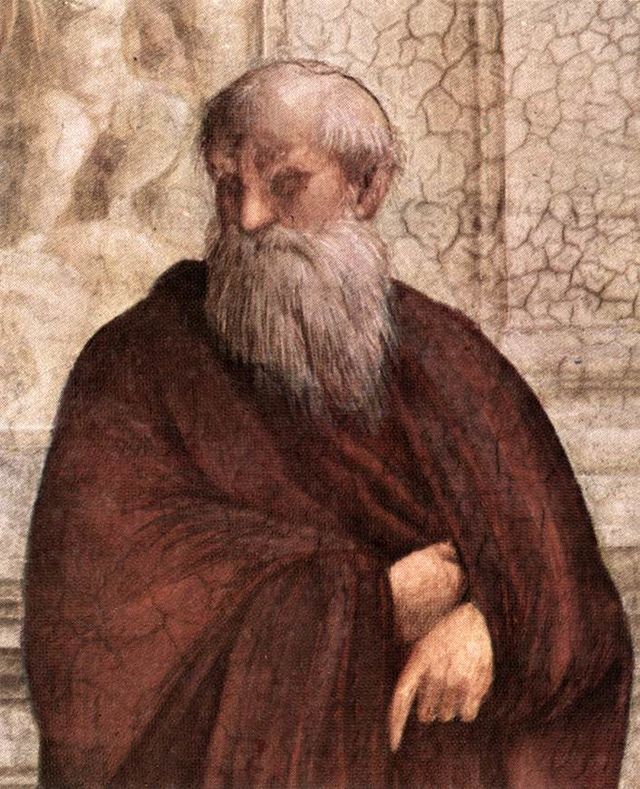
Aristotle placed God at the summit of his metaphysics as "thought thinking itself" — a perfect self-contemplating intellect that serves as the unmoved mover of the cosmos. For Aristotle, this divine intellect was the fullest form of being, the act without any potentiality. Plotinus admires this account but regards it as stopping too soon. Thought-thinking-itself still involves a duality — thinker and thought — however refined. A principle that is the ground of everything, including thought and being themselves, cannot have even this internal distinction. The Aristotelian God remains at the level of Nous; the Plotinian One is prior to Nous.
Being as a Product
If the One is beyond being, then being is something produced — a level of reality that arises when the One's self-sufficiency overflows into Intellect and Intellect turns to contemplate its source. Being is the form that reality takes at the level of Intellect: it is the coextension of thinking and what is thought, the realm in which the Forms exist and are known. This means that all of ontology — everything philosophers have said about what it is to exist — applies to a level of reality that is already a derivative, already one step removed from the true first principle. The study of being is important but not ultimate.
Freedom and Necessity
One consequence of the One's position beyond being is its absolute freedom. Nothing constrains the One from without — there is nothing outside it — and nothing constrains it from within, since it has no parts whose demands could conflict. The One's production of Intellect is not compelled by external necessity, nor is it a free choice in any deliberate sense: it is the natural expression of what absolute self-sufficiency is. This notion of a freedom that is neither constrained nor deliberate was enormously influential on later theological accounts of divine creation and on the concept of grace in Christian mysticism.
The location of the One "beyond being" (epekeina tês ousias) is explicitly drawn from Plato's Republic 509b, which Plotinus cites in Ennead VI.9.6. The subsequent tradition wrestles with whether "beyond being" means non-existent, supra-existent, or simply other than the categories of finite being.
Related Concepts