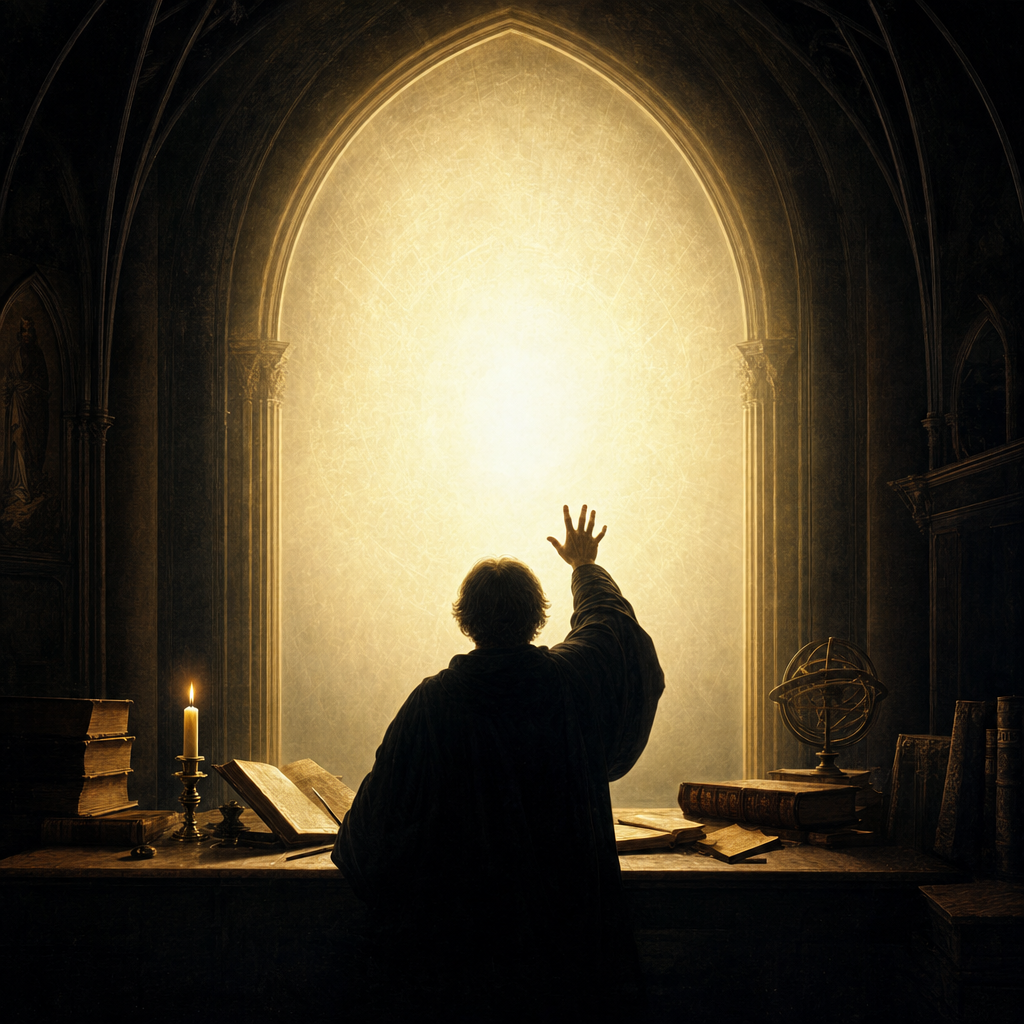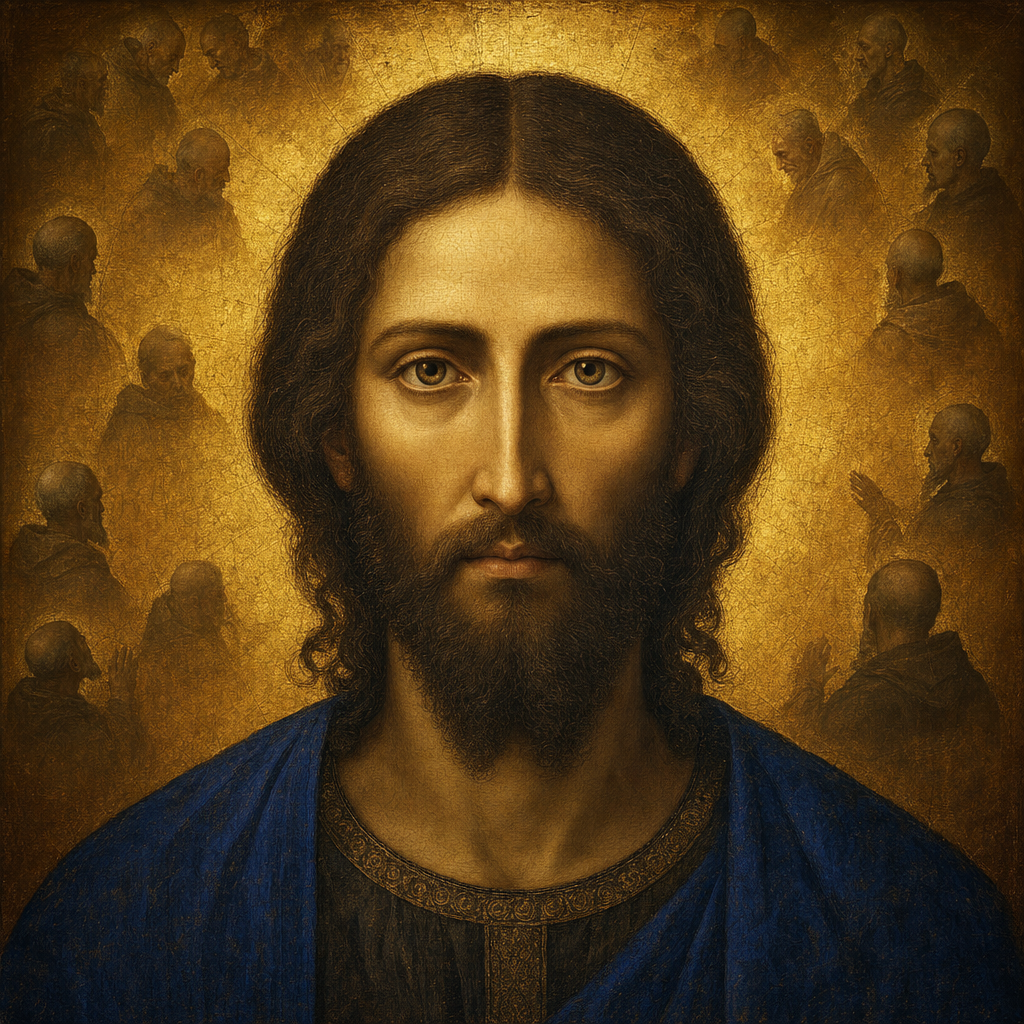
De Visione Dei (The Vision of God) is Nicholas of Cusa's most accessible and spiritually immediate work — a meditation on the mutual vision between God and humanity, composed in 1453 for the Benedictine monks of the Abbey of Tegernsee. Cusa sent the monks a tondo painting of a face whose eyes appeared to follow the viewer around the room — an 'omnivoyant' icon — and invited them to perform an exercise: each monk should stand before the icon at different positions and observe how it seemed to look at each of them simultaneously, even as the other monks reported the same experience from different angles. From this exercise, Cusa draws a series of profound meditations on divine vision. God sees all things at once; from every point of view; without excluding any perspective. God's seeing is not from a particular position, as human vision is, but is the condition for all positions — omnivoyant, absolute, and identical with being. For a creature to be seen by God is to exist; God's vision is not distinct from God's act of creation. The text develops into one of Cusa's deepest treatments of mystical union: to see God is to recognise that God's seeing and our seeking converge at the coincidence of opposites that is God. De Visione Dei is a masterwork of Christian mysticism and a philosophically sophisticated account of divine omniscience, presence, and the structure of transcendence.
This work isn't available here yet. In the meantime you can purchase a copy on Amazon, or check back later, as we are always adding books to our library.
As an Amazon Associate we earn from qualifying purchases.