
Directory › Henry Sidgwick
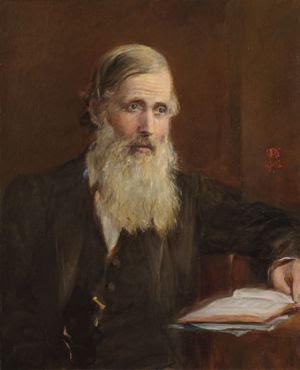
Henry Sidgwick
Utilitarianism
1838–1900 · Modern Philosophy
Henry Sidgwick was the greatest systematic moral philosopher of the Victorian era and the figure who, more than anyone else, transformed ethical theory from a branch of theology into an autonomous academic discipline. The Methods of Ethics examined the major approaches to ethics—intuitionism, egoism, and utilitarianism—with a rigour and fairness that set the standard for subsequent work in moral philosophy.
Sidgwick concluded with what he called the "dualism of practical reason"—the inability to reconcile rational egoism with universal benevolence without a cosmic guarantee such as God. He believed that if morality were to be fully rational, self-interest and duty must ultimately harmonise. He co-founded Newnham College, Cambridge, pioneered the academic study of psychical research, and was among the first to advocate seriously for women's higher education.
The good of any one individual is of no more importance, from the point of view of the universe, than the good of any other.
0
Books
20
Related
0
Concepts