Not Optimism
It would be a serious misreading to take Hegel's claim that Reason governs history as a claim that history is getting better, or that suffering is justified by progress, or that everything happens for the best. Hegel is acutely aware of the "slaughter-bench" of history — the enormous suffering, the waste of human lives, the destruction of great cultures. His claim is not that these are good but that they are not merely random. History has a structure, and that structure is rational.
The Rational Is the Real
The thesis of Reason in history is the application of Hegel's metaphysical principle — "What is rational is actual; what is actual is rational" — to the temporal dimension. What genuinely endures in history, what achieves stable actuality, embodies a rational principle. What contradicts reason destroys itself or is destroyed. The task of philosophy is not to prescribe what history should do but to comprehend what it has done — to read the rational necessity in what appears to be mere contingency.
History and Freedom
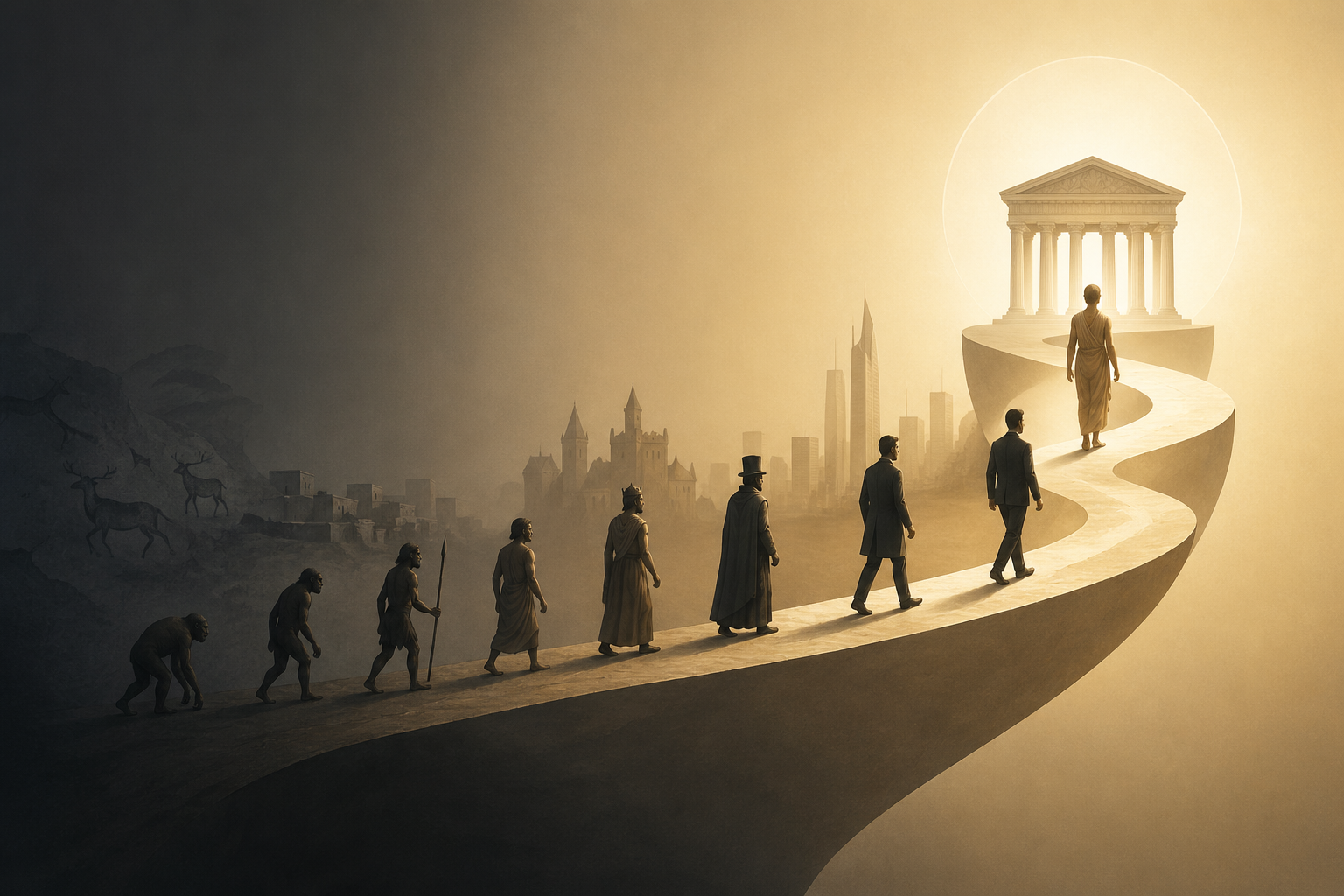
The specific content of historical Reason, for Hegel, is freedom. The history of the world is the history of freedom coming to consciousness of itself. This is not a merely political claim but a metaphysical one: Spirit is essentially free, and its self-development in history is the progressive realisation of that freedom in concrete institutions, cultures, and forms of self-understanding. History ends — in the sense of reaching its conceptual completion — when freedom is fully known and institutionally embodied.
Francis Fukuyama's controversial thesis of the "end of history" — the claim that liberal democracy represents the final form of government toward which all history has been tending — is explicitly indebted to Hegel, mediated through Alexandre Kojève's reading. Critics note that Fukuyama's Hegel is heavily filtered through Cold War assumptions and misses the dialectical openness in Hegel's own account.
Related Concepts