A Missing Element
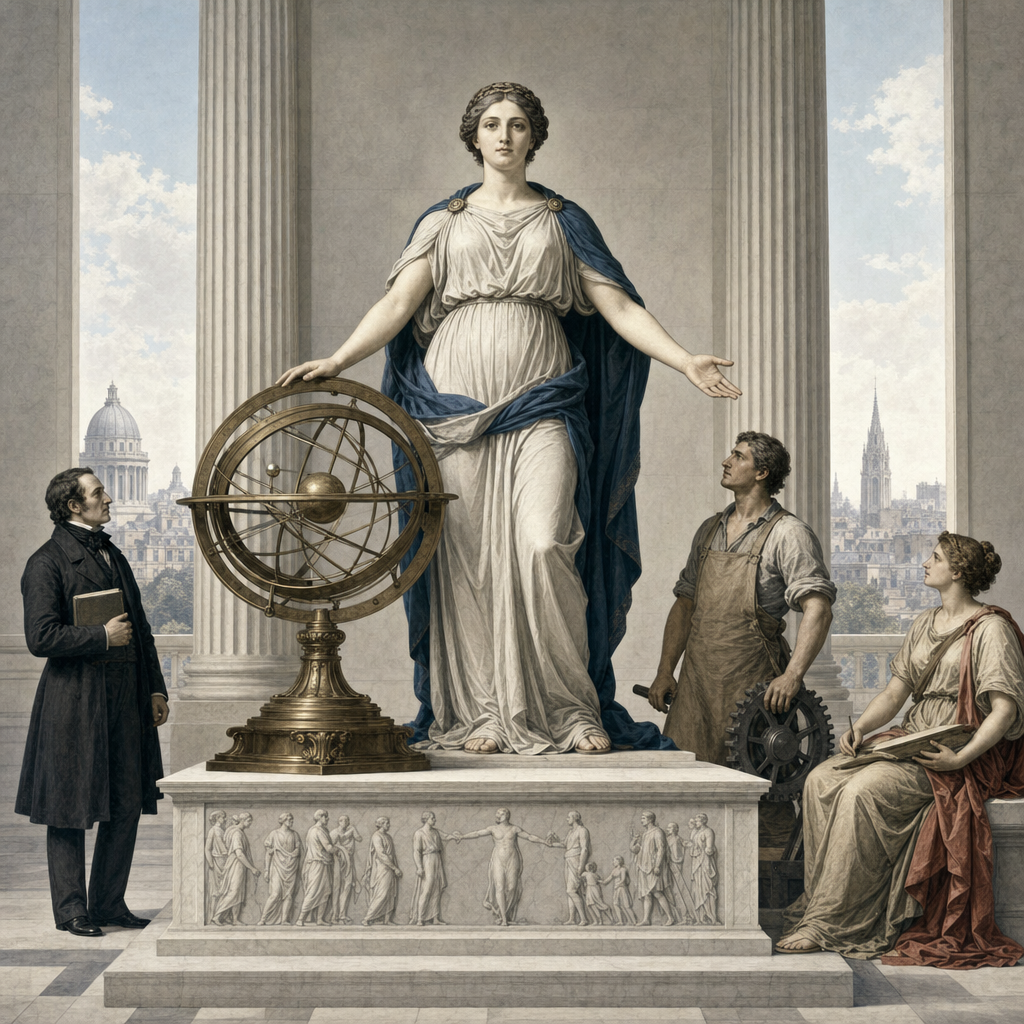
Comte maps his tripartite psychology — Feeling, Intellect, Activity — onto society itself: philosophers represent Intellect, the working classes represent Activity. But Feeling, which he has already argued is the true centre of human nature, has no dedicated representative in that alliance. Both philosophers and workers possess social sympathy, but in neither case, he argues, is it pure or constant enough to sustain the whole project alone.
it is indispensable that Women be associated in the work of regeneration as soon as its tendencies and conditions can be explained to them
Comte's Case for Women's Moral Authority
Comte assigns women the function of guarding and cultivating Feeling in domestic and social life, arguing that their position — freed, in his idealized picture, from both abstract speculation and material competition — leaves affection less obstructed than in either philosophers or workmen. It is a claim built on the gender assumptions of his age, presenting women's exclusion from public and intellectual life as a moral advantage rather than a limitation.
Reading This Chapter Today
This chapter is among the most dated in the book, and also among the most revealing of Comte's whole method: having decided that Feeling must have an institutional home, he goes looking for one in the existing social arrangements of his own century, and finds it in the domestic role assigned to women rather than questioning that assignment. The chapter is worth reading less as a theory of gender than as a case study in how a totalizing system absorbs the prejudices of its moment.
Drawn from Chapter IV of A General View of Positivism (1848), on the influence of Positivism upon women.
Related Concepts