The Natural Virtues
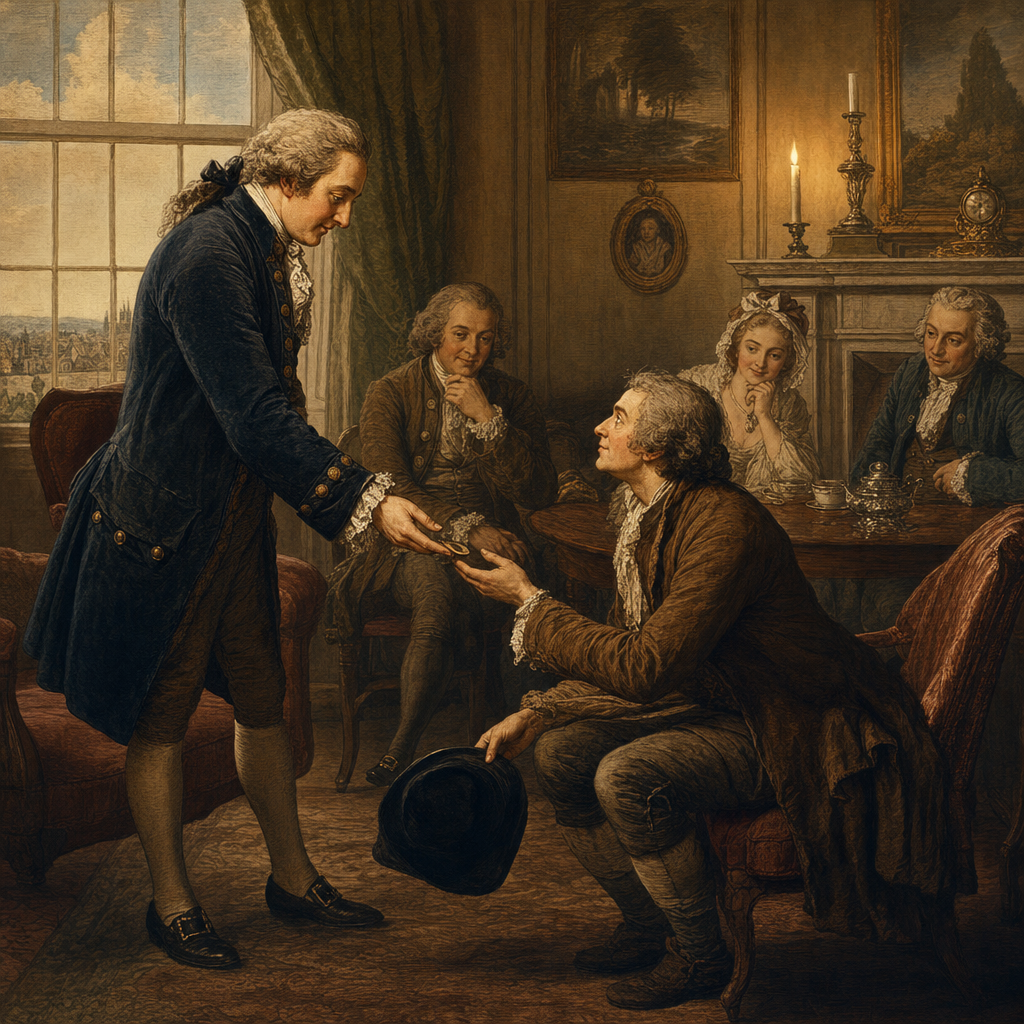
Natural virtues — benevolence, gratitude, friendship, generosity — are approved immediately and directly: when we observe a genuinely kind or generous act, our approval does not pass through any calculation of social benefit. We feel the approval directly, through sympathy with the pleasure the act produces in its recipient. The merit of natural virtues is their immediate agreeableness or usefulness to the person who has them or to those around them. They require no convention, no system, no social institution — they would be virtues even in a solitary individual or in any conceivable form of human society.
The Artificial Virtues and Convention
Justice and fidelity to promises are different: a single just act, considered in isolation, may benefit no one and may even harm its agent. The virtuous quality of paying a debt to a miser, or of keeping a promise that has become inconvenient, does not reside in the immediate pleasure produced. It resides instead in the contribution the act makes to a system of mutual expectation — a conventional scheme of property rights and promise-keeping — whose overall operation is indispensable to social life. The artificial virtues are virtues not through natural feeling but through rational reflection on the social consequences of the institutions they sustain.
Utility as the Common Thread
The unifying thread in Hume's account of both natural and artificial virtues is utility: we approve virtues because they are useful or agreeable to their possessor or to others. This is not a utilitarian doctrine — Hume does not say that we approve virtues because we calculate their aggregate utility, but that the reflection on their utility, once it becomes salient, generates approval through sympathy with the benefits they produce. Utility is one of the two main sources of moral approval (the other being agreeableness), and both operate through the sentiments, not through calculation. Jeremy Bentham read Hume on utility and found in it the seed of his own utilitarian calculus — which Hume himself would not have recognised as his doctrine.
The distinction between natural and artificial virtues is developed in more detail in the Treatise, Book III, Parts II and III. The Enquiry compresses and refines this distinction, focusing on utility as the common ground of moral approval. Hume's account of justice as an artificial virtue directly influenced Rawls's treatment of justice as a social institution.
Related Concepts