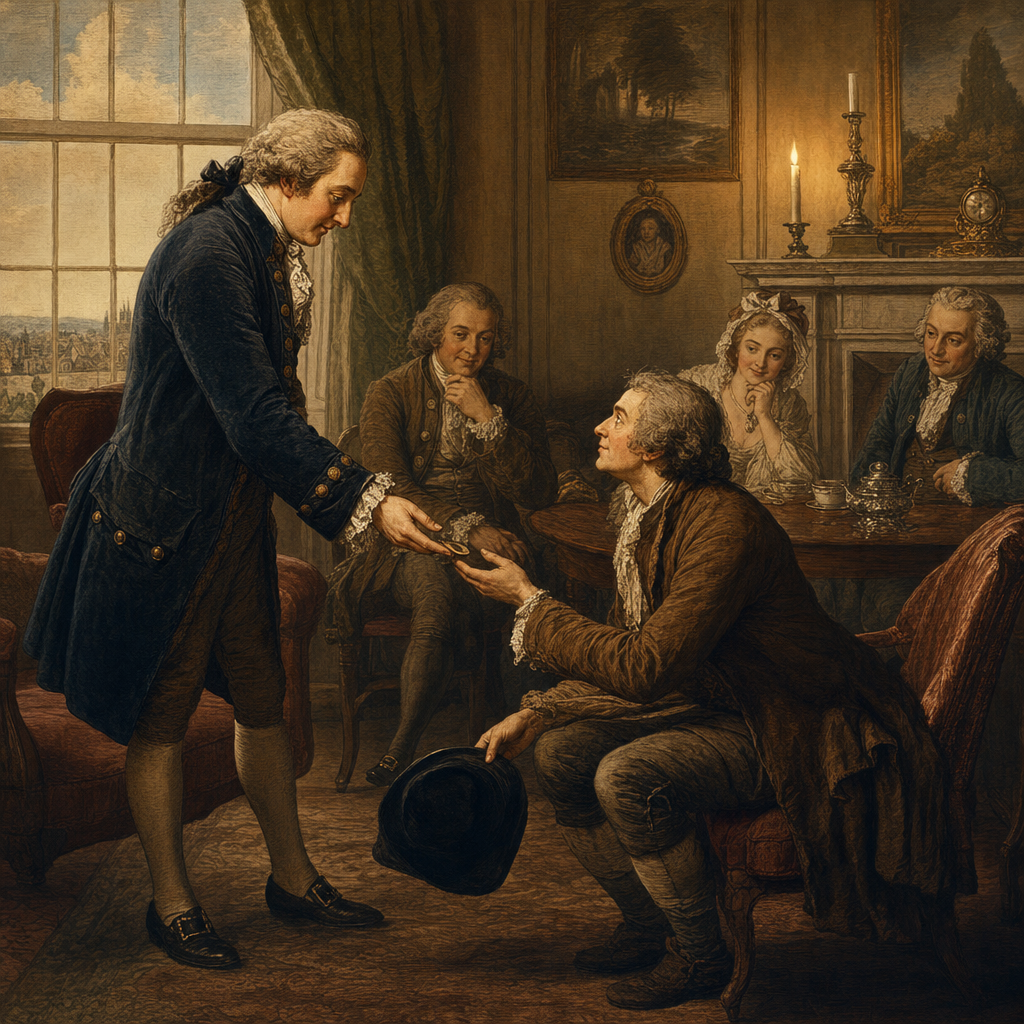
An Enquiry Concerning the Principles of Morals is Hume's most polished and accessible work in ethics — a compact, elegant defence of moral sentimentalism that he regarded as his best writing. Published in 1751, it is a revised and refined version of the moral philosophy of the Treatise, stripped of technical apparatus and rewritten for a general educated audience. The work proceeds by asking what qualities we universally approve in human beings and in their conduct, and argues that both artificial virtues (justice, fidelity to promises) and natural virtues (benevolence, generosity, humanity) owe their merit not to reason but to sentiment — specifically to the feeling of approval or disapproval that arises in an impartial spectator surveying a character or action. Hume argues against rationalist moral theories (those of Clarke, Wollaston, and Cudworth) that moral distinctions cannot be derived from reason alone, since reason merely discovers facts and relations while morality requires motivation. The central role is played by sympathy and utility: we approve virtues because they are useful or agreeable to their possessor or to others, and the faculty of sympathy allows us to share in the pleasures and pains of all humanity. The work ends with a portrait of the "truly virtuous character" — not the austere ascetic of monkish religion but the person of natural benevolence, social ease, and refined sentiment — which served as an influential ideal of the Enlightenment. Kant read it and declared it woke him from his "dogmatic slumber" — though he drew the opposite conclusion.
Full text not available
This work isn't available here yet. In the meantime you can purchase a copy on Amazon, or check back later, as we are always adding books to our library.
As an Amazon Associate we earn from qualifying purchases.
More by David Hume

An Enquiry Concerning Human Understanding
David Hume
1748
Free
An Enquiry Concerning Human Understanding
David Hume