Punishment as a Necessary Evil
Every act of punishment involves inflicting pain on a sentient being. This pain is a cost that must appear on the utilitarian ledger. Punishment is justified only when the pain it inflicts is outweighed by the pain it prevents — by deterring would-be offenders, incapacitating dangerous individuals, or reforming character. Punishment inflicted beyond what is necessary to achieve these ends is simple cruelty, adding to the world's stock of misery without any compensating benefit.
Reform Over Retribution
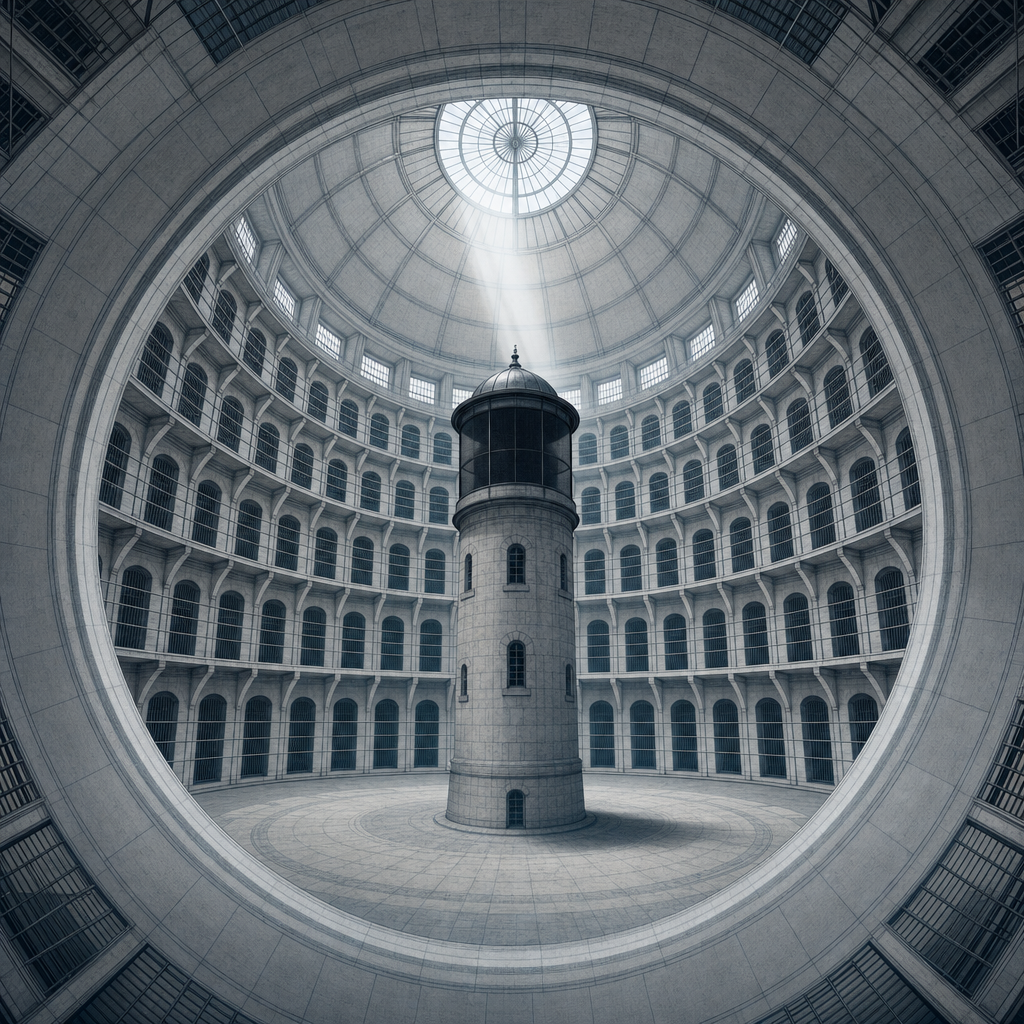
The Panopticon is explicitly designed as an instrument of reform rather than vengeance. Bentham is contemptuous of the idea that suffering is owed to wrongdoers as a matter of cosmic justice. What matters is not that offenders are made to suffer but that they cease to offend. If reform can be achieved with less pain — through labour, routine, and oversight rather than flogging or transportation — then less pain is always better. The only metric is the future happiness of the community, not the satisfaction of punitive instincts.
Bentham's theory of punishment is developed both in the Introduction (Chapters XIII–XVI) and throughout the Panopticon Writings, where the reform rationale structures every feature of the design.
Related Concepts