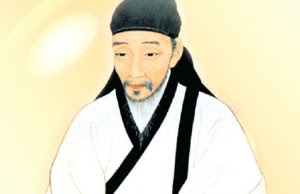
The Mind as Master
In Yi Hwang's framework, the mind-and-heart is the ruler of the body and the locus of all moral activity. It contains the moral nature (the four virtues expressed as li) and gives rise to feelings and intentions (the activity of qi). The moral task is to keep the mind in a condition where its inherent principle can manifest clearly — neither agitated by unruly emotions nor dulled by distraction and inattention. This requires a continuous practice of watchful self-cultivation that Yi Hwang, following Cheng Yi and Zhu Xi, describes as kyŏng (reverence or seriousness): a state of sustained, undistracted, inward attentiveness.
Reverence as Method
Kyŏng is both the foundation and the continuous thread of Yi Hwang's method. It is not a specific technique but an orientation — a maintained posture of moral seriousness that holds the mind collected and undivided both in activity and in stillness. When engaged in affairs, reverence means giving one's full attention to what is at hand without distraction; when at rest, it means preserving the inner composure in which moral principle can be discerned. Yi Hwang insists that kyŏng cannot be reduced to meditative withdrawal from the world — it must be sustained through all the vicissitudes of daily life, in reading, in social relationships, in governance.
Study and Self-Examination
Alongside reverence, Yi Hwang emphasises the role of sustained study of the classics and self-examination. The student of sage learning reads the texts of the Confucian tradition not as mere information but as mirrors in which to recognise and assess the state of one's own mind. Self-examination means regularly reviewing one's intentions and actions against the standards of humanity, righteousness, ritual propriety, and wisdom — not in a spirit of anxious self-punishment but in the spirit of a craftsman who periodically checks their work against the standard they aspire to achieve. The two practices, reverence and study, are mutually supporting: reverence provides the attentive composure in which study can penetrate, and study provides the concrete norms against which reverence is directed.
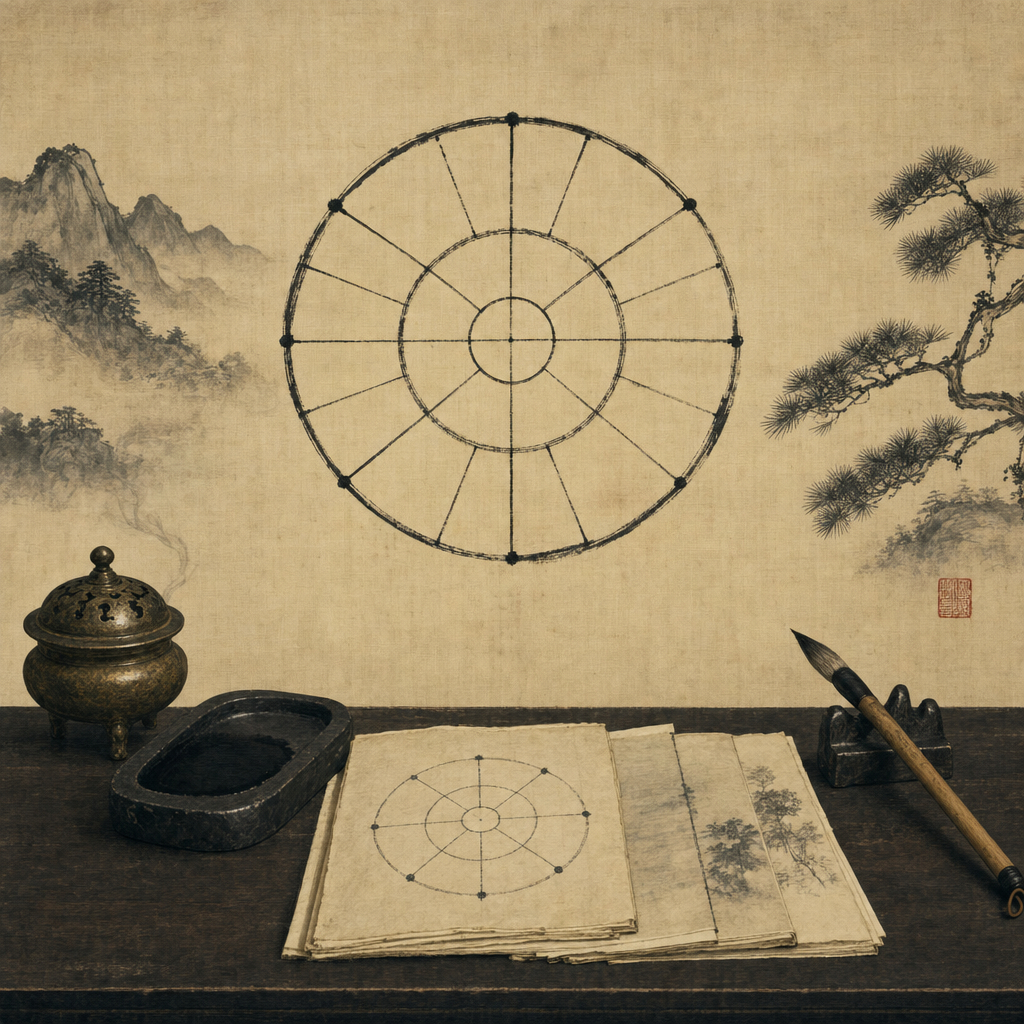
The eighth diagram of the Ten Diagrams on Sage Learning is drawn from Ch'en Pai-sha and other Neo-Confucian sources on the learning of the mind-and-heart (simhak). Yi Hwang's emphasis on kyŏng as the central method of moral cultivation follows Cheng Yi's formula "reverence as the basis of inner life, righteousness as the basis of outer life," which also forms the subject of the ninth diagram.
Related Concepts