Externalisation of Inner Life
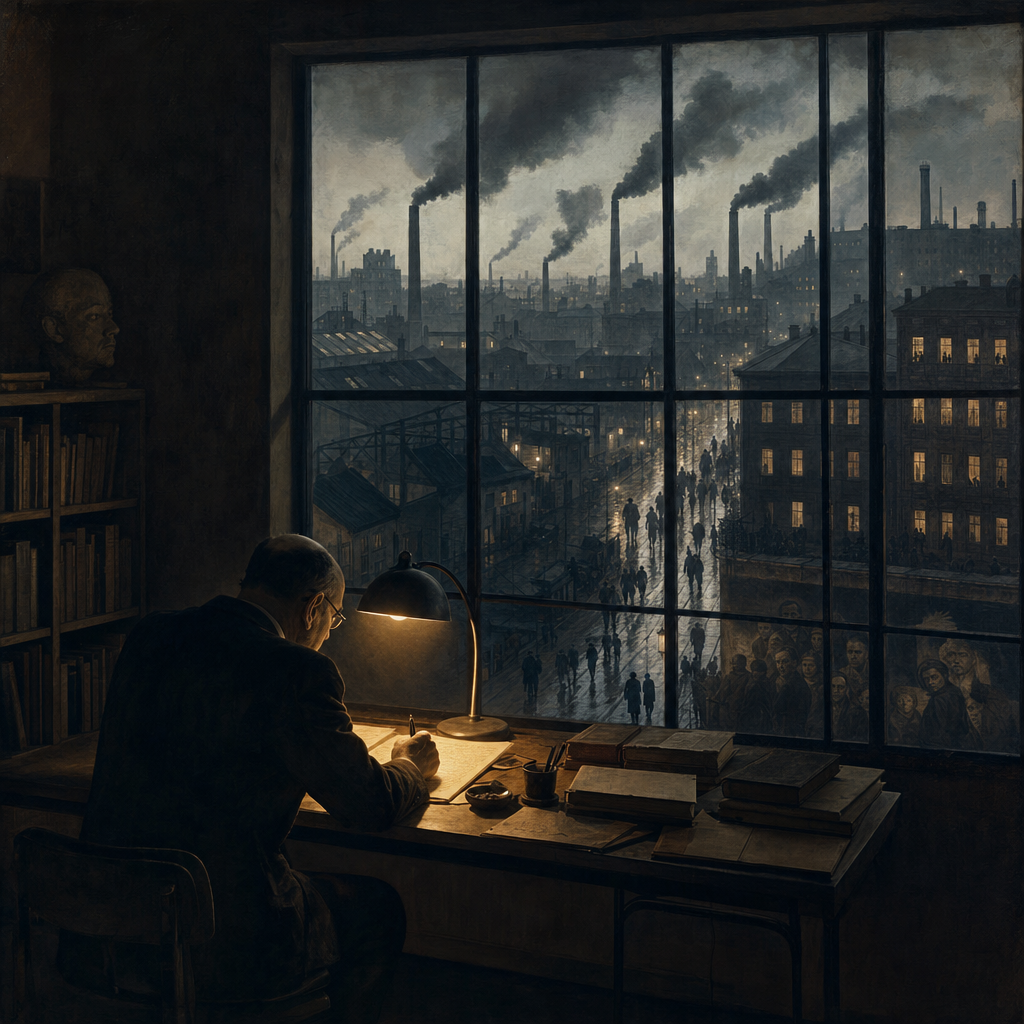
One of Adorno's recurring observations in Minima Moralia is the progressive externalisation of what was once genuinely interior. Love becomes a matter of strategy — of playing the market, of securing a relationship as an investment — rather than genuine devotion to another person. Intellectual work becomes a career move rather than the pursuit of truth. Gift-giving becomes an exercise in social obligation rather than spontaneous generosity. The inner life is hollowed out, its forms preserved while its substance is replaced by the logic of exchange.
The Exile Perspective
The book is written from the perspective of a German Jewish intellectual in American exile — a position of double displacement that Adorno turns into a philosophical method. The exile sees what the native cannot: the strangeness of what others take as natural, the contingency of what presents itself as necessary, the costs of what claims to be free. This perspective is not merely biographical but epistemological: distance from the social world one observes is a condition of seeing it clearly rather than merely reproducing its self-understanding.
Fragments as Form
The aphoristic form of Minima Moralia is not a stylistic preference but a philosophical choice. A damaged life cannot be represented in the systematic, progressive form of the treatise — which presupposes a unified, coherent experience capable of being built into a whole. The fragment, the aphorism, the interrupted reflection: these are forms adequate to a consciousness that knows itself to be partial, discontinuous, exposed to forces it cannot fully comprehend or control. The form is the argument.
Minima Moralia was written between 1944 and 1947 and published in 1951. The dedication to Horkheimer reads: "For Max, in gratitude and promise." The title echoes Aristotle's Magna Moralia while deliberately inverting its scope and ambition.
Related Concepts