A Seventh Son, Born with a Veil
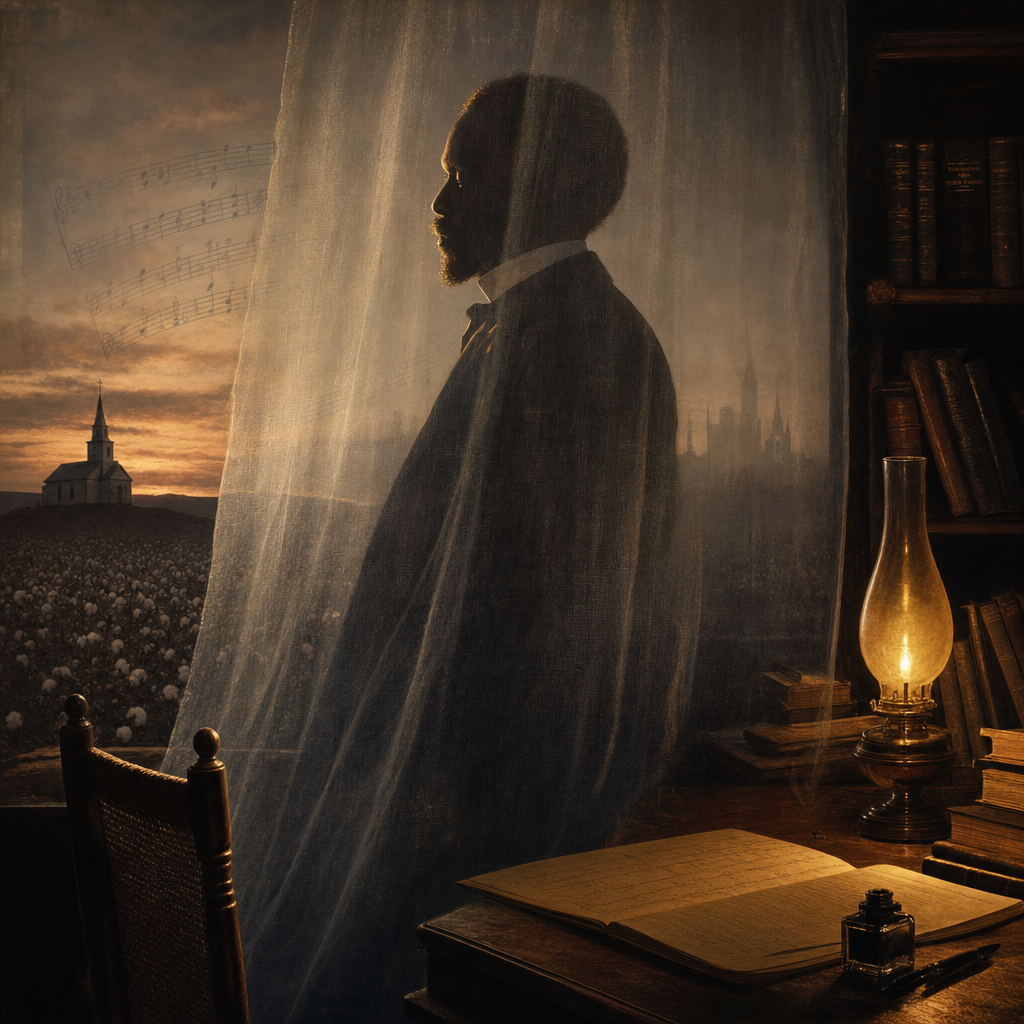
Du Bois reaches for a folk image: the seventh son, born already gifted with prophecy. Transposed onto the racial drama of the United States, the gift is bitter — the inner vision is bought by exile from full recognition. The Veil does not separate two equal worlds; it separates a world that grants self-consciousness from one that withholds it.
After the Egyptian and Indian, the Greek and Roman, the Teuton and Mongolian, the Negro is a sort of seventh son, born with a veil, and gifted with second-sight in this American world,—a world which yields him no true self-consciousness, but only lets him see himself through the revelation of the other world.
Living Above the Veil
In the book's most luminous passage, Du Bois describes the life of the mind that the Veil cannot reach. With Shakespeare, Balzac, Dumas, Aristotle, and Marcus Aurelius he moves freely; none scorns him; none condescends. The Veil is not transcended by political reform alone but by claiming, here and now, the universal inheritance of culture as one's rightful birthright.
I sit with Shakespeare and he winces not. Across the color line I move arm in arm with Balzac and Dumas, where smiling men and welcoming women glide in gilded halls. From out the caves of evening that swing between the strong-limbed earth and the tracery of the stars, I summon Aristotle and Aurelius and what soul I will, and they come all graciously with no scorn nor condescension. So, wed with Truth, I dwell above the Veil.
Rending the Veil
The book closes with the prophecy that one day America will "rend the Veil and the prisoned shall go free." Until then, the Veil is the medium through which Black Americans see clearly what the country refuses to see about itself — its denials, its self-flattery, the gap between its founding language and its operating practice. Second-sight is the recompense for the wound it names.
The metaphor of the Veil opens Chapter I and closes Chapter XIV, framing every essay in between. The "above the Veil" passage is from Chapter VI, "Of the Training of Black Men."
Related Concepts