A Sensation of Twoness
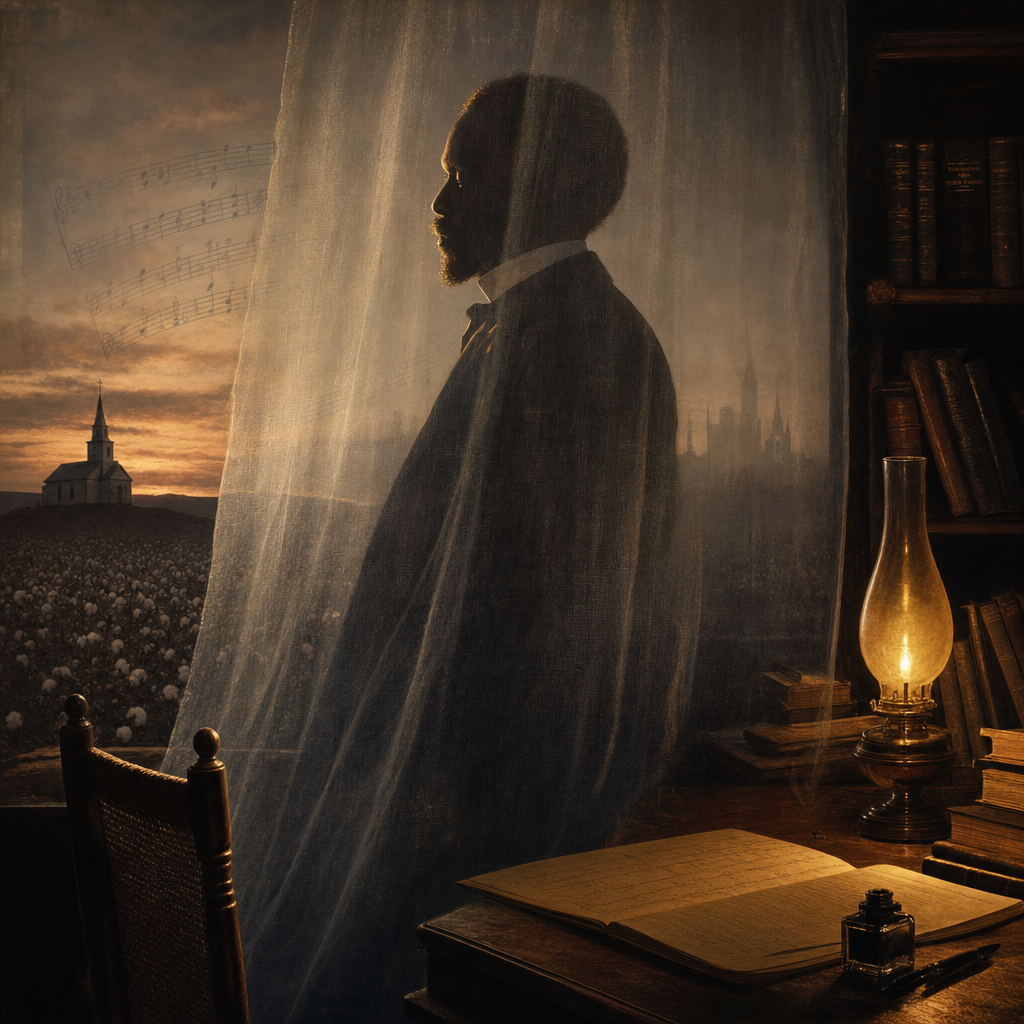
The image is unsparing. To be a problem — that is the unasked question hovering at every encounter. The Negro of 1903, Du Bois writes, is born "with a veil, and gifted with second-sight in this American world." That world does not return a true self-consciousness; it only reflects back a distorted image filtered through other eyes. Out of this comes the peculiar sensation that Du Bois insists on calling not confusion but consciousness: the awareness of being looked at, measured, judged by criteria one had no part in setting.
It is a peculiar sensation, this double-consciousness, this sense of always looking at one’s self through the eyes of others, of measuring one’s soul by the tape of a world that looks on in amused contempt and pity.
Two Warring Ideals
Double-consciousness is not metaphor only; it is a structural condition. Two ideals — one African, one American — coexist in the same body, each pulling against the other. To be American is to claim a heritage that has cursed and excluded you; to be Negro is to claim a heritage the dominant culture cannot read. The strength to hold these together, Du Bois writes, is dogged: not the harmony of resolution, but the bare refusal to be torn in half.
One ever feels his twoness,—an American, a Negro; two souls, two thoughts, two unreconciled strivings; two warring ideals in one dark body, whose dogged strength alone keeps it from being torn asunder.
The Wish Is Not for Erasure
What the Black American wants, Du Bois insists, is neither to Africanise America nor to bleach Negro identity in a flood of white Americanism. Both selves carry messages the world needs. The end of striving is therefore not assimilation, not separation, but the merging of the double self into "a better and truer self" — co-worker in the kingdom of culture, full participant in the republic, without being made to surrender what is one's own.
The Inheritance of the Idea
Double-consciousness has become one of the most quoted phrases in American thought, ramifying through Black liberation theology, decolonial philosophy, and critical race theory. But the original use is sharper and more existential than its later glosses. Du Bois is not describing identity options; he is describing what it feels like to live, hour by hour, inside a society that has not decided whether you are fully human.
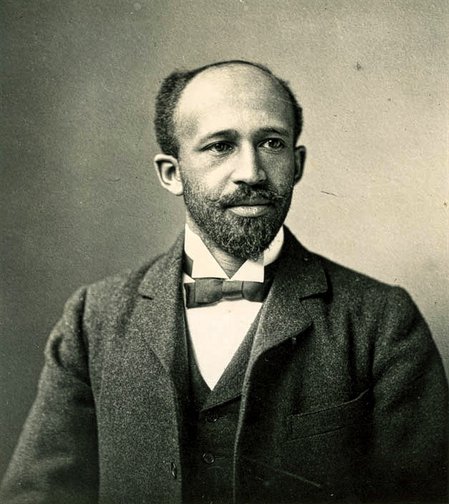
From "Of Our Spiritual Strivings" (Chapter I of The Souls of Black Folk, 1903), Du Bois's opening statement of the problem the book sets out to anatomise.
Related Concepts