Form Without Matter
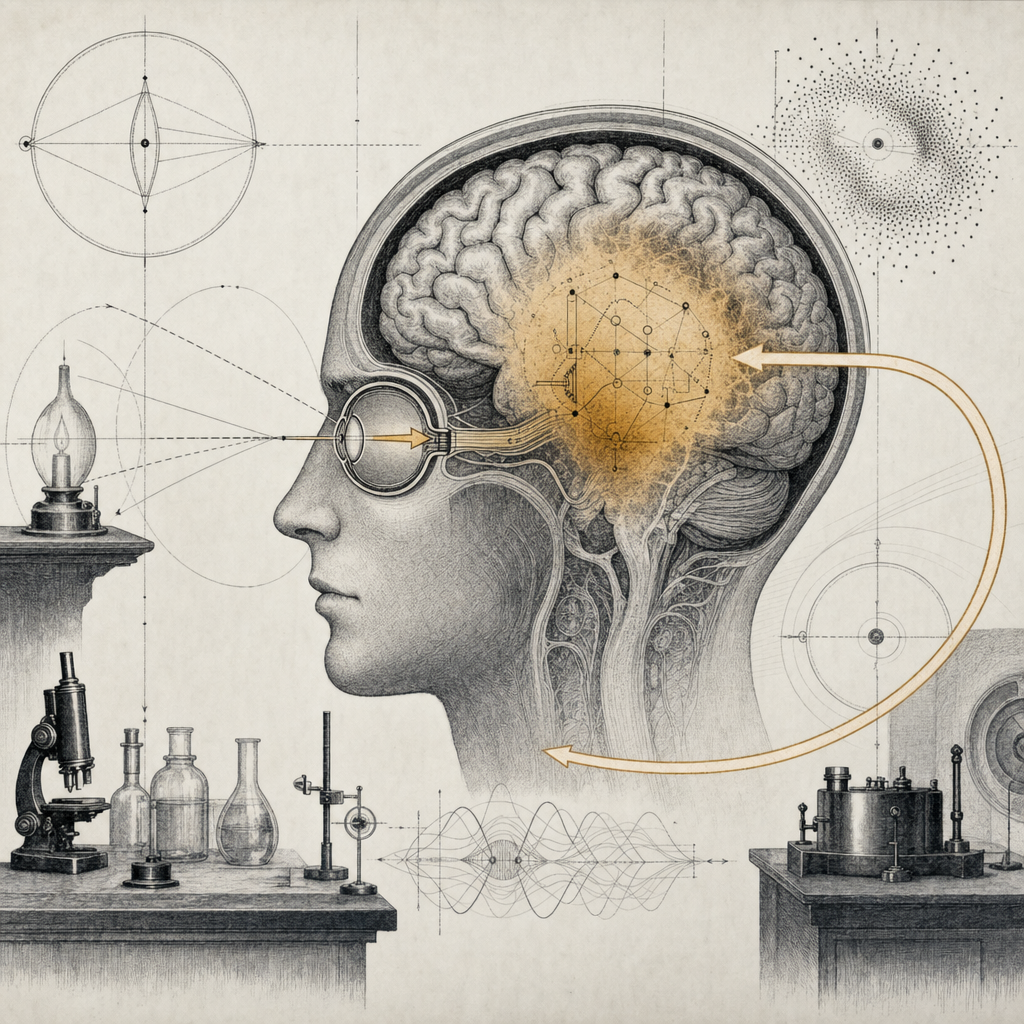
The key to Aristotle's theory of sensation is the claim that the sense organ receives the sensible form of the object without its matter. The eye takes on the colour of what it sees without becoming coloured; the ear takes on the sound without the air vibrating within it. What is received is the form — the structured quality — not the material substrate. This is what makes sensation a cognitive rather than a merely physical event: the sense organ does not just react to stimuli but acquires a representation of the sensible world.
The Common Sense
The five external senses — sight, hearing, touch, taste, smell — each have their proper objects. But we are also aware that it is the same object that is both white and sweet, that we see the apple and taste it simultaneously. This requires a higher faculty: what Aristotle calls the common sense (koinē aisthēsis). The common sense unifies the reports of the individual senses, perceives common sensibles (motion, rest, number, shape, size) that no single sense alone can grasp, and provides the foundational awareness of time.
Sensation and Knowledge
Sensation is the starting point of all human knowledge. Aristotle is emphatic on this: nothing is in the intellect that was not first in the senses. Unlike Plato, who thought genuine knowledge must transcend the sensible world entirely, Aristotle grounds all cognition in the engagement of the sensing body with the perceptible world. Abstraction, concept formation, and ultimately science all begin with the deliverances of the senses — not as unreliable appearances to be escaped but as the first and irreplaceable contact with reality.
The theory of sensation is developed in De Anima II.5–12. The common sense is discussed in De Anima III.1–2 and more fully in the short treatise On Sense and Sensibilia. Aristotle's account influenced the scholastic theory of species intentionales — intelligible and sensible species — that dominated medieval cognitive theory.
Related Concepts