The Outer World: Sensation
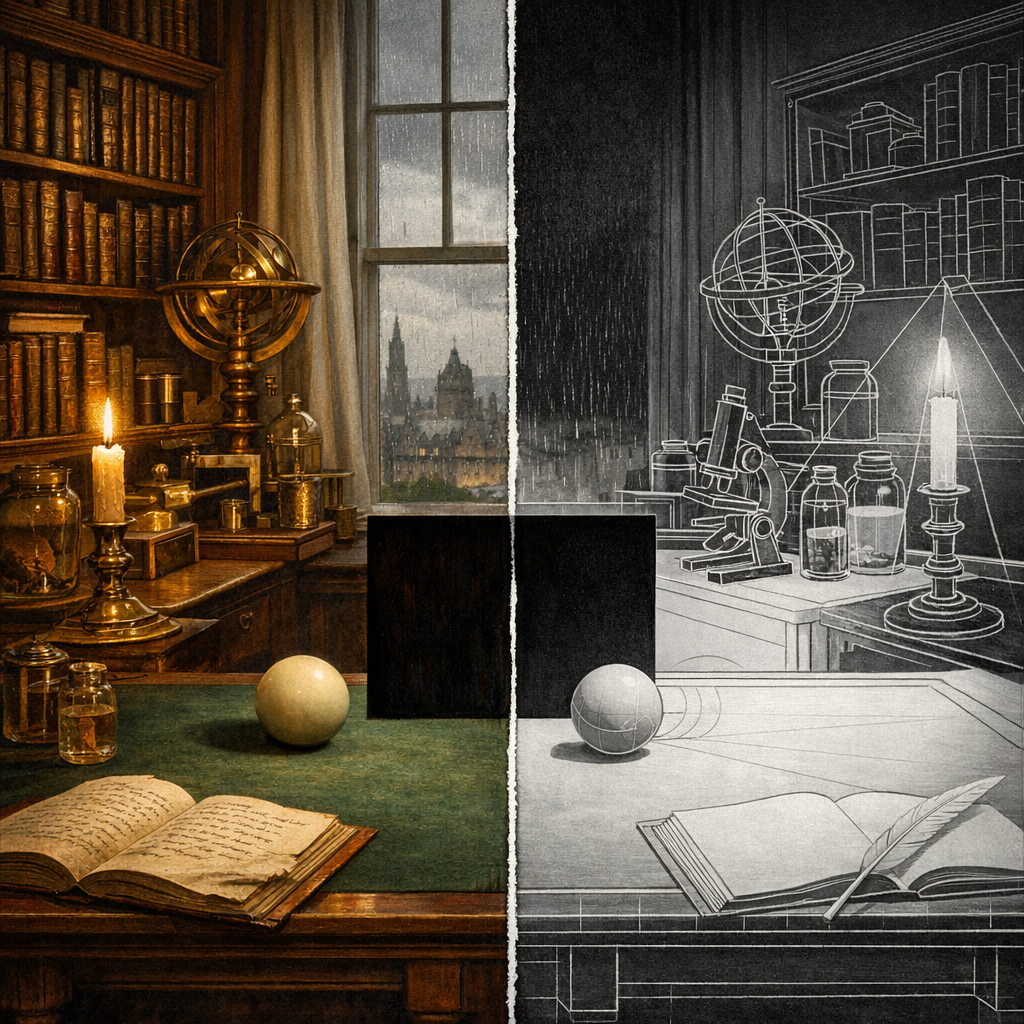
Sensation is the more obvious of the two sources. Our senses — sight, hearing, touch, taste, smell — bring us into contact with the external world, and from this contact we receive simple ideas: the yellowness of gold, the hardness of a stone, the warmth of fire. These simple ideas are the raw material of all knowledge. They cannot be defined — you cannot explain what yellow looks like to someone who has never seen it — but they are given directly and undeniably in experience. The senses are the windows through which the world enters the mind.
Locke is careful to distinguish between ideas and the external objects that cause them. The idea of warmth in my mind is not the same as the physical process in the fire that produces it. Locke develops this into a distinction between primary and secondary qualities: primary qualities — solidity, extension, figure, motion — actually belong to objects as they are in themselves; secondary qualities — colours, sounds, tastes, smells — are powers in objects to produce certain ideas in us, and those ideas do not resemble anything in the objects themselves. This distinction was enormously influential on subsequent philosophy of perception.
The Inner World: Reflection
Reflection is the less obvious but equally important source. It is the perception by the mind of its own operations: thinking, doubting, believing, knowing, willing, and the other internal processes. These operations are themselves objects of experience, though of a distinctly inner kind — the mind, attending to itself, acquires ideas of thinking, willing, perceiving, and so on. This is not self-knowledge in the grand sense; it is the mind noticing what it is doing as it does it.
Together, sensation and reflection supply all the simple ideas from which complex ideas are subsequently built. Locke denies that there is any other source. Ideas of space, time, number, pleasure, pain, existence — all can be traced back to these two fountains. The richness of the mind's inventory is not evidence of pre-formed content but of the remarkable variety of experience and the mind's power of combination and abstraction.
The Mind as Active Builder
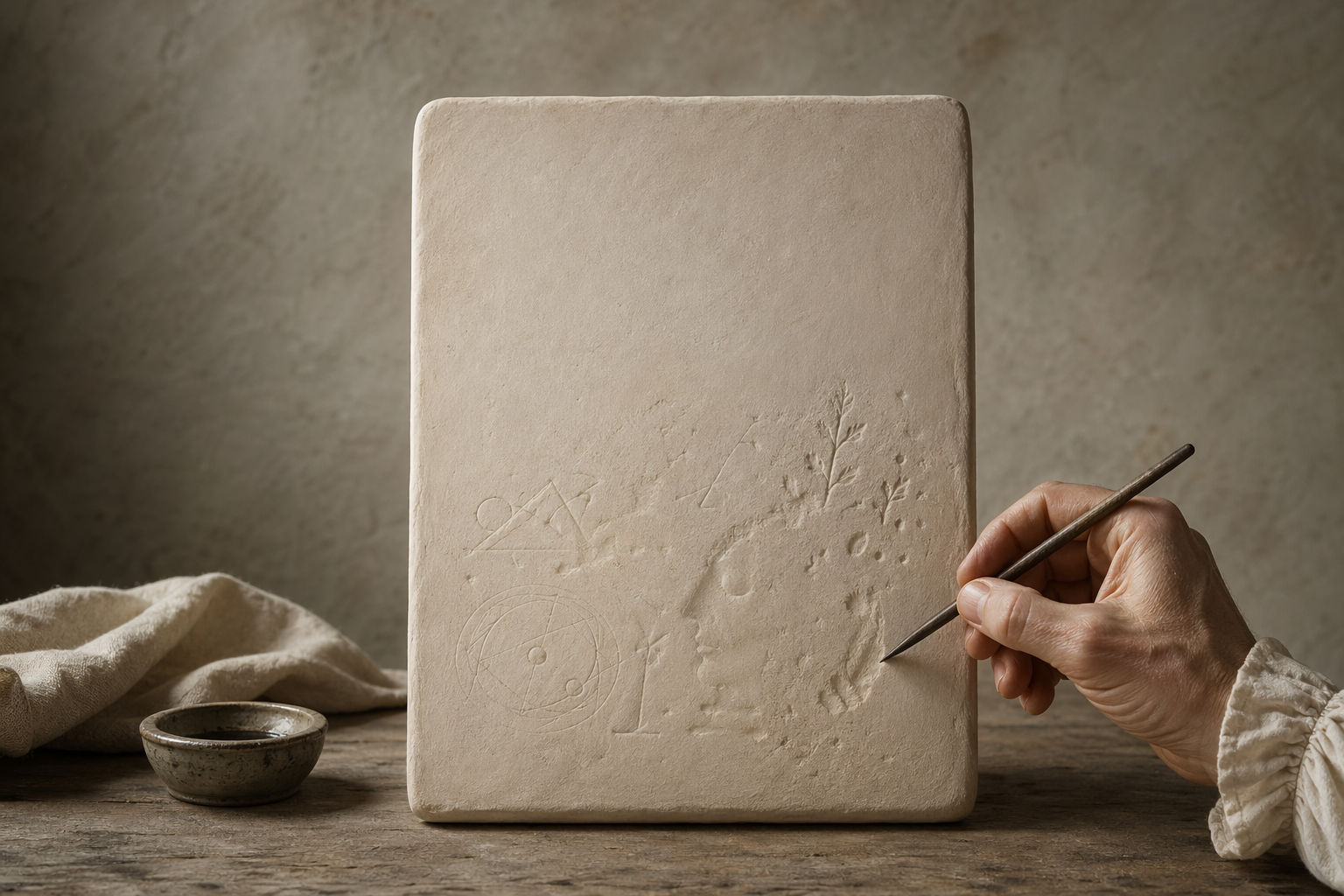
Though the mind begins as blank paper, it is not passive. From the simple ideas delivered by sensation and reflection, the mind constructs complex ideas by combining, comparing, and abstracting. The idea of gold — a complex idea — is built from the simple ideas of yellow, heavy, malleable, and so on. The idea of beauty is assembled from simpler ideas of form, proportion, and the pleasure they produce. The idea of God is constructed by extending and combining ideas of power, knowledge, and goodness beyond any limit we have experienced. The tabula rasa is not a tabula that stays blank — it is filled with extraordinary activity.
The distinction between sensation and reflection is introduced in Book II, Chapter I of the Essay. The primary-secondary quality distinction is developed in Book II, Chapter VIII. Both distinctions were widely debated by Locke's contemporaries and successors, most notably by Berkeley, who argued that even primary qualities are mind-dependent.
Related Concepts