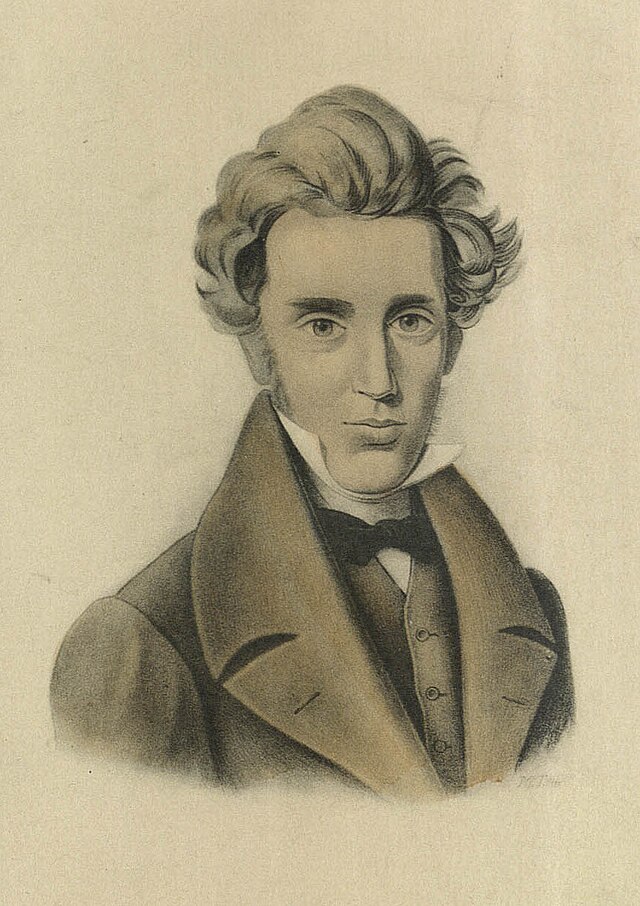
The Failure of Simple Variety
The naive strategy for defeating boredom is simple variety: when this place bores you, travel; when this person bores you, find another; when this occupation palls, change to a new one. But this strategy, "A" argues, is self-defeating. The more one travels, the more places feel the same; the more people one encounters, the more familiar the patterns; the more occupations one tries, the sooner each reveals its essential sameness. Simple variety is a form of the crop rotation that exhausts the soil: it works for a time, then the field is as barren as before.
The Intensive Strategy
The Rotation Method in its refined form is not about changing the objects of experience but about changing one's relationship to them. A lecture is boring — but the boredom of the lecturer, observed closely, is endlessly interesting. A social obligation is tedious — but the precise quality of its tedium, attended to with sufficient ironic detachment, becomes a source of inexhaustible aesthetic pleasure. One must learn to see everything obliquely, to find in each situation the angle from which it is not what it seems. This is the art of the aesthete at its most sophisticated: converting the world's limitation into material for infinite variation.
Forgetting as an Art
"A" insists that the secret of the Rotation Method is cultivated forgetting: the ability to forget selectively, to release what has been exhausted while retaining what has not yet been fully explored. Memory, for the aesthete, is not a treasure to be preserved but a faculty to be managed — keeping only what still has aesthetic charge, releasing the rest. This is the opposite of the ethical person's commitment to continuity and history; where Judge William celebrates the accumulated depth of a marriage remembered and cherished, "A" regards the ability to forget as the highest aesthetic virtue.
The essay on the Rotation Method appears in the section "Diapsalmata" and related fragments in Volume I of Either/Or. It has been widely read as a self-portrait of Kierkegaard's own early aesthetic temperament, though the relationship between author and pseudonym is deliberately unstable.
Related Concepts