Doubt as Evidence of Imperfection
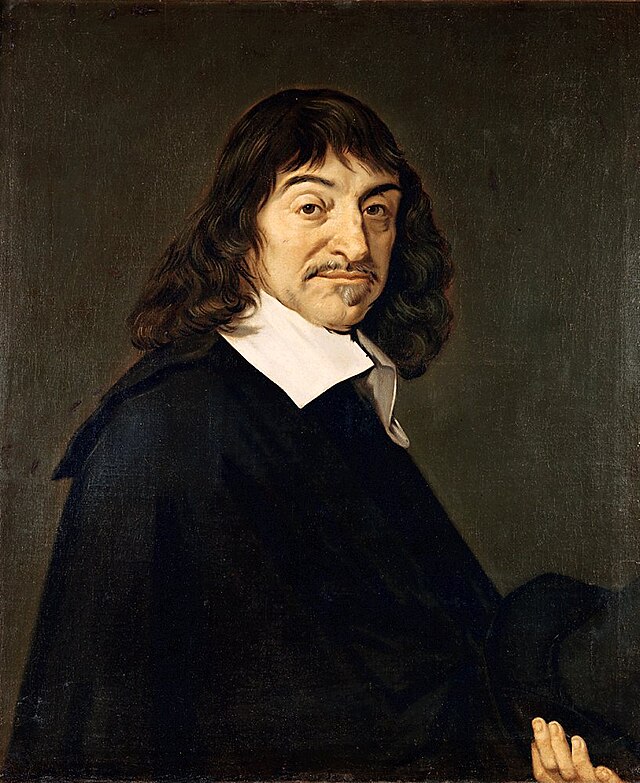
Descartes identifies the cogito — the certainty of his own thinking existence — and immediately turns to a second question: what kind of being am I? He doubts, and therefore is not wholly perfect: it is clearly better to know than to doubt. But where did the idea of perfection come from? He did not derive it from himself, since he is imperfect. He did not construct it from experience, since no experience presents absolute perfection. The idea of a perfect being must, Descartes concludes, have been placed in him by something that actually possesses the perfection he can only conceive.
from reflecting on the circumstance that I doubted, and that consequently my being was not wholly perfect (for I clearly saw that it was a greater perfection to know than to doubt), I was led to inquire whence I had learnt to think of something more perfect than myself
The Causal Principle
The argument rests on a principle about causation: an idea must have a cause at least as real as its content. The idea of a being with infinite perfections — omniscience, omnipotence, supreme goodness — cannot have been produced by a finite and imperfect mind working with finite and imperfect materials. Only a being that actually possesses infinite perfections could be the cause of the idea of them. Therefore God, the supremely perfect being, must exist as the cause of the idea I find in myself.
This is a version of what later philosophers call the causal argument for God's existence, distinct from the ontological argument (which reasons from the concept of God to his existence) and from the cosmological argument (which reasons from the existence of the world). Descartes offers all three in various works, but the argument from the idea of perfection found in Part IV of the Discourse is the most intimately connected to the autobiographical narrative of systematic doubt.
God as Guarantor of Knowledge
The existence of God has a critical role in Descartes' system beyond metaphysics: it guarantees the reliability of clear and distinct perception. If a perfect God created us, he did not create us to be systematically deceived when we perceive things clearly and distinctly. The evil genius hypothesis — the most radical form of Cartesian doubt — is defeated once God's existence and veracity are established. The whole edifice of knowledge can be reconstructed on the foundation of the cogito and the existence of a perfect, non-deceiving God.
The proof for God's existence in Part IV of the Discourse is a condensed version of the argument developed more fully in the Third Meditation. The relationship between God, clear and distinct perception, and the defeat of the evil genius hypothesis is a central controversy in Cartesian scholarship.
Related Concepts