When Morality Collapsed
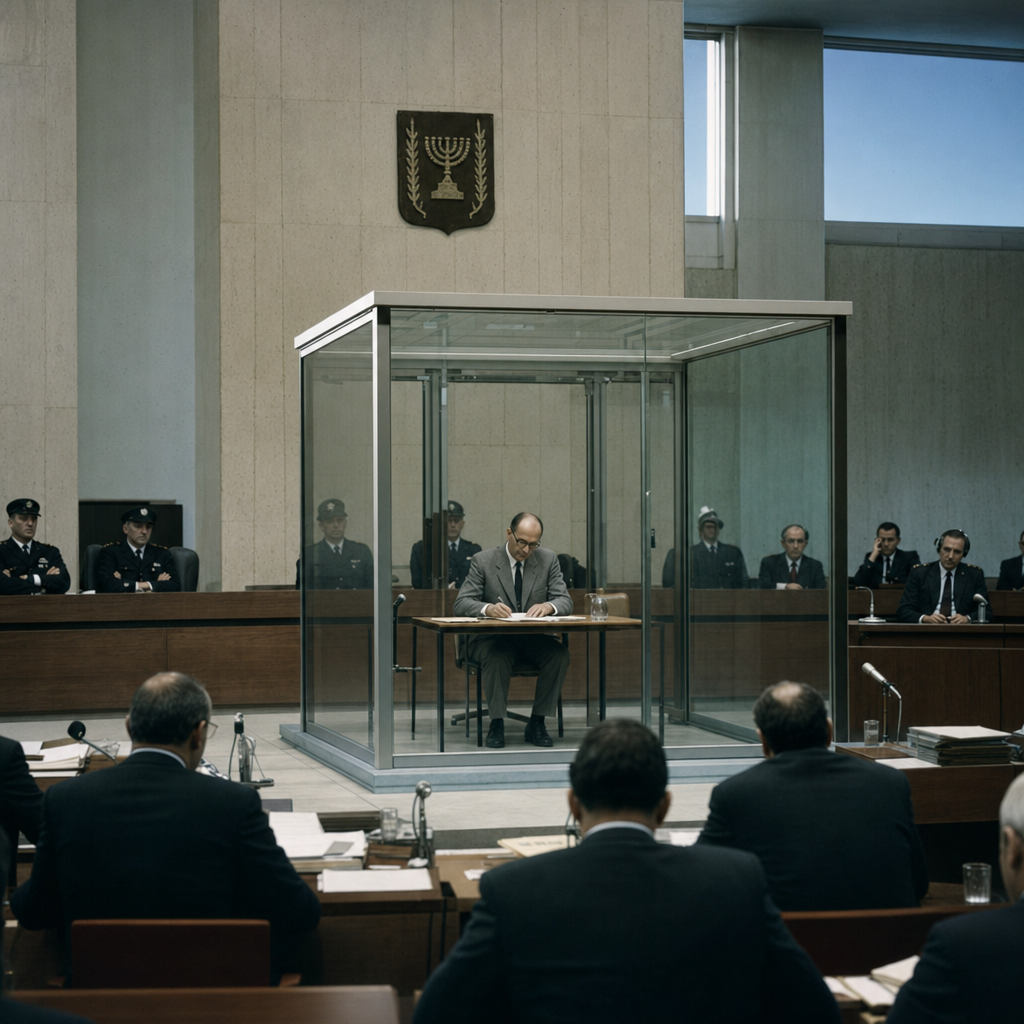
What disturbed Arendt most was not that Eichmann had violated conventional morality but that he had applied it. He obeyed the law — the law of the Nazi state — with scrupulous conscientiousness. The moral catastrophe of the Third Reich was not a breakdown of rule-following but its perverse continuation: ordinary people continued to follow orders, obey authority, and defer to the demands of the collective, even when those demands required participation in mass murder.
Judgment Without Rules
Drawing on Kant's account of aesthetic judgment, Arendt argues that genuine moral judgment cannot be derived from the application of universal rules. It requires the capacity to see particular situations in their particularity — to say "this is wrong" in a situation for which no rule has prepared you, on the basis of an enlarged mentality that can think from the standpoint of others. This is a faculty that Eichmann wholly lacked.
The Few Who Refused
Against the conformism of the many, Arendt insists on the significance of those — a small number throughout occupied Europe — who did refuse to participate, who judged for themselves without appeal to precedent or authority, and who thereby demonstrated that the capacity for independent moral judgment was not destroyed, only suppressed. Their existence proves that participation was a choice, not a necessity.
Arendt developed her theory of judgment most fully in Lectures on Kant's Political Philosophy (posthumously published 1982), building on her analysis of the Eichmann trial.
Related Concepts