The Sky as a Problem
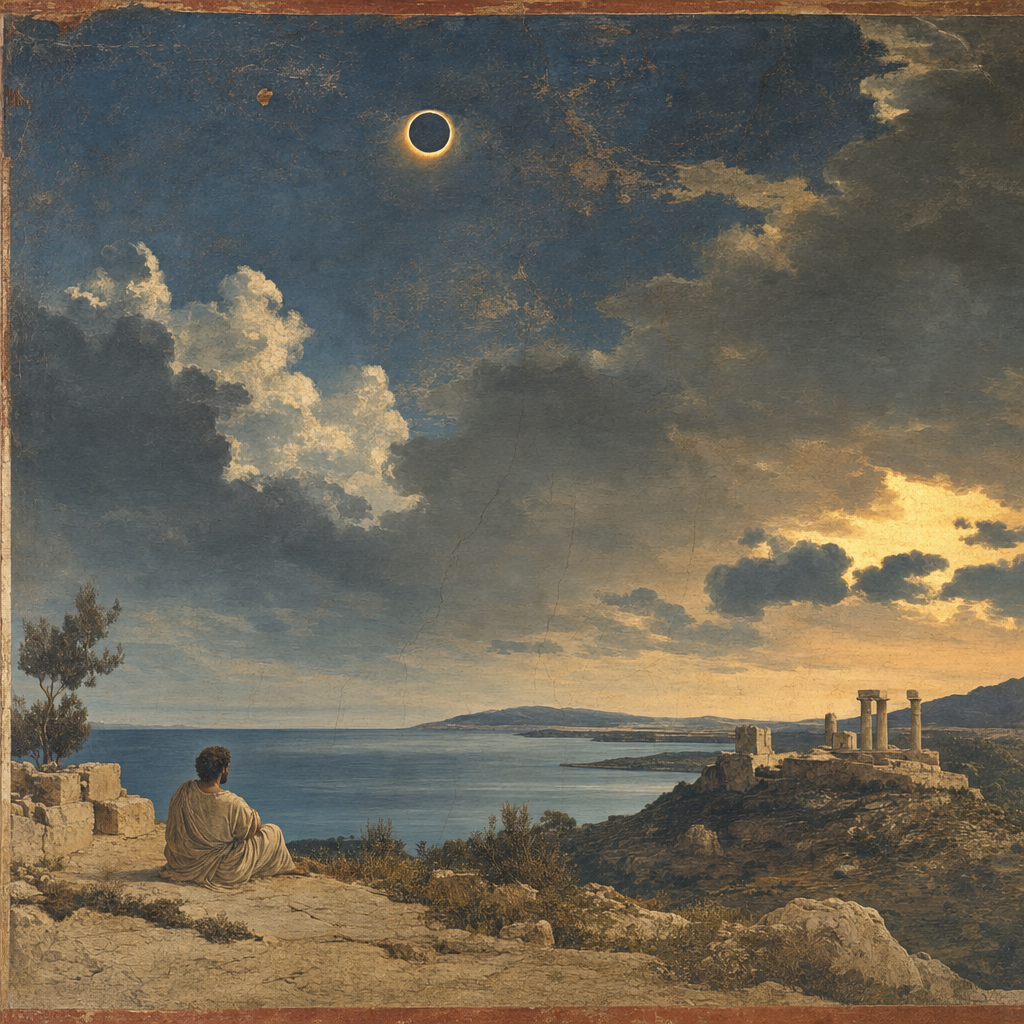
In the ancient world, the sky was the primary site of divine communication. Omens, augury, the reading of entrails, the interpretation of lightning — entire systems of religious practice were built around the premise that gods communicated their will through natural phenomena. The anxiety generated by this interpretive framework was enormous: an unusual comet, an unexpected eclipse, or a prolonged drought could plunge a whole society into collective dread. Epicurus's natural philosophy is aimed, systematically and deliberately, at dismantling this framework by providing natural accounts of every class of sky phenomenon.
Natural Causes Throughout
The method of the Letter to Pythocles is uniform: for each phenomenon — the motions of the stars, the nature of comets, the causes of rain, thunder, lightning, winds, earthquakes — Epicurus proposes one or more natural explanations grounded in the mechanics of atoms and void. Clouds are accumulations of compressed atoms; thunder is the noise of their violent movements; lightning is fire expressed from compression. No single mechanism is necessary; what matters is that some mechanism of this type exists. Once the class of natural explanations is established, the supernatural interpretation is excluded — not by denial but by redundancy.
Wonder Without Anxiety
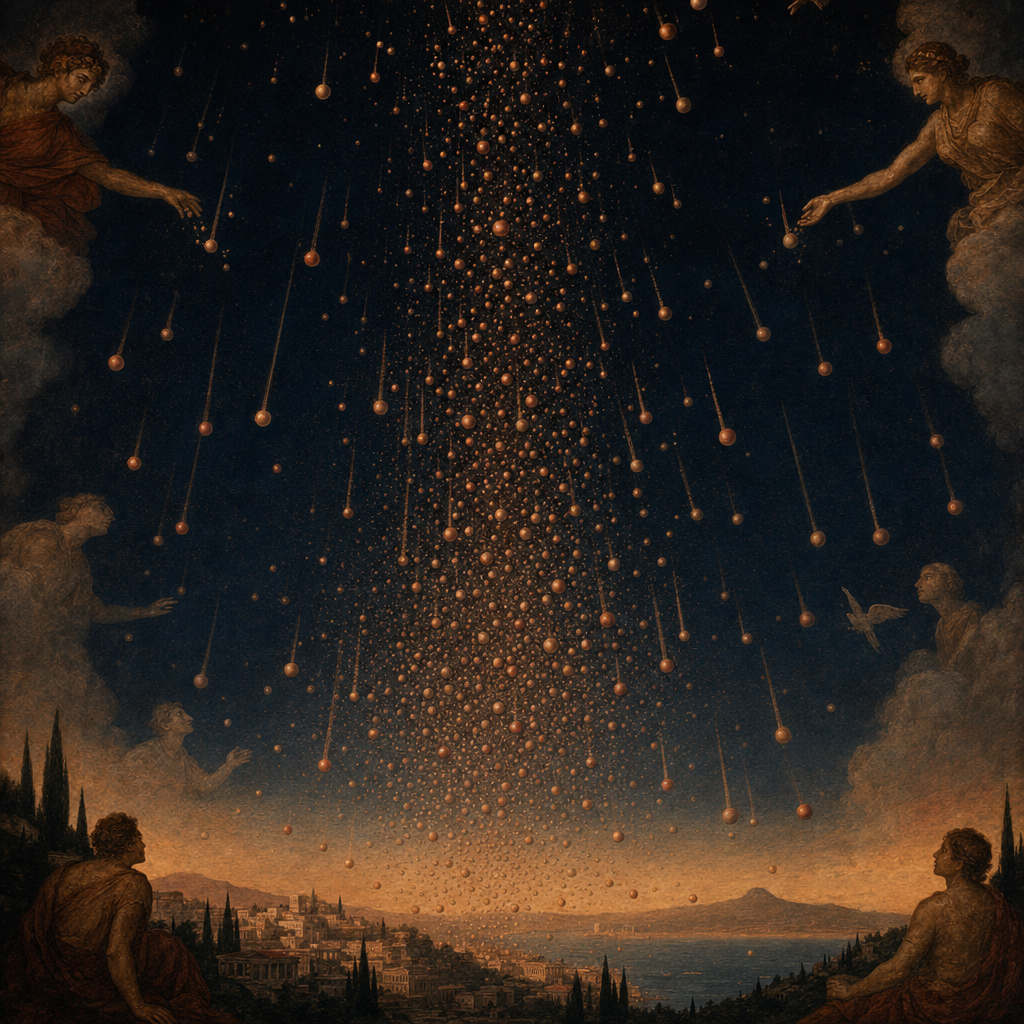
The Epicurean does not view the sky with indifference — Epicurus clearly finds the natural world genuinely wonderful and worthy of detailed investigation. What changes is the emotional register: wonder without anxiety, curiosity without dread. The meteor that would terrify a believer in divine portents is, for the Epicurean, a remarkable natural phenomenon worthy of study and admiration. This transformation of the emotional response to natural events is itself a philosophical achievement: the world becomes a place of interest rather than a place of threat, and the human being can engage with it from a position of equanimity rather than fear.
The Letter to Pythocles is the most systematic application of Epicurean natural philosophy to specific phenomena. Its authenticity has been questioned by some scholars who regard its style as inferior to the other letters, but its content is consistent with Epicurean principles throughout. Lucretius's De Rerum Natura, Books V–VI, covers similar ground at far greater length and with considerable literary power.
Related Concepts