What Impressions Do
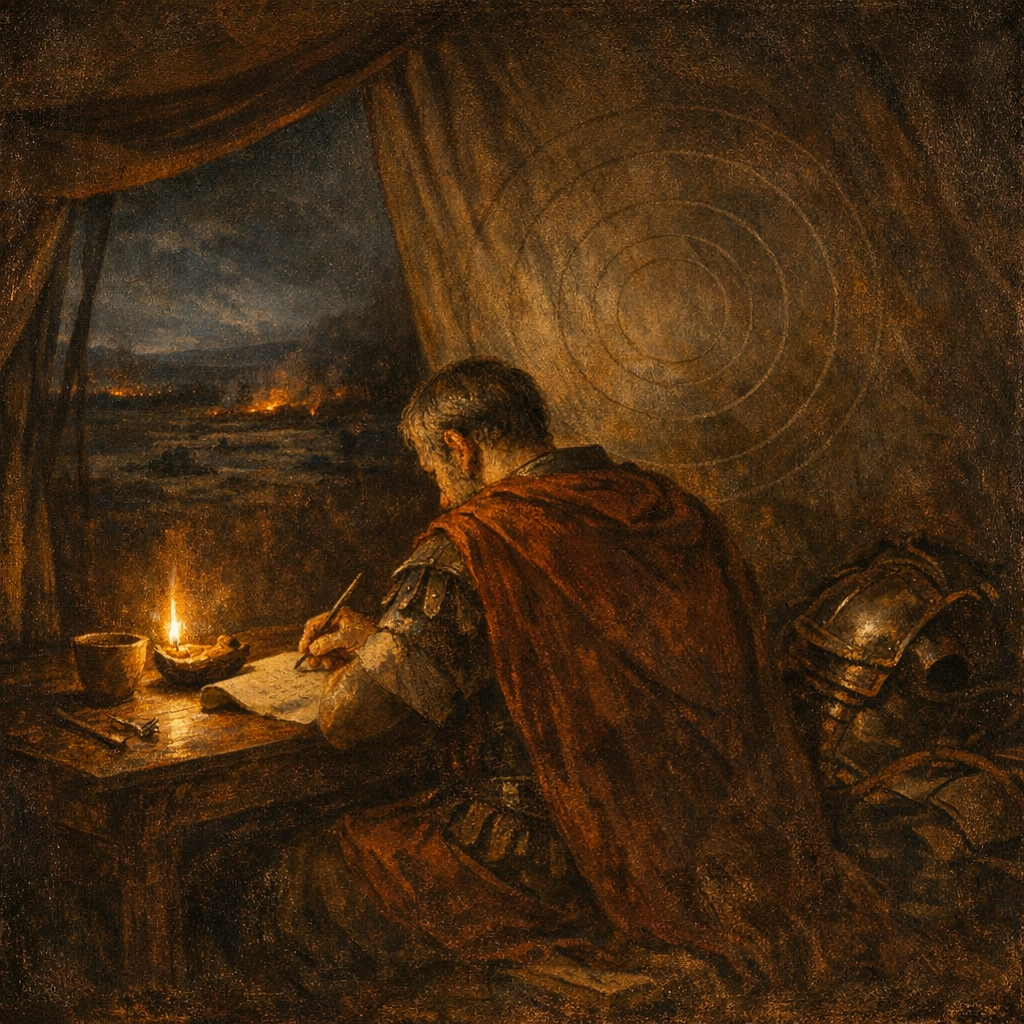
An impression — what the Stoics call a phantasia — is the mind's first take on something: that this is dangerous, that this is good, that this is offensive, that I am being wronged. Impressions arrive unbidden and carry their own vivid certainty. The untrained mind takes them as reports from reality and acts accordingly. Epictetus's central claim is that impressions are not self-evidently true. They are proposals, not verdicts, and the wise person has learned to interrogate them before consenting.
Appearances, wait for me a little; let me see who you are, and what you are about; let me put you to the test.
Suspending the Rush
The key failure, Epictetus observes, is speed. Appearances arrive and we are already moving before we have examined them. We feel insulted and are already angry; we see something we want and are already reaching. The philosophical life begins with inserting a pause — not passivity, but deliberate examination. What is this impression claiming? Is what it presents to me actually good or bad, or merely appearing so? Does this belong to what is in my power or to what is not?
This is not an intellectual exercise confined to quiet hours. Epictetus's students were expected to practise it constantly — at the bath, at breakfast, in every encounter. The same faculty that judges philosophical arguments must be brought to bear on the petty irritations of daily life. In fact, the petty irritations are where the training matters most: it is easy to be philosophical in the abstract; it is another thing entirely when someone takes your seat at the theatre.
The Strength of the Trained Mind
Epictetus compares the untrained mind to an athlete who has never done any work: only trifling words, and nothing more. The mind that has practised suspending assent has a kind of muscular strength — it can hold an impression at arm's length long enough to assess it, and then either consent to it or let it go. This is what distinguishes the philosopher from the ordinary person: not knowing more, but being able to act on what they know under pressure.
The discourse on appearances and assent appears throughout the Discourses but is treated with particular clarity in Chapter 2 here. The Stoic technical terms are phantasia (impression), synkatathesis (assent), and prohairesis (the faculty of choice or will).
Related Concepts