What Suffering Reveals
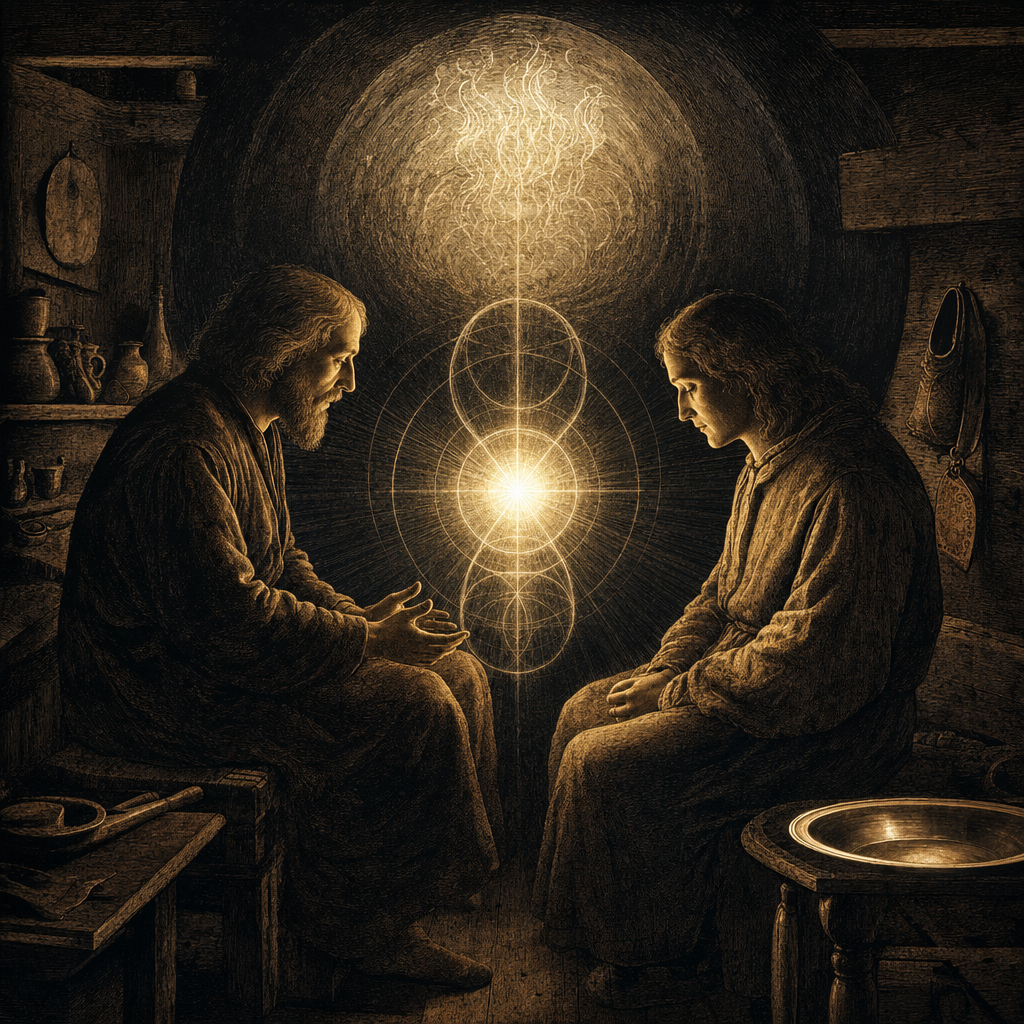
Eckhart does not minimise suffering or counsel indifference. Suffering is real, and the outer man genuinely feels it. But suffering is also revelatory: it strips away the things we supposed were constitutive of ourselves — position, relationships, certainty — and shows us how much of our identity was invested in what is not ultimately ours. In this sense, great loss can function as a spiritual teacher, forcibly detaching the soul from its false foundations.
The Unchanging as Refuge
If we rest our identity in what changes, we will be undone by change. Eckhart's counsel is to root the self in what does not change: the divine ground, the eternal now, the uncreated spark. This is not resignation or emotional numbness but a shift in ontological address — coming to inhabit, as the primary dwelling, that part of oneself which shares in God's immutability.
God Suffers Too
In a striking move, Eckhart argues that God's comfort is most present precisely in suffering, because suffering empties the soul of the things that ordinarily block divine entry. The poor, the grieving, and the afflicted are, paradoxically, closer to the condition of spiritual receptivity than the comfortable. This does not glorify suffering but reframes it: it can be the occasion for the deepest union, if the soul turns inward rather than outward for its comfort.
The Book of Divine Comfort was composed around 1308 for Agnes of Hungary following the assassination of her father Albrecht I. It circulated widely in manuscript and was among the texts submitted to papal scrutiny during the investigation into Eckhart's teaching.
Related Concepts