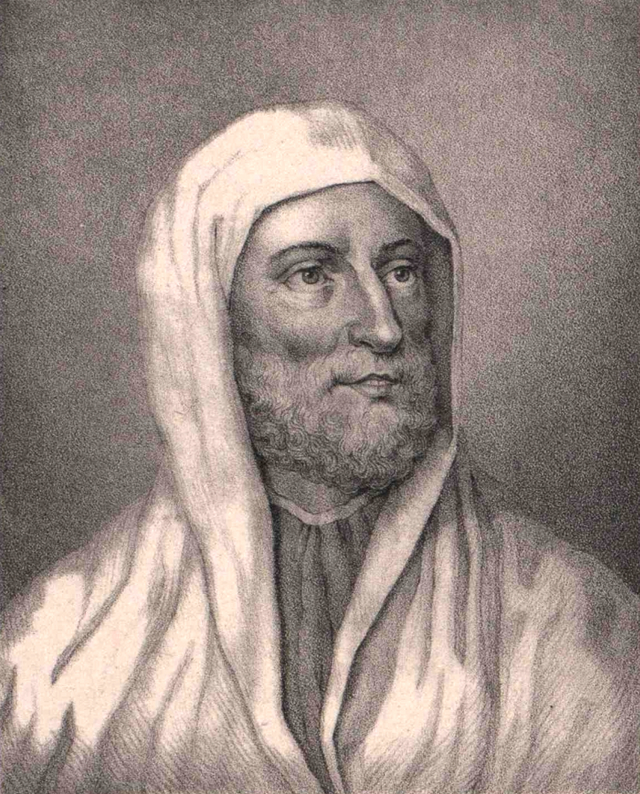
The Stations of the Ascent
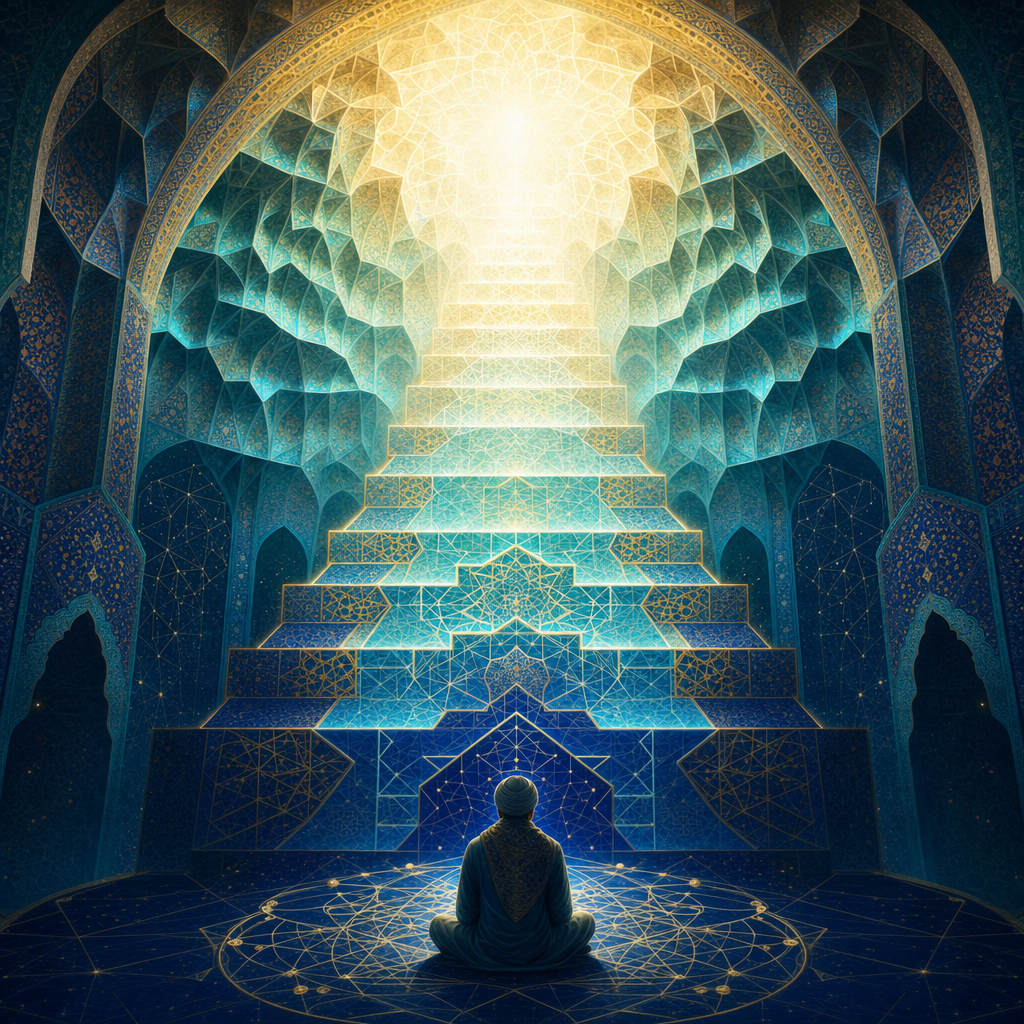
Avicenna describes a progressive movement from the ordinary intellectual life of the philosopher toward direct encounter with the divine. The first station is the will to ascend — an orientation of desire away from worldly things and toward the divine source of all intelligibility. As the soul turns away from its bodily preoccupations and toward the Active Intellect, it begins to receive flashes of illumination — sudden, unearned insights that exceed what discursive reasoning alone could produce. These flashes become more frequent and more sustained as the ascent progresses, until the advanced gnostic can enter at will into a state of direct contemplation.
Philosophy and Mysticism Reconciled
What makes Avicenna's account distinctive is that the mystical ascent is not a departure from philosophy but its fulfilment. The preparation required for direct contemplation is philosophical: the purification of the intellect through logic, natural philosophy, and metaphysics. The gnostic is not someone who bypasses reason but someone who has fully actualised reason's potential and discovered that the fully actualised intellect is capable of a mode of knowing that transcends discursive reason. Philosophy, on Avicenna's account, is the path to mysticism — not its enemy. This synthesis influenced Suhrawardi's Illuminationist school and the entire Persian philosophical-mystical tradition.
The Paradox of Mystical Language
Avicenna is acutely aware that the highest stages of the mystical ascent cannot be communicated in the language of philosophy. The direct encounter with the divine — the state in which the soul is wholly absorbed in contemplation — can be pointed toward by analogy and symbol but not described in propositions. The Book of Directives and Remarks accordingly changes register in its final sections: from the crisp logical argument of the philosophical parts to a more evocative, symbolic style that acknowledges the limits of philosophical language. This tonal shift is itself a philosophical statement: knowledge of the highest things requires a different kind of knowing and a different kind of speaking.
The mystical sections of the Book of Directives and Remarks (Maqamat al-'Arifin, "Stations of the Gnostics") are discussed in Part VIII and the conclusion. They represent Avicenna's personal synthesis of Aristotelian epistemology and Sufi spirituality, and became central to the tradition of Islamic philosophical mysticism developed by Suhrawardi, Mulla Sadra, and their successors.
Related Concepts